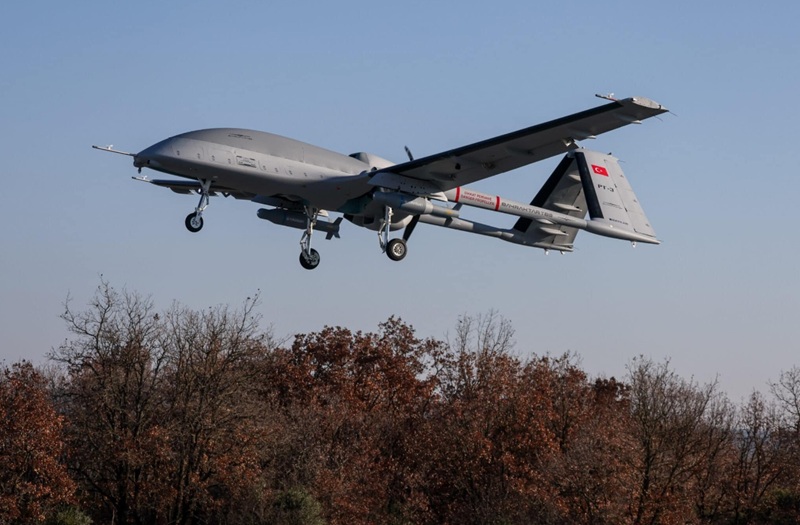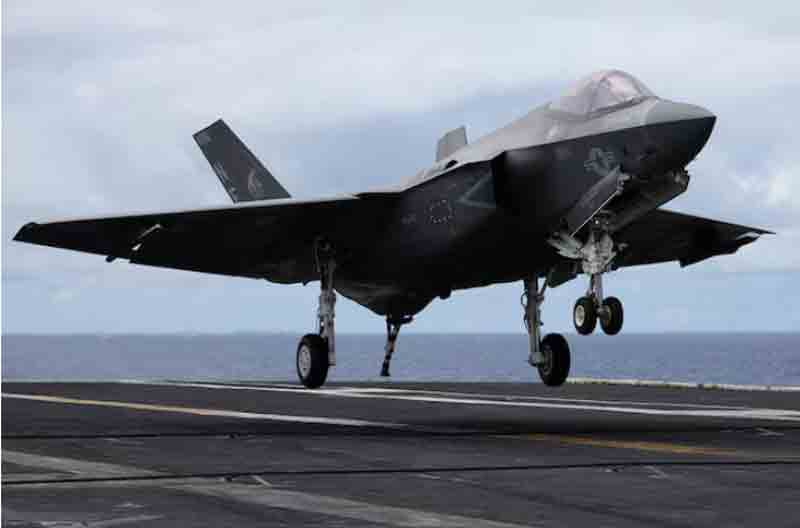
A substantial surge of American air and naval power is moving toward the Middle East, reinforcing U.S. forces already positioned in the region as President Donald Trump weighs military options alongside renewed diplomatic engagement with Iran. Open-source flight tracking and official confirmations indicate the most intense phase yet of a U.S. force “plus-up,” involving advanced combat aircraft, surveillance platforms, and additional naval assets.
A broad airpower movement eastward
Online tracking data shows F-22 Raptor, F-16 Fighting Falcon, E-3 Sentry, and at least one U-2 Dragon Lady either crossing the Atlantic or newly positioned in Europe en route to the Middle East. According to tracking data, at least a dozen F-22s departed Langley Air Force Base in Virginia, likely transiting through the UK before continuing onward, although U.S. Central Command has declined to comment on specific movements.
This pattern mirrors previous pre-conflict deployments, particularly ahead of Operation Midnight Hammer, when F-22s transited east days before participating in strikes against Iranian nuclear facilities.
Fighters, sensors, and command-and-control
The mix of aircraft points to preparation for sustained, complex operations rather than a short-duration contingency. F-22 Raptors provide air dominance and suppression of enemy air defenses, while F-16s can be tasked with both defensive counter-air missions against drones and missiles and offensive strike roles.
The arrival of E-3 Sentry aircraft at RAF Mildenhall enhances airborne command-and-control capacity, enabling wide-area tracking of aircraft, cruise missiles, and drones. Meanwhile, the U-2 offers high-altitude intelligence, surveillance, and reconnaissance, as well as acting as a communications bridge between fifth-generation platforms such as the F-22 and F-35A Lightning II.

Jordan as a central hub
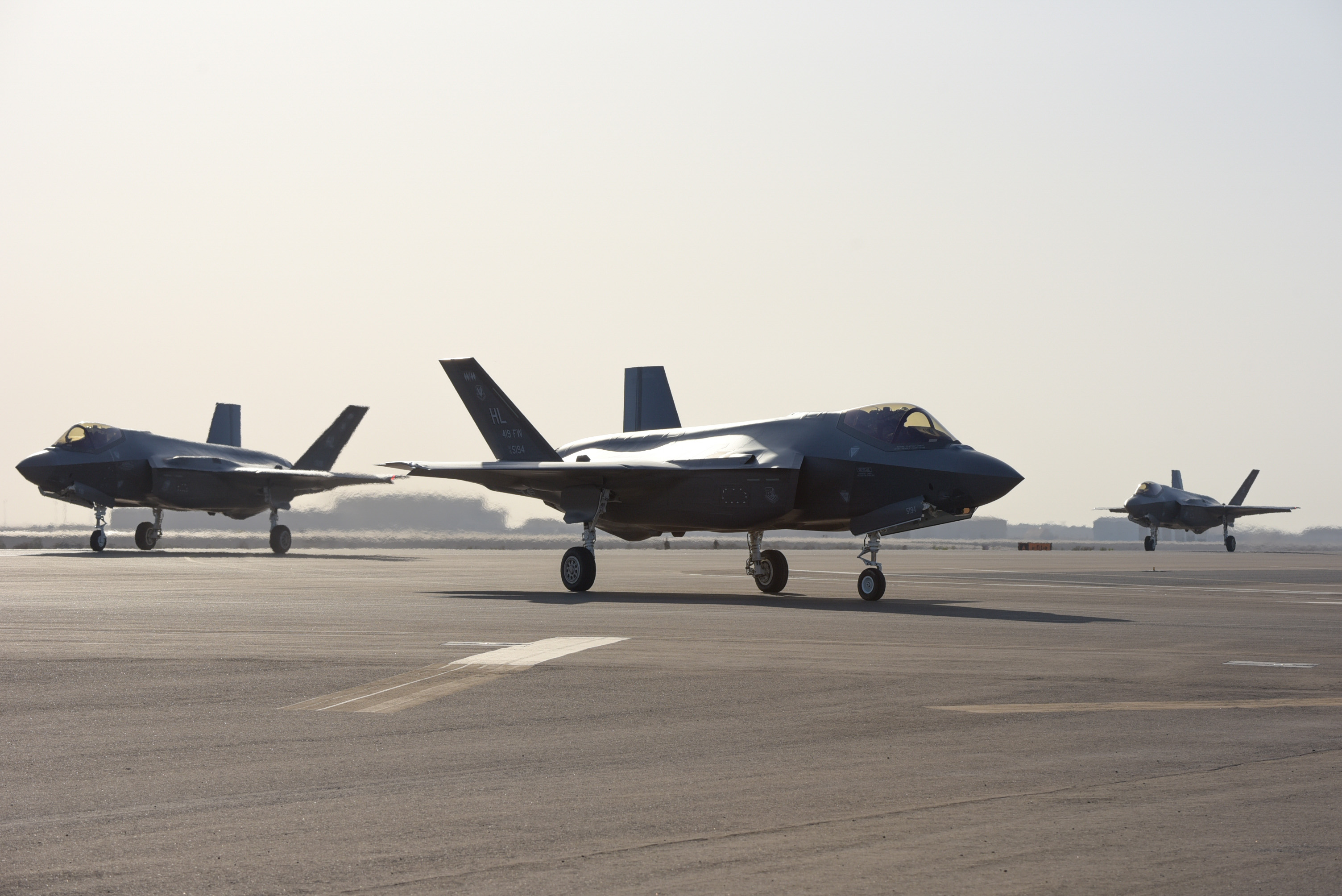
Eighteen F-35A fighters have already departed RAF Lakenheath for Muwaffaq Salti Air Base in Jordan, which has become a focal point for U.S. tactical aviation in the region. These aircraft previously played a critical role in penetrating and suppressing Iranian air defenses during Midnight Hammer, often serving as the first assets into contested airspace and the last to withdraw.
The growing concentration of aircraft at Muwaffaq Salti—including Strike Eagles, Growlers, A-10s, MQ-9 Reapers, and special operations aircraft—underscores the scale of the buildup, even as Jordan publicly states it would not allow its airspace to be used for an attack on Iran.

Naval reinforcement in parallel
The air surge is matched at sea. A seventh USS Pinckney has entered the U.S. Central Command area, bringing the total number of U.S. surface combatants in or near the region to around a dozen. These include the Abraham Lincoln Carrier Strike Group and additional Arleigh Burke-class destroyers in both the CENTCOM and Mediterranean theaters.
The USS Gerald R. Ford Carrier Strike Group is now operating in the 6th Fleet area, providing additional flexibility with carrier-based F/A-18E/F Super Hornets, EA-18G Growlers, and F-35C fighters. Subsurface assets, including nuclear-powered submarines, are also believed to be present, though their locations are not disclosed.
Iranian response and regional tension
As U.S. forces reposition, Iran’s Islamic Revolutionary Guard Corps has announced live-fire exercises in and around the Strait of Hormuz, a critical maritime chokepoint through which roughly one-fifth of global crude oil shipments pass. Iranian state media report the use of anti-ship cruise missiles, drones, and submarines during the drills, while Supreme Leader Ayatollah Ali Khamenei issued warnings directed at U.S. warships.

Diplomacy alongside deterrence
The military buildup coincides with indirect U.S.–Iran negotiations in Switzerland, mediated by Oman. Iranian officials have described the talks as constructive, though substantive gaps remain over Iran’s nuclear program and Washington’s demands. Notably, similar diplomatic timelines preceded Midnight Hammer, when a decision on military action was deferred even as forces quietly assembled.
Assessment
Taken together, the scale and composition of U.S. deployments now visible align closely with what would be expected ahead of a major, sustained air campaign rather than a limited strike. While no decision to attack Iran has been announced, the concentration of high-end airpower, command-and-control assets, and naval firepower significantly expands Washington’s military options—and strengthens the credibility of deterrence as negotiations continue.