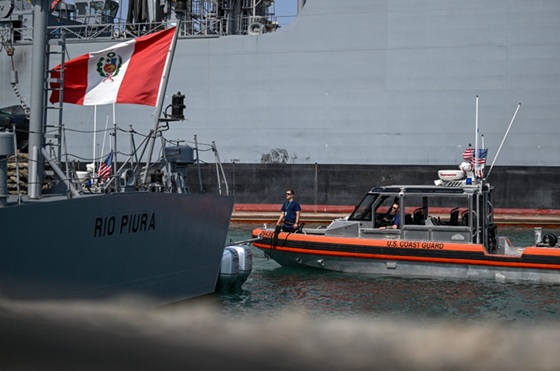
The United States has approved a potential $1.5 billion Foreign Military Sale (FMS) to Peru aimed at modernising maritime and onshore infrastructure at the Callao Naval Base, the country’s most critical naval installation. The US State Department confirmed the approval on January 15, with the Defense Security Cooperation Agency (DSCA) notifying Congress shortly thereafter.
Unlike traditional arms sales, the package does not include major weapons systems or combat platforms. Instead, it focuses on long-term infrastructure modernisation, engineering support, and sustainment—highlighting a growing US emphasis on strategic basing, logistics resilience, and partner capacity-building rather than direct militarisation.
What the Deal Includes
According to the DSCA, Peru requested a comprehensive suite of construction and engineering services designed to overhaul port infrastructure at Callao. The package covers:
- Lifecycle facility design and construction
- Project and construction management
- Engineering studies and site surveys
- Facility assessments and infrastructure planning
- Acquisition and logistics support
- Long-term sustainment services
The total projected value of all work and associated services is $1.5 billion, making it one of the largest US-approved defence infrastructure projects in South America in recent years.
Why Callao Matters
Callao Naval Base sits adjacent to Lima and serves as Peru’s primary naval hub, supporting fleet operations, logistics, ship maintenance, and maritime security missions across the eastern Pacific. The base is central to Peru’s ability to:
- Protect vital sea lanes
- Conduct counter-narcotics operations
- Respond to illegal fishing and maritime crime
- Support humanitarian assistance and disaster relief missions
The DSCA noted that the modernisation effort will reduce civilian-military overlap within the existing base layout, improving operational security, safety, and efficiency—an increasingly important concern as port congestion and dual-use infrastructure expand along Latin America’s coastline.
Long-Term US Presence Without Bases
One of the most strategically significant elements of the sale is the deployment of up to 20 US government or contractor personnel in Peru for as long as ten years. While modest in number, this long-term presence ensures sustained US involvement in planning, oversight, and project execution.
This approach reflects a broader US strategy: persistent engagement without permanent basing. By embedding technical expertise rather than troops or weapons, Washington strengthens interoperability and influence while avoiding domestic political sensitivities in host nations.
Strategic Significance Beyond Peru
Although US officials stress that the deal will not alter the regional military balance, analysts view the project as part of Washington’s effort to reinforce maritime infrastructure across strategically important regions, including the Indo-Pacific, Middle East, and increasingly, Latin America’s Pacific coast.
The eastern Pacific has gained renewed importance due to:
- Rising Chinese commercial port investments
- Expanding illegal, unreported, and unregulated (IUU) fishing
- Growing transnational narcotics trafficking routes
- Increased naval deployments tied to great-power competition
By strengthening Peru’s naval logistics and port resilience, the US enhances a regional partner’s capacity to police its waters while indirectly counterbalancing external influence, particularly China’s expanding economic footprint in South American ports.
No Weapons, But Strategic Depth
The absence of Major Defense Equipment is deliberate. Infrastructure-focused FMS packages allow the US to lock in long-term strategic alignment without triggering arms race concerns or parliamentary resistance in recipient states.
The DSCA stated that Peru will have “no difficulty absorbing these articles and services,” underscoring that the project aligns with existing operational structures rather than introducing disruptive new capabilities.
No prime contractor has yet been named, with selection expected later through a competitive process. No offset agreements are currently planned, and any such arrangements would be negotiated directly between Peru and the eventual contractor.
Peru’s Perspective
For Peru, the deal supports broader naval modernisation goals while avoiding the fiscal and political costs of acquiring high-end combat platforms. Upgraded infrastructure will improve fleet readiness, reduce maintenance bottlenecks, and enhance Peru’s ability to respond to maritime contingencies across its extensive coastline.
It also reinforces Peru’s status as a reliable US security partner in a region where Washington increasingly prioritises institutional strength, logistics, and governance over headline-grabbing arms transfers.
Conclusion
The $1.5 billion Callao Naval Base modernisation deal highlights a quiet but consequential shift in US defence engagement strategy. Rather than focusing on weapons sales, Washington is investing in infrastructure, sustainment, and long-term presence—tools that shape regional security environments without overt militarisation.
For Peru, the project promises enhanced maritime capability and operational efficiency. For the United States, it secures strategic access, influence, and partnership in the eastern Pacific—without altering regional military balances or provoking escalation.