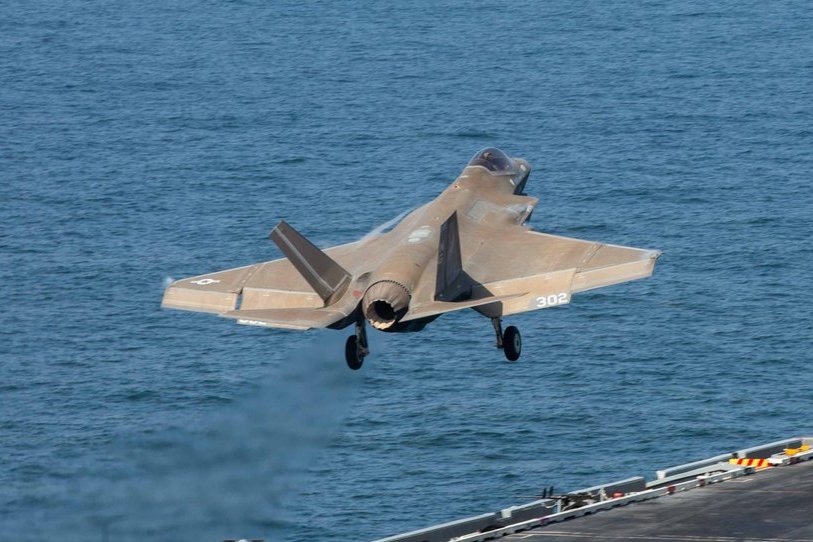
The United States has approved billions of dollars in emergency arms sales to the United Arab Emirates, Kuwait, and Jordan, bypassing Congress in a move aimed at strengthening regional defenses against escalating Iranian retaliation.
The decision comes as Gulf allies face increasing threats following US and Israeli military operations targeting Iran.
Emergency Powers Used to Bypass Congress
According to official notices from the US State Department, the administration invoked emergency authority to waive Congressional review requirements, citing urgent security concerns.
“The Secretary of State has determined that an emergency exists requiring immediate sale,” the notice stated.
This mechanism allows the rapid transfer of critical defense systems without the usual legislative delay.
$8.4 Billion Package for UAE
The largest portion of the deal includes approximately $8.4 billion in arms sales to the UAE, featuring:
- Advanced Medium-Range Air-to-Air Missiles (AMRAAMs)
- F-16 fighter jet munitions
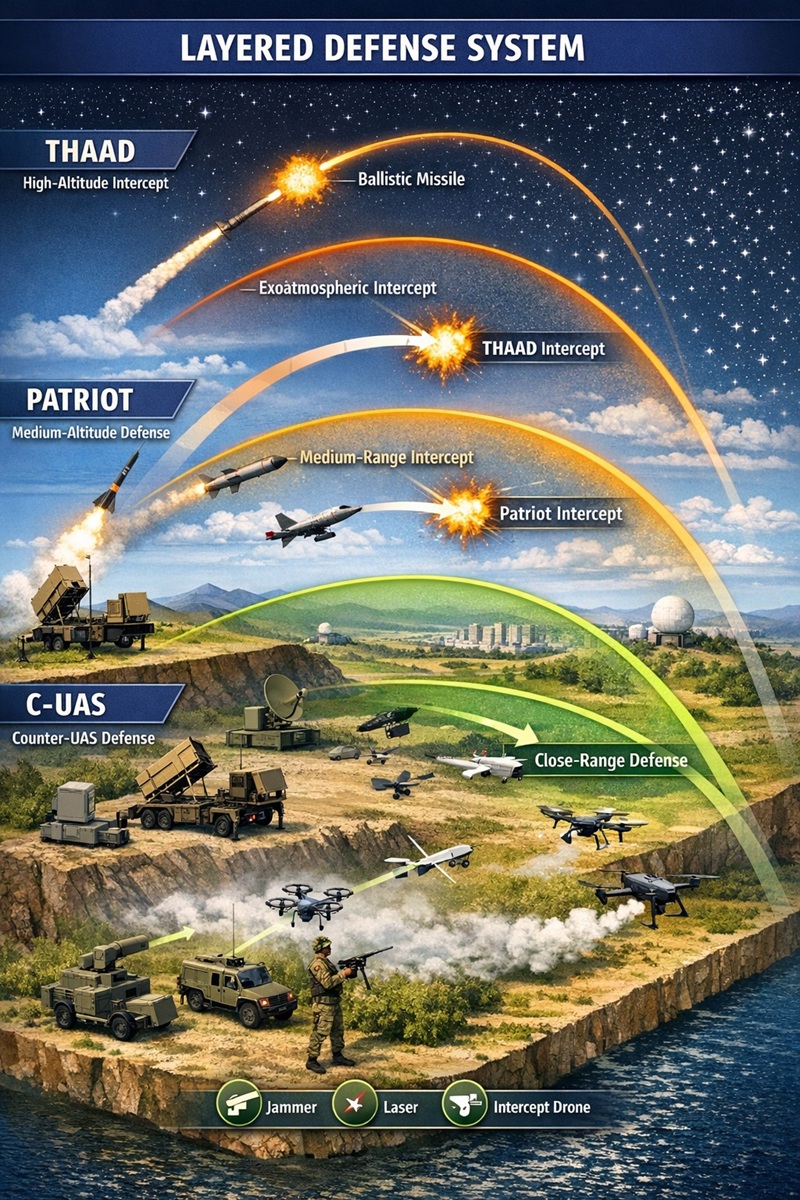
- Counter-drone systems targeting low, slow, small UAVs
- Long-range discrimination radar integrated with THAAD
These systems are designed to enhance the UAE’s ability to counter missile and drone threats—key components of Iran’s current strategy.
$8 Billion Air Defense Boost for Kuwait
Kuwait is set to receive $8 billion worth of Lower Tier Air and Missile Defense Sensor Radars, significantly upgrading its detection and interception capabilities.
The systems are expected to improve early warning and tracking of incoming threats, particularly ballistic missiles and drones.
Support Package for Jordan
Jordan will receive a smaller but critical $70.5 million support package, including:
- Aircraft spare parts
- Maintenance and repair services
- Operational support equipment
This assistance aims to ensure the continued readiness of Jordan’s air fleet amid regional instability.
Response to Iranian Retaliation
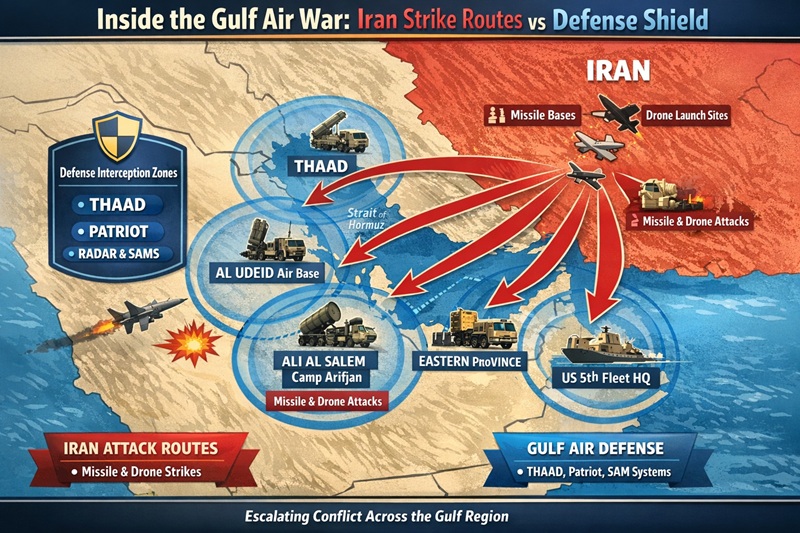
Iran has already targeted US-linked facilities across the Gulf, including locations in:
- UAE
- Kuwait
- Jordan
- Other regional states
The expedited arms sales reflect growing urgency in Washington to reinforce allied defenses as tensions continue to rise.
Part of a Broader Military Support Strategy
This move follows a similar emergency decision earlier in March, when the US approved the immediate sale of 12,000 bombs to Israel without Congressional review.
Together, these actions highlight a broader US strategy to:
- Rapidly arm regional allies
- Strengthen integrated air and missile defense
- Counter Iran’s expanding drone and missile campaign
Strategic Implications
The fast-tracked arms deals signal several key trends:
- Increasing militarization of the Gulf region
- Deepening US security commitments to allies
- Escalating confrontation with Iran
However, questions remain about how quickly these systems can be delivered and deployed effectively.
THAAD vs Shahed-136 — Exact System Comparison
| Feature | Shahed-136 (Iran) | THAAD System (US / Gulf) |
|---|---|---|
| Type | Loitering attack drone (kamikaze UAV) | Anti-ballistic missile defense system |
| Cost per unit | $20,000 – $50,000 | $12M – $15M per interceptor |
| Length | ~3.5 m (est.) | 6.17 m missile |
| Weight | Light UAV | ~900 kg interceptor |
| Speed | ~185 km/h | ~Mach 8 (≈ 2,800 m/s) |
| Range | 1,000 – 2,500 km | ~200 km intercept range |
| Guidance | GPS / INS | Infrared hit-to-kill seeker |
| Warhead | 36–50 kg explosive | Kinetic (no warhead, direct impact) |
| Role | Strike ground targets (bases, oil sites) | Intercept ballistic missiles & threats |
| Strategy | Swarm saturation attacks | High-value precision interception |
Conclusion
As Iran intensifies its regional operations, the United States is accelerating efforts to reinforce its allies with advanced defense systems.
By bypassing Congress, Washington has prioritized speed over procedure—underscoring the urgency of the current security environment in the Middle East.