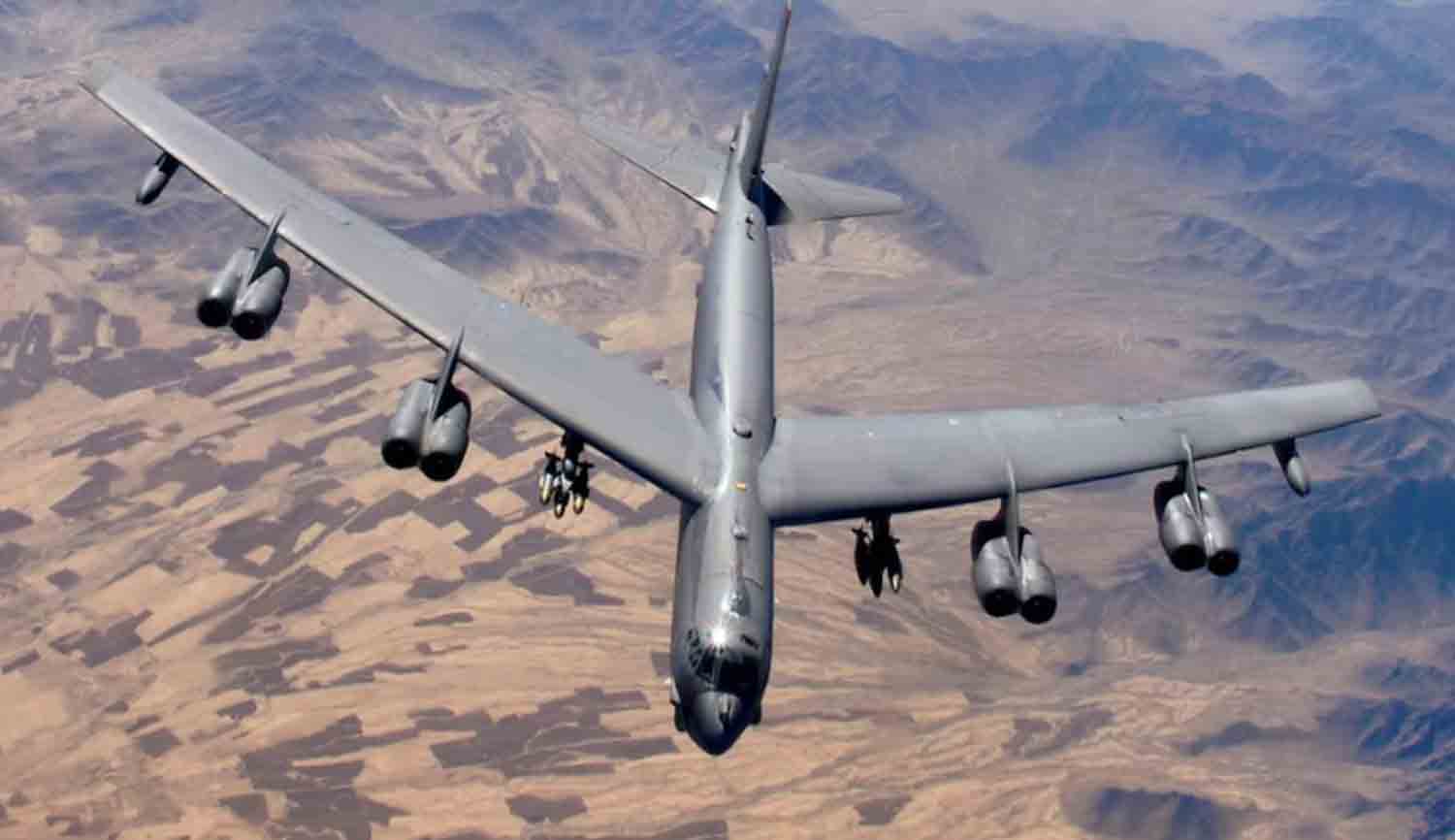
Three B-52H Stratofortress strategic bombers have arrived at RAF Fairford in the United Kingdom, joining previously deployed B-1B Lancer bombers as part of the United States’ expanding air campaign linked to the conflict with Iran.
NEW: At least three U.S. B-52 bombers have landed at RAF Fairford in the U.K., signaling preparations for potential sustained heavy bomber strikes against Iran.
Source: Airport Action pic.twitter.com/LmSKVQvX9I
— Clash Report (@clashreport) March 9, 2026
The deployment brings the number of U.S. heavy bombers stationed across European bases to 11 aircraft, marking the largest American strategic bomber presence in Europe since the early weeks of the 2003 Iraq War.
Defense analysts say the move highlights Washington’s intention to maintain sustained long-range strike capability against Iranian targets.
B-52 Bombers Join B-1 Lancers at RAF Fairford
The three B-52H bombers arrived at RAF Fairford on March 9, joining eight B-1B Lancer bombers deployed to Europe days earlier.
RAF Fairford has historically served as a forward operating base for U.S. strategic bombers and is again playing a central role in ongoing operations linked to the Iran conflict.
The aircraft form part of the broader Operation Epic Fury campaign targeting Iranian military infrastructure.
Heavy bomber deployments allow the U.S. military to conduct long-range strike missions without relying exclusively on bases inside the Middle East.
The Capabilities of the B-52H Stratofortress
The B-52H Stratofortress remains one of the most powerful long-range bombers in the U.S. Air Force inventory.
The aircraft can carry approximately 70,000 pounds of weapons, including precision-guided bombs and long-range cruise missiles.
Key capabilities include:
- AGM-158 JASSM standoff cruise missiles
- JDAM precision-guided bombs
- Conventional air-launched cruise missiles with ranges exceeding 1,500 miles
These weapons allow the aircraft to strike targets deep inside enemy territory without entering contested airspace.
During the current campaign, bombers have been used to target ballistic missile facilities and command infrastructure inside Iran.
Multiple Strategic Bases Activated
RAF Fairford is only one element of the broader U.S. military network supporting operations.
Other key bases involved include:
Al Udeid Air Base – Qatar
One of the largest U.S. military installations in the Middle East, serving as a major command and logistics hub.
Al Dhafra Air Base – United Arab Emirates
Hosts U.S. fighter aircraft and surveillance systems.
Incirlik Air Base – Turkey
A critical NATO facility supporting regional operations.
Diego Garcia – Indian Ocean
A major strategic base that provides an additional long-range strike axis for U.S. bomber operations.
The Pentagon has also reinforced regional defenses by deploying additional Patriot and THAAD missile defense systems to protect allied bases.
A Rapid Air Campaign
According to military reporting, the U.S. and allied air campaign has moved quickly during the first phase of the conflict.
Recent assessments indicate:
- Iranian air defense networks have suffered heavy losses
- Thousands of military targets have been struck
- Iranian missile launch rates have declined sharply from early peaks
These developments suggest that coalition forces have achieved a significant degree of air superiority.
Strategic Implications
The deployment of heavy bombers to Europe reflects a broader shift in how modern air campaigns are conducted.
Long-range bombers operating from distant bases provide several advantages:
- Reduced vulnerability to regional missile attacks
- Greater operational flexibility
- The ability to sustain continuous strike operations
RAF Fairford’s role in the current campaign highlights how NATO bases in Europe can support operations in the Middle East and beyond.
A Larger Military Posture
The bomber deployment comes amid a broader U.S. military buildup linked to the ongoing Iran conflict.
In recent weeks, Washington has positioned additional naval forces, air defense systems, and combat aircraft across the region.
The concentration of U.S. air and naval assets represents one of the most significant force deployments in the region since the early stages of the Iraq War. (Wikipedia)
What Comes Next
With strategic bombers now positioned in Europe and multiple regional bases operating at high readiness levels, analysts expect the air campaign to continue targeting Iranian missile infrastructure and military facilities.
The presence of B-52 and B-1 bombers provides the United States with the ability to maintain long-range strike operations for extended periods, shaping the next phase of the conflict.