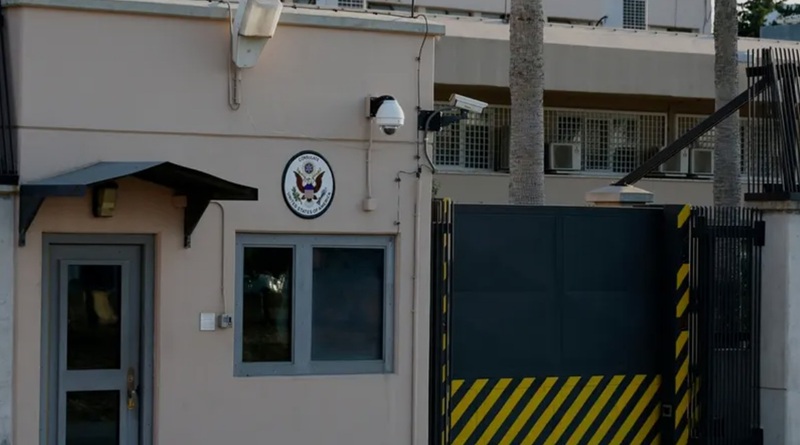
The United States has suspended consulate services in Adana, Turkey, and ordered the departure of non-essential staff and family members, marking a significant expansion of security precautions linked to the escalating conflict in the Middle East.
The move is notable because Turkey is a NATO ally and has not been directly attacked, yet the decision affects a consular district that covers 22 provinces in southern Turkey.
Analysts say the step reflects growing concern that the geographic scope of the conflict may extend beyond its original core areas.
Diplomatic Presence Across the Region Reduced
Since the outbreak of hostilities on February 28, the U.S. State Department has significantly reduced its diplomatic presence across the Middle East.
Several embassies and consulates have suspended operations or shifted to emergency staffing levels.
According to available reports:
- U.S. embassies in Saudi Arabia, Lebanon, and Kuwait have closed indefinitely.
- Non-essential personnel have been ordered to depart from the UAE, Bahrain, Qatar, Oman, Jordan, and Turkey.
In addition, the State Department issued “Depart Now” travel advisories covering 14 countries, including:
- Bahrain
- Egypt
- Iran
- Iraq
- Israel
- Jordan
- Kuwait
- Lebanon
- Oman
- Qatar
- Saudi Arabia
- Syria
- United Arab Emirates
- Yemen
Several of these locations are currently under Level 4 “Do Not Travel” advisories, the highest warning issued by the U.S. government.
Security Incidents Across the Region
The widespread security measures follow a series of incidents affecting diplomatic facilities and military installations.
Reports indicate that:
- The U.S. Fifth Fleet headquarters in Bahrain has been targeted by attacks.
- Port Shuaiba in Kuwait, where U.S. personnel were stationed, has been heavily fortified following casualties reported earlier in the conflict.
- A drone-related incident struck near the U.S. consulate in Dubai on March 3.
As a result, many U.S. diplomatic missions across the region are now operating with minimal staff behind reinforced security measures.
Thousands of Americans Evacuated
The State Department has confirmed that more than 17,500 U.S. citizens have already been repatriated since the crisis began.
One of the largest evacuation days occurred on March 4, when roughly 8,500 people left the region within 24 hours.
Unlike some past crises, the evacuations are being carried out primarily through commercial flights rather than government-organized transport operations.
Some lawmakers have criticized the lack of coordinated evacuation programs for Americans still in the region.
Allies Begin Evacuations
Several allied governments have also taken steps to remove citizens from areas affected by the conflict.
- The United Kingdom issued warnings against travel to Israel and Palestinian territories and organized charter evacuation flights.
- France deployed fighter aircraft to the United Arab Emirates while preparing evacuation operations.
- Germany reported tens of thousands of citizens stranded across the region amid travel disruptions.
Other European countries, including Poland, Spain, and Italy, have issued advisories urging their citizens to leave affected areas.
Why the Adana Closure Matters
The suspension of consular services in Adana carries particular significance because of the city’s proximity to Incirlik Air Base, one of the most important U.S. military facilities outside the United States.
Located roughly 350 kilometers from the Syrian border, Incirlik plays a central role in U.S. military operations across the Middle East.
Security analysts note that missile and drone capabilities operated by several regional armed groups now have ranges capable of reaching airspace near Turkey.
Although Turkey itself has not been attacked, the decision to suspend consulate services suggests that U.S. officials are concerned about the broader expansion of the conflict’s threat envelope.
Expanding Security Perimeter
The cumulative effect of embassy closures, travel warnings, and evacuations indicates that the conflict’s impact is spreading beyond its original battlefield.
In less than two weeks:
- U.S. diplomatic operations have been reduced across more than a dozen countries.
- Tens of thousands of foreign citizens have been urged to leave the region.
- Multiple governments have begun evacuation planning.
The suspension of services at a consulate inside a NATO member state illustrates how the perceived risk zone has widened significantly.
A Region on Alert
While large-scale military operations remain concentrated in specific areas, the diplomatic response suggests that governments are preparing for a broader regional crisis.
For now, embassies across the Middle East continue operating with limited staff while evacuation efforts and travel advisories remain in effect.
The closure of the Adana consulate underscores a growing concern among Western governments that the conflict’s security risks could extend well beyond the immediate battlefield.