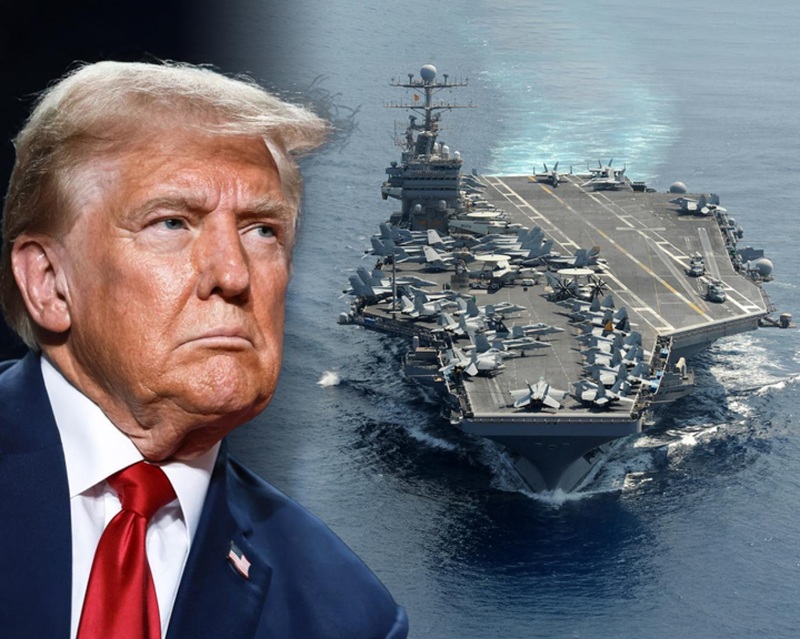
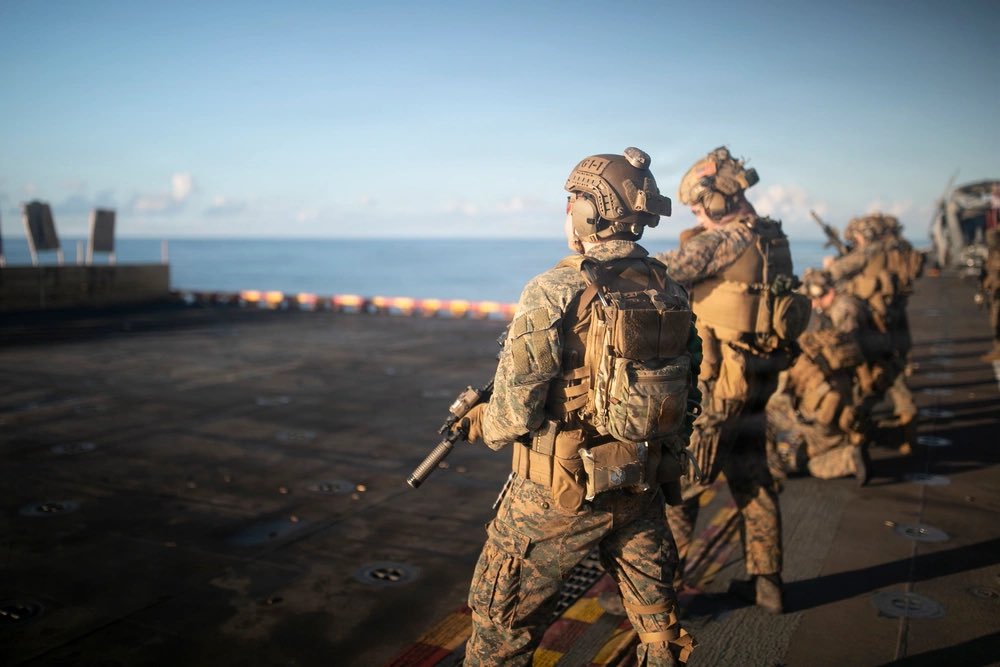
As the United States deploys thousands of Marines, advanced aircraft, and amphibious units toward the Middle East, attention is shifting from current operations to what comes next.
The scale and composition of the deployment suggest preparation not just for deterrence—but for potential escalation into a broader, multi-domain conflict.
The key question now is:
Is the war entering a new phase that could include ground operations, energy warfare, and global economic disruption?
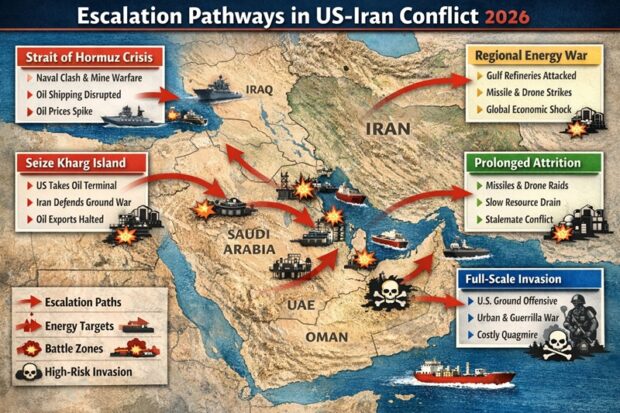
Scenario 1: Battle for the Strait of Hormuz
One of the most likely flashpoints is the Strait of Hormuz, the world’s most critical oil transit chokepoint.
What Could Happen:
- U.S. forces move to secure shipping lanes
- Iran responds with naval mines and swarm tactics
- Regional waters become a contested war zone
Risks:
- Disruption of ~20% of global oil supply
- Rapid spike in energy prices
- Expanded naval conflict involving multiple countries
Securing the strait may require sustained military presence, not just short-term operations.
Scenario 2: Kharg Island Ground Operation
Another potential escalation path involves Iran’s Kharg Island, the backbone of its oil exports.
Possible US Objective:
- Seize or neutralize the island
- Cut off Iran’s energy revenue
- Apply economic pressure on Tehran
Likely Iranian Response:
- Direct military defense of the island
- Missile strikes on U.S. naval forces
- Expansion of attacks across the Gulf
This scenario would mark a shift from indirect conflict to direct territorial confrontation.
Scenario 3: Regional Energy War
If energy infrastructure becomes a primary target, the conflict could spread rapidly across the Gulf.
Potential Targets:
- Oil refineries in Saudi Arabia
- LNG facilities in Qatar
- Gas infrastructure in the UAE
Outcome:
- Widespread energy disruption
- Global economic instability
- Long-term damage to production capacity
This would transform the war into a global economic crisis, not just a regional conflict.
Scenario 4: Prolonged War of Attrition
Even without a decisive ground invasion, the war could evolve into a long-term attritional conflict.
Characteristics:
- Continuous missile and drone exchanges
- Gradual depletion of military resources
- Increasing financial and political costs
Historical Pattern:
As seen in past conflicts:
- Early victories create momentum
- Followed by prolonged stalemate
- Ending in negotiation or strategic compromise
Scenario 5: High-Risk Ground Invasion
A full-scale U.S. ground operation inside Iran remains the most dangerous escalation path.
Challenges:
- Iran’s geography favors defense
- Extensive missile and drone capabilities
- High risk of prolonged insurgency
Military analysts warn that modern warfare conditions could make such an operation:
- Extremely costly
- Difficult to sustain
- Strategically unpredictable
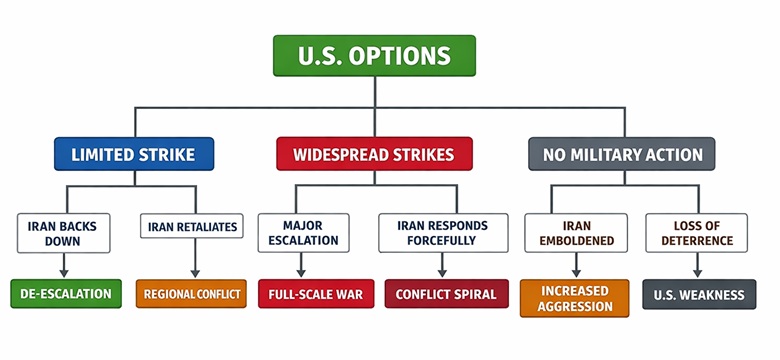
The Strategic Trap: Winning Battles vs Winning Wars
History suggests a recurring pattern:
- Initial operations deliver rapid tactical success
- Followed by operational slowdown
- Leading to strategic uncertainty
The risk is entering a conflict that is:
- Easy to start
- Difficult to control
- Hard to end on favorable terms
US Military Posture: Preparation or Pressure?
The deployment of Marines, amphibious ships, and F-35s indicates:
Possible Objectives:
- Deterrence through visible force
- Preparation for rapid escalation
- Flexibility across air, sea, and land domains
However, such deployments also increase the risk of:
- Miscalculation
- Accidental escalation
- Irreversible conflict expansion
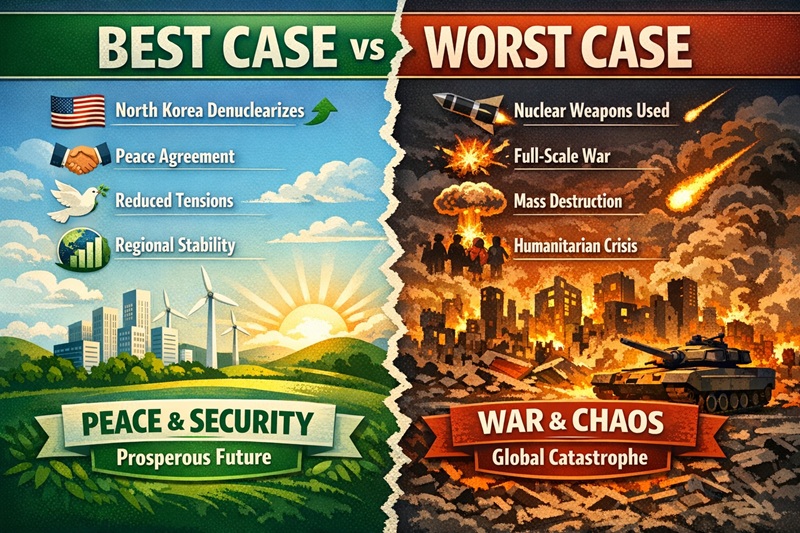
Global Implications: Beyond the Battlefield
The future trajectory of the war will impact:
- Energy markets → oil and gas supply disruptions
- Global trade → maritime chokepoints under threat
- Alliances → pressure on countries to choose sides
The conflict is no longer confined to one region—it is becoming a global strategic issue.
Conclusion
The current deployment of U.S. forces signals that the war is approaching a critical turning point.
Several paths lie ahead:
- Controlled escalation
- Regional energy war
- Prolonged attrition
- Full-scale ground conflict
Each carries significant risks—and none offer a clear or easy outcome.
The real challenge is no longer how to fight the war,
but how to prevent it from expanding beyond control.