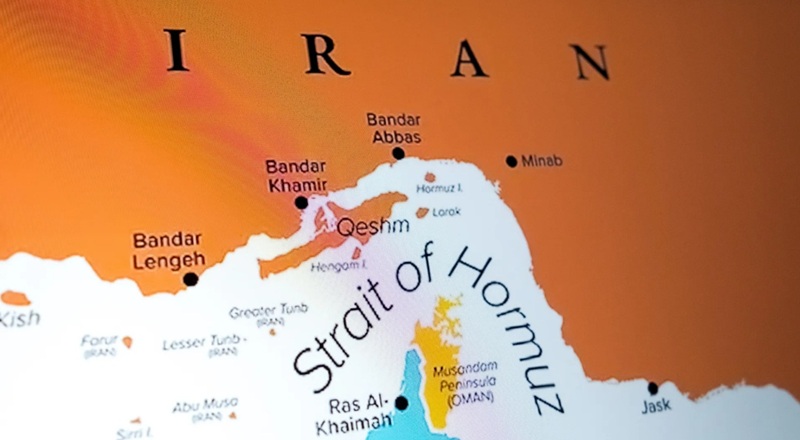
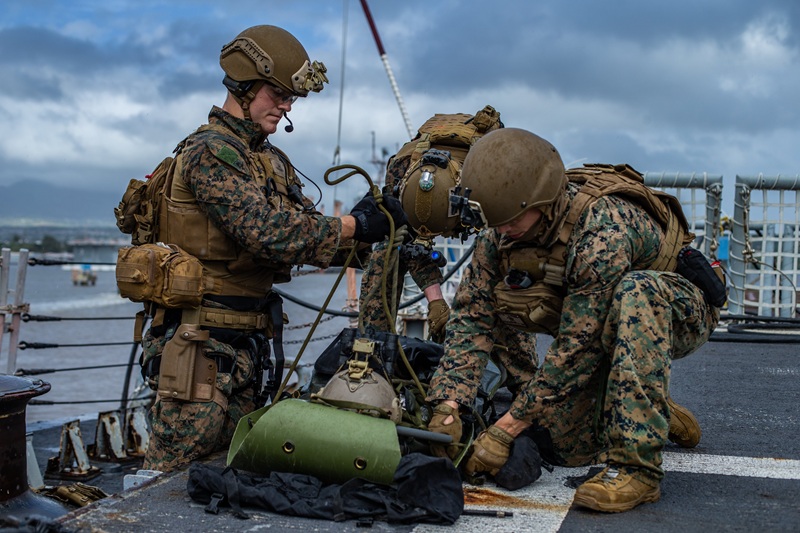
Thousands of U.S. Marines are set to enter the Middle East as Washington accelerates its military buildup around the Strait of Hormuz, signaling a potential shift in war objectives.
Approximately 2,200 Marines from the 31st Marine Expeditionary Unit (MEU), alongside the USS Tripoli and USS New Orleans, are moving into Central Command’s area of responsibility. Their arrival coincides with a critical deadline tied to reopening the strait.
While these forces will take several days to reach the chokepoint, the deployment underscores a growing focus on securing global energy routes rather than pursuing broader strategic goals.
From Regime Change to Hormuz Control
U.S. and Israeli officials increasingly view control of the Strait of Hormuz as the most realistic endgame of the conflict.
Earlier objectives—such as:
- Forcing regime change in Iran
- Completely dismantling Iran’s nuclear program
are now seen as unlikely to succeed in the near term.
Instead, strategy is shifting toward:
- Ensuring freedom of navigation
- Protecting global energy flows
- Limiting Iran’s economic leverage
Massive Airlift: Combat Forces, Not Just Supplies
Since March 12, the United States has conducted an extensive airlift operation:
Key Details:
- 35+ C-17 flights into the region
- Transporting:
- Troops
- Combat equipment
- Multi-branch military assets
Main Staging Points:
- Ovda Air Base (Israel)
- Jordanian air bases
Flights originate from major U.S. rapid-response hubs such as:
- Fort Liberty
- Joint Base Lewis-McChord (JBLM)
This indicates deployment of combat-ready units, not logistical support alone.
Amphibious Forces and Marine Power
Two major amphibious ready groups (ARGs) are now central to U.S. posture:
USS Tripoli ARG + 31st MEU
- ~2,200 Marines
- Expeditionary strike capability
USS Boxer ARG + 11th MEU
- ~2,500 Marines
- Additional amphibious assault capacity
These forces are designed for:
- Rapid coastal operations
- Seizure of strategic positions
- Flexible response across land and sea
Total US Military Presence Expands
The U.S. military footprint in the region has grown significantly:
Current Deployment:
- 50,000+ U.S. troops
- 150+ aircraft
- Submarines and destroyers
- Multiple carrier strike groups
🛳️ Key Assets:
- USS Abraham Lincoln (active operations)
- USS Gerald R. Ford (positioned in Greece)
- Possible third carrier preparing for deployment
82nd Airborne on High Alert
The 82nd Airborne Division, one of the U.S. military’s primary rapid-response forces, has been placed on heightened readiness:
- Training exercises canceled
- Immediate Response Force activated
- Capable of deployment within ~18 hours
This signals preparation for rapid escalation scenarios if required.
Likely Military Objectives
Despite the scale of the buildup, current planning appears focused on limited, targeted operations rather than full-scale invasion.
Potential Objectives:
1. Secure the Strait of Hormuz
- Ensure uninterrupted shipping
- Protect global oil flows
2. Target Strategic Nodes
- Kharg Island (Iran’s main oil export hub)
- Coastal infrastructure
3. Conduct Limited Coastal Operations
- Seizures or strikes on key positions
- Pressure without deep inland engagement
A full ground invasion of Iran is not currently seen as the primary objective.
Diplomacy vs Military Buildup
While diplomatic signals suggest possible de-escalation, military preparations continue at full pace.
Current Situation:
- Talks reportedly ongoing
- Temporary pause on some strikes announced
- But troop deployments and force buildup continue
This reflects a dual-track strategy:
- Diplomacy as a potential off-ramp
- Military readiness as leverage
Strategic Implications
The evolving strategy highlights a critical shift in modern warfare:
From Ambition → Achievable Objectives
- Moving away from regime change
- Focusing on controlling key chokepoints
Global Stakes
- Strait of Hormuz = ~20% of global energy flow
- Any disruption impacts global economy
Controlled Escalation
- Limited operations reduce risk of full-scale war
- But still carry significant escalation potential
Conclusion
The deployment of Marines, carrier groups, and rapid-response forces signals that the United States is preparing for a decisive phase centered on the Strait of Hormuz.
Rather than pursuing broader and more complex goals, the focus is shifting toward securing strategic leverage points that shape the global economy.
The coming days will determine whether this strategy leads to stabilization—or further escalation in one of the world’s most critical regions.