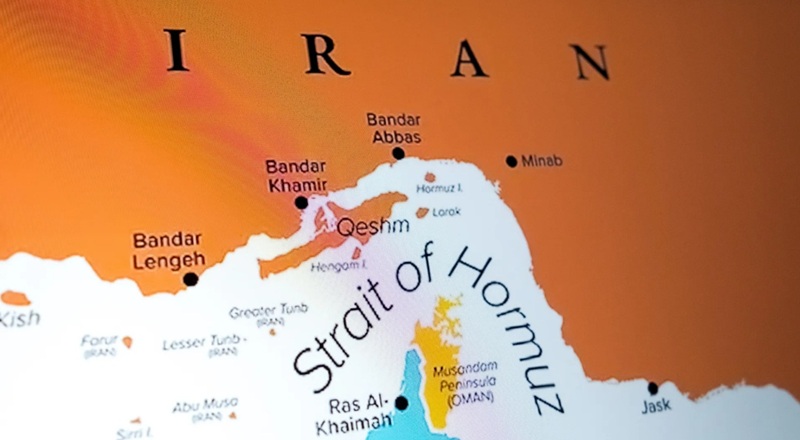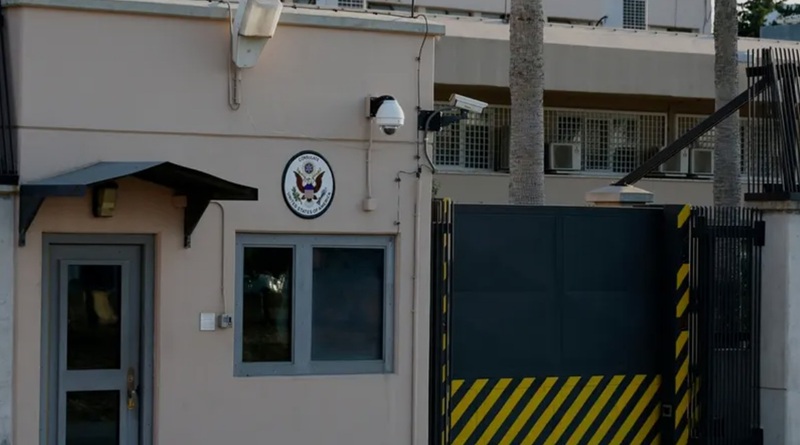
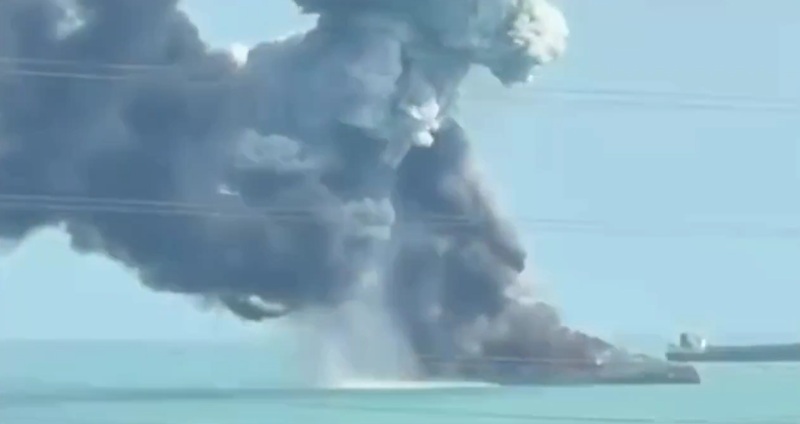
Reports indicate that U.S. naval forces struck three Iranian vessels in the Persian Gulf near Bandar Abbas, escalating tensions in one of the world’s most important energy corridors.
According to several media outlets and social media footage circulating online, at least one vessel caught fire following the strikes. The exact type of ships involved has not been officially confirmed, though some reports suggest they may have been oil tankers or support vessels.
Video footage has now been released of the moment the IRIS Shahid Sayyad Shirazi, a Soleimani-class corvette serving with Iran’s Islamic Revolutionary Guard Corps Navy (IRGCN), was targeted today by a U.S. strike off the coast of Bandar Abbas. Immediately following the strike,… pic.twitter.com/IHoLlCbx1J
— OSINTdefender (@sentdefender) March 5, 2026
The U.S. Central Command (CENTCOM) has not yet released an official statement confirming the targets.
Reports of Additional Iranian Ship Losses
If the reported strikes are confirmed, the number of Iranian naval vessels destroyed or severely damaged since February 28 could exceed 45 ships, according to estimates circulating among defense analysts.
The strikes occurred near Bandar Abbas, Iran’s largest naval base and a strategic location close to the Strait of Hormuz, the narrow maritime passage that handles a major share of global oil shipments.
Because of the location, even isolated naval incidents can have major consequences for international shipping and energy markets.
The Insurance Market Is the Real Gatekeeper
While military operations dominate headlines, analysts say the reinsurance market ultimately determines whether global oil shipping through the Strait of Hormuz resumes.
On March 5, several major maritime insurers reportedly withdrew war-risk coverage for tankers operating in the Gulf region.
Without insurance, most commercial shipping companies cannot legally send vessels through the area.
Insurance risk models evaluate incidents using statistical metrics, including:
- Number of attacks per day
- Geographic concentration of incidents
- Proximity to commercial shipping lanes
These models generally do not distinguish between military vessels and civilian ships when calculating risk.
War-Risk Premiums Surge
Since the conflict began, the cost of war-risk insurance for tankers transiting the region has surged dramatically.
Industry reports indicate that premiums have jumped from approximately 0.05 percent of vessel value to between 1 and 3 percent.
For a tanker valued at $100 million, this could translate into a cost of $750,000 per voyage or more.
Some reports suggest premiums have risen even higher, reflecting the perception that the Strait of Hormuz is currently an active combat zone.
Incident Density Drives Insurance Decisions
Each new strike in the region increases the statistical risk profile used by insurers.
Actuarial models used by maritime insurers analyze incident density, which measures the number of attacks or incidents occurring within a specific maritime corridor over time.
Three additional burning vessels near the entrance of the Strait of Hormuz may significantly raise that metric.
Even if military operations aim to secure shipping lanes, the presence of ongoing combat activity often pushes insurers to maintain restrictions.
Potential Retaliation Risks
Security analysts also warn that attacks on Iranian naval assets could trigger retaliation by Iranian forces operating along the Gulf coastline.
Iran’s Islamic Revolutionary Guard Corps Navy (IRGCN) maintains a network of coastal missile batteries, drone launch sites, and fast attack craft in the region.
Under Iran’s decentralized defense doctrine, local commanders may respond to attacks on Iranian assets without waiting for central approval.
Any retaliation would likely produce additional incidents in the same maritime corridor, further increasing risk calculations used by insurers.
A Self-Reinforcing Cycle
This dynamic can create a feedback loop that prolongs the disruption of commercial shipping.
Each stage of the cycle reinforces the next:
- Naval strike or attack
- Retaliation or counterattack
- Increase in incident density
- Higher insurance premiums
- Delay in reopening commercial routes
As long as incidents continue to occur near the shipping lanes, insurers may hesitate to restore coverage.
Military Success vs Commercial Reality
From a military perspective, the strikes may weaken Iranian naval capabilities and reduce threats to allied forces.
However, analysts say that military success does not automatically translate into the reopening of commercial shipping.
For global energy markets, the decisive factor is whether insurers conclude that the Strait of Hormuz has become safe for commercial transit.
Until that happens, even a single tanker voyage through the corridor could remain economically and legally impossible.
Global Energy Markets Watching Closely
The Strait of Hormuz remains one of the most critical energy chokepoints in the world, carrying roughly one-fifth of global oil exports.
Any prolonged disruption could have major implications for oil prices, shipping markets, and global energy supply chains.
As naval engagements continue near the narrow entrance to the strait, insurers and shipping companies are closely monitoring the situation.
For now, the key question is not who controls the sea militarily—but when commercial shipping can safely return to one of the world’s most vital trade routes.