The ongoing conflict in the Middle East is revealing a critical shift in modern warfare: the prioritization of sensors over shooters.
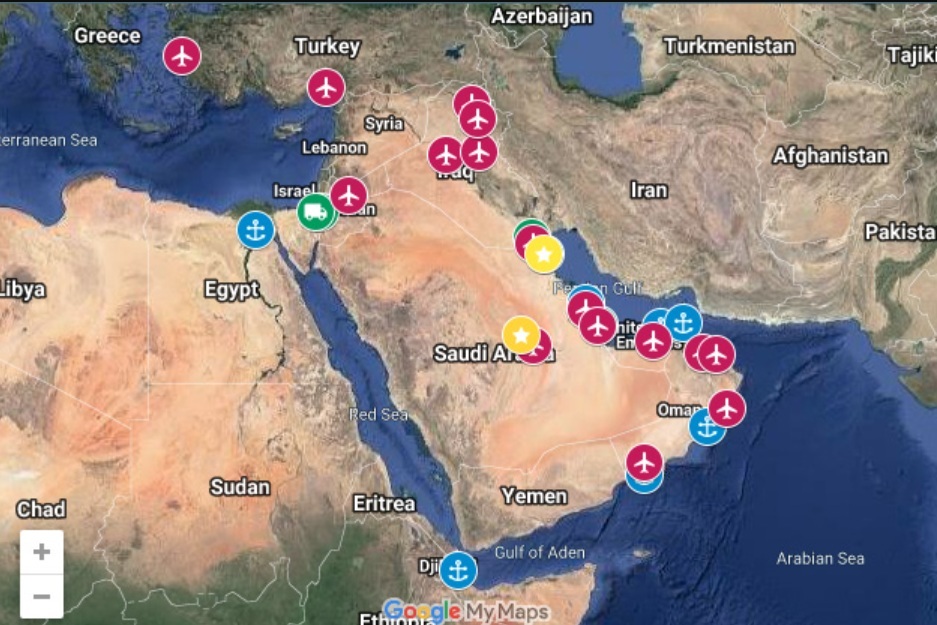
Independent analysis of commercial satellite imagery and verified video evidence indicates that U.S. and allied radar and missile-defense installations have been struck multiple times since the opening phase of the war.
Rather than focusing on aircraft or runways, the pattern of strikes suggests a deliberate campaign to degrade early-warning systems—the foundation of any modern air-defense network.
Why Radar Systems Are the Primary Target
Air- and missile-defense systems depend on a layered structure:
- Detection (radar and sensors)
- Tracking (data processing and targeting)
- Interception (missiles and defense systems)
By targeting radar installations, attackers aim to disrupt the first and most critical layer: detection.
Without reliable sensor data:
- Reaction times shrink
- Interceptors become less effective
- Defense networks operate with incomplete information
Evidence from Satellite and Open-Source Analysis
Commercial satellite imagery from multiple providers has confirmed:
- More than two dozen strike locations across several bases
- Repeated targeting of radar domes, communication arrays, and sensor infrastructure
- Damage patterns consistent with precision drone and missile strikes
Open-source video footage has further validated impacts at key installations, reinforcing the credibility of the findings.
The use of independent verification is significant, as it reduces reliance on official statements and provides observable evidence for analysts.
Satellite imagery and videos analyzed by ABC News indicate that Iran and its proxies have struck at least 10 radar sites across the Middle East since the war began over two weeks ago.
Some of the targeted systems—including high-value missile defense radars like AN/TPY-2 and… pic.twitter.com/dHP0wlnQjW
— Clash Report (@clashreport) March 18, 2026
Geographic Spread: A Regional Network Under Pressure
The strikes were not isolated to a single country.
Confirmed or suspected impacts span multiple locations, including:
- Saudi Arabia
- United Arab Emirates
- Jordan
- Kuwait
- Qatar
- Bahrain
This distribution indicates that the campaign is targeting the entire regional detection network, rather than individual national systems.
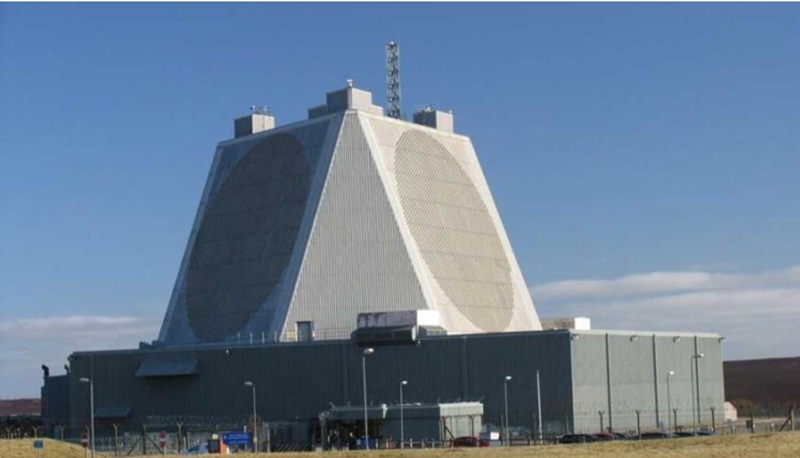
High-Value Targets: AN/TPY-2 and AN/FPS-132
Among the systems reportedly affected are some of the most advanced radar platforms in operation:
- AN/TPY-2: Key component of missile defense systems
- AN/FPS-132: Large phased-array radar for long-range detection
These systems are:
- Extremely expensive (hundreds of millions per unit)
- Technologically complex
- Critical for early warning and tracking
Even partial damage can significantly reduce their effectiveness.
The Vulnerability of Fixed Sensors
Radar installations face a structural disadvantage:
- They must remain stationary to function
- Their locations are often known and observable
- They cannot be easily relocated during conflict
This makes them ideal targets for:
- Long-range drones
- Precision-guided munitions
- Pre-planned strike operations
The Role of Low-Cost Drones
A notable aspect of the campaign is the use of relatively inexpensive systems.
- Long-range drones, including variants of the Shahed family, are assessed to have been used
- These platforms can strike fixed targets repeatedly
- They impose minimal cost compared to the value of the systems they target
This creates an asymmetric dynamic:
Low-cost weapons vs high-value infrastructure
Operational Impact: Degrading, Not Destroying
The strategy does not require total destruction of radar systems.
Instead, even limited damage can:
- Reduce tracking accuracy
- Interrupt power or communications
- Force maintenance downtime
This results in partial blindness rather than total collapse—often enough to achieve operational advantage.
The “Cat-and-Mouse” Dynamic
Experts describe the situation as an evolving cycle:
- Attackers target sensors to create gaps
- Defenders attempt to restore coverage through redundancy
- Additional assets (such as airborne radar) are deployed to compensate
This dynamic reflects a broader trend in modern warfare, where:
Information and detection are as critical as firepower.
Strategic Consequences
The degradation of radar networks has several implications:
1. Reduced Reaction Time
Shorter warning windows increase the risk of successful missile or drone strikes.
2. Increased Operational Pressure
Command centers must operate with less reliable data.
3. Greater Reliance on Backup Systems
Airborne and mobile sensors become more important but also more strained.
4. Regional Impact
Because the network is interconnected, damage in one area affects the entire system.
Limits of Visibility and Ongoing Uncertainty
Despite the available evidence, significant uncertainty remains:
- Some satellite imagery is delayed or low resolution
- Governments have limited public disclosures
- The full extent of damage is unclear
This uncertainty itself becomes a factor, as both sides operate without complete information.
Strategic Insight: The Sensor Layer Is the Weak Link
The campaign highlights a fundamental reality:
Modern defense systems are only as strong as their sensors.
- Interceptors depend on accurate detection
- Networks rely on continuous data flow
- Disruption at the sensor level affects the entire system
Conclusion
The pattern of strikes across the Middle East indicates a deliberate shift toward sensor warfare, where the goal is not immediate destruction but cumulative degradation of defensive capability.
By targeting radar systems—the “eyes” of the network—attackers can create operational advantages that extend far beyond individual strikes.
As the conflict continues, the ability to maintain or restore situational awareness may prove as decisive as the ability to launch or intercept missiles.