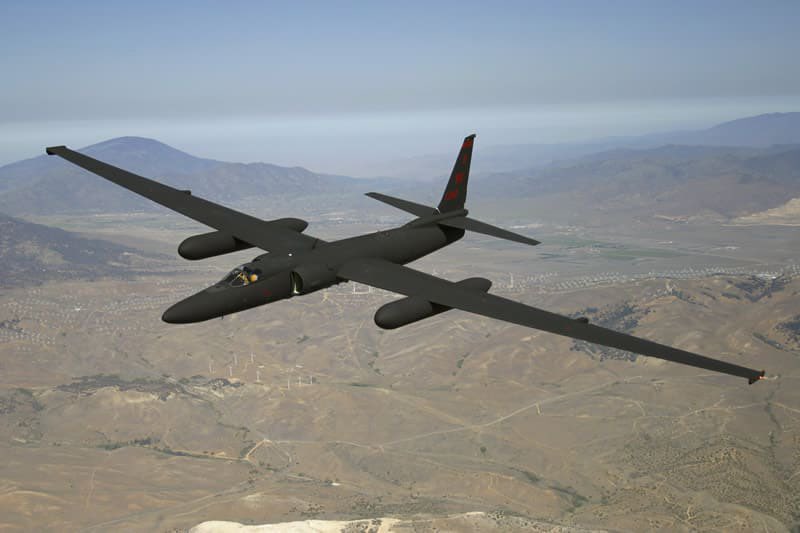
Open-source aviation monitoring reports indicate that a United States Air Force U-2 Dragon Lady operating under the call sign DRAGON 51 has departed RAF Fairford and is repositioning toward the Middle East. As of now, no official confirmation has been issued by the U.S. Air Force, but the movement is consistent with established deployment patterns for high-altitude intelligence assets.
Strategic Context of the Movement
RAF Fairford has long functioned as a forward operating hub for specialized U.S. Air Force aircraft transiting between Europe and operational theaters further east. The base regularly supports bomber task forces and high-end reconnaissance deployments, offering secure infrastructure and favorable access routes.
The reported repositioning of a U-2 from Fairford toward the Middle East suggests a routine reallocation of intelligence, surveillance, and reconnaissance (ISR) resources in response to evolving regional requirements rather than an exceptional or unprecedented move.
Why the U-2 Dragon Lady Still Matters
Despite its Cold War origins, the U-2 Dragon Lady remains one of the most capable high-altitude ISR platforms in active service. Operating above 70,000 feet, the aircraft provides a near-space vantage point that allows wide-area surveillance with high resolution and persistence.
Modern U-2S variants are equipped with modular sensor suites that can include advanced electro-optical and infrared imagery systems, synthetic aperture radar for all-weather ground mapping, and sophisticated signals-intelligence payloads. These systems allow the aircraft to collect imagery intelligence (IMINT), electronic intelligence (ELINT), and communications intelligence (COMINT) during a single sortie, with data often relayed to commanders in near real time.

Likely Mission Focus in the Middle East
If DRAGON 51 is indeed repositioning toward the Middle East, its tasking is likely to center on persistent theater-level intelligence collection. Typical U-2 missions in the region have included monitoring military movements, tracking air and missile activity, observing maritime traffic, and mapping electronic emissions from radar and communications systems.
Such missions are particularly valuable during periods of heightened uncertainty, when commanders require continuous situational awareness beyond what satellites or unmanned systems alone can provide.
What the Deployment Does — and Does Not — Signal
Movements of U-2 aircraft are best understood as indicators of intelligence posture rather than direct signals of imminent military action. The U.S. Air Force routinely rotates ISR assets to areas where information demand increases, and similar deployments have occurred during past regional crises without leading to kinetic escalation.
That said, the presence of a U-2 does underline the strategic importance of the region at a given moment, ensuring that U.S. and allied decision-makers have access to detailed, timely intelligence.
Outlook
Unless formally acknowledged by U.S. military authorities, details of DRAGON 51’s mission and destination are likely to remain limited. However, additional aircraft movements, public affairs releases, or satellite imagery may provide further clarity in the coming days.
For now, the reported departure from RAF Fairford appears to represent a quiet but meaningful adjustment in U.S. ISR force positioning—one aimed at reinforcing intelligence coverage rather than making a public strategic statement.