
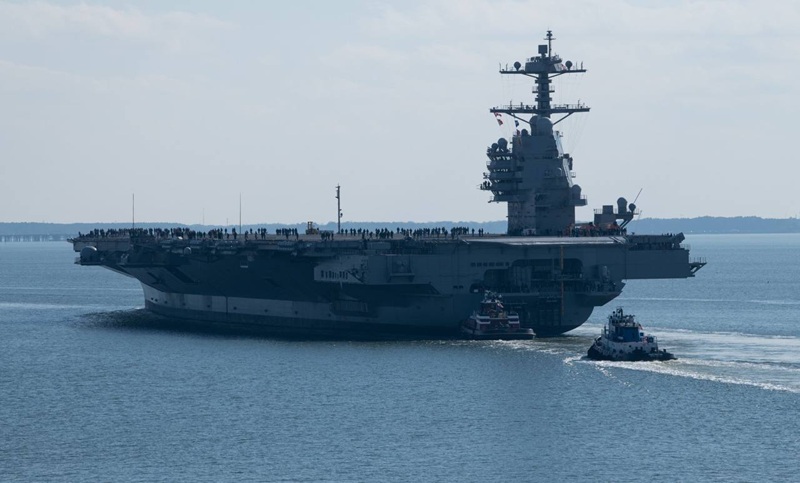
The United States Navy’s newest aircraft carrier, USS John F. Kennedy (CVN-79), has departed the Newport News Shipbuilding yard in Virginia and entered open waters for its first sea trials, marking a critical milestone before eventual commissioning into operational service.
CVN-79 is the second carrier of the Gerald R. Ford–class, a new generation of nuclear-powered aircraft carriers designed to replace the ageing Nimitz-class aircraft carriers, which have formed the backbone of U.S. naval aviation since the mid-1970s.
What Sea Trials Mean
The initial sea trials are designed to test the carrier’s propulsion, navigation, power generation, and basic shiphandling at sea. Engineers and naval crews will assess reactor performance, hull integrity, steering systems, and onboard sensors before the ship returns to port for further outfitting and refinements.
Unlike flight trials, these early tests focus on the ship as a maritime platform rather than on aircraft operations, which will follow in later phases.
A Key Platform in U.S. Naval Modernization
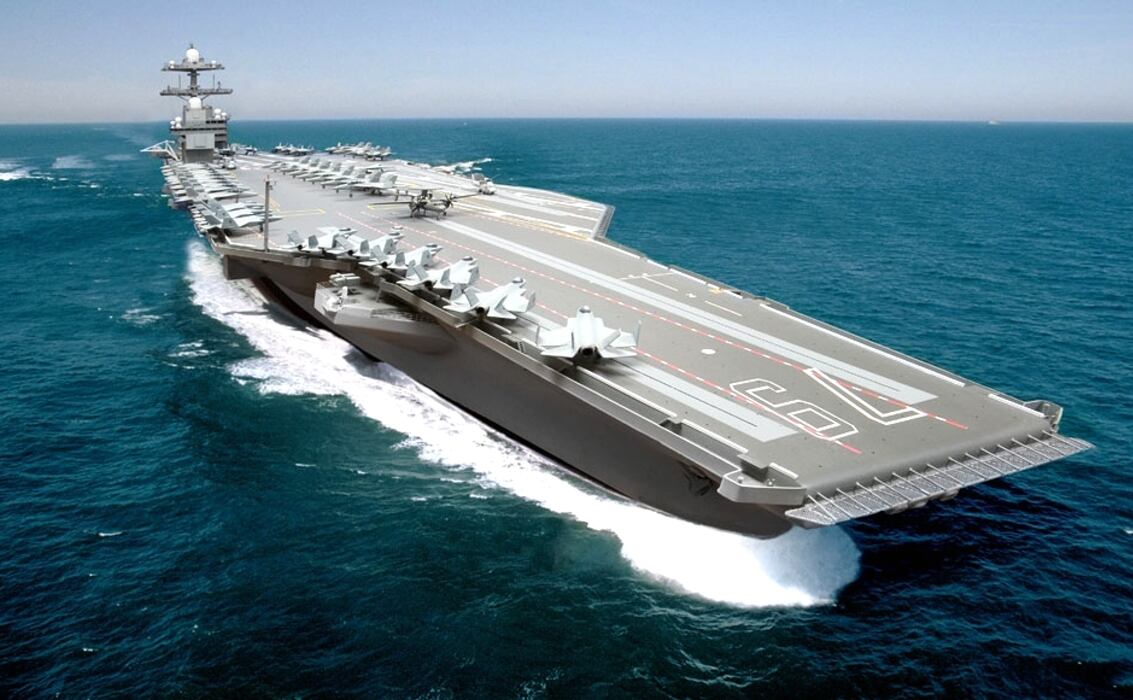
The USS John F. Kennedy represents a major evolution in carrier design. Measuring 337 meters in length with a flight deck width of 78 meters and a full displacement of approximately 100,000 tons, the carrier is among the largest warships ever constructed.
Designed for a 50-year service life, CVN-79 can operate more than 80 aircraft and helicopters, including fifth-generation fighters, airborne early-warning aircraft, electronic warfare platforms, and support helicopters.
As part of the Ford class, the ship incorporates advanced technologies intended to increase sortie rates, reduce crew workload, and lower long-term operating costs compared to Nimitz-class carriers.
Lessons from the First Ford-Class Carrier
The lead ship of the class, USS Gerald R. Ford (CVN-78), faced years of technical challenges related to new systems such as the electromagnetic aircraft launch system (EMALS) and advanced arresting gear.
According to U.S. Navy officials, many of those early issues have informed design improvements and production refinements on CVN-79, allowing the John F. Kennedy to progress more smoothly toward operational readiness.
Strategic Importance
Aircraft carriers remain central to U.S. power projection, crisis response, and deterrence strategy. With rising competition from near-peer rivals and growing emphasis on maritime operations in the Indo-Pacific and Middle East, the Ford-class carriers are intended to provide sustained airpower, survivability, and flexibility well into the second half of the 21st century.
The departure of USS John F. Kennedy for sea trials signals not just progress on a single ship, but momentum in the U.S. Navy’s broader effort to modernize its carrier fleet amid an evolving global security environment.