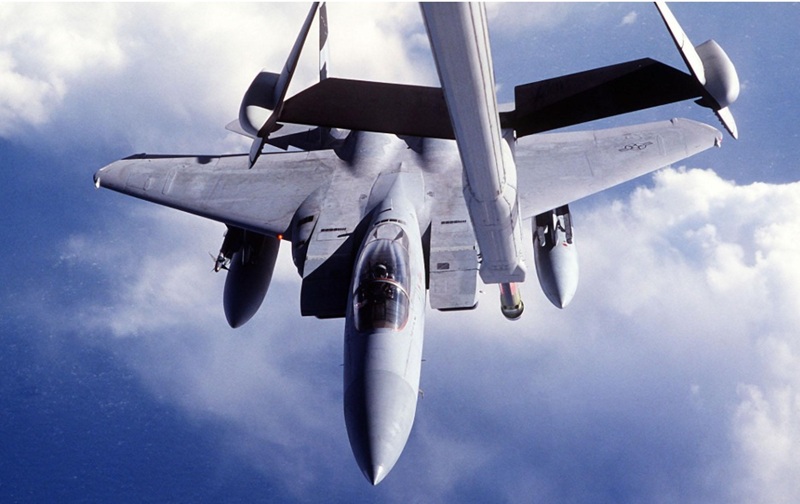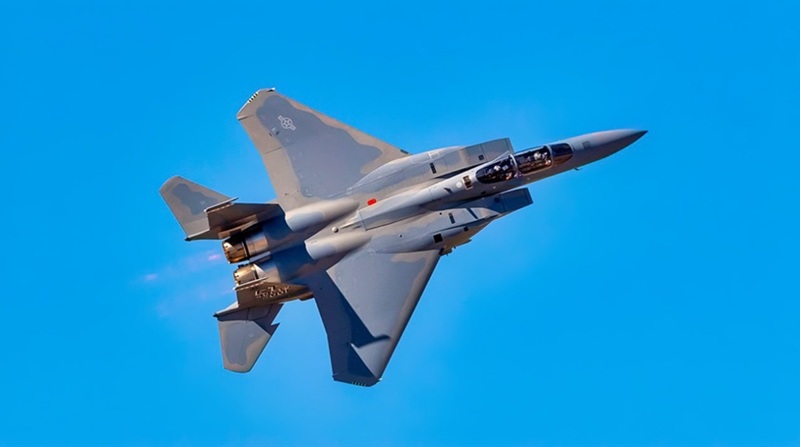
New questions are emerging following a CENTCOM report acknowledging the loss of three US McDonnell Douglas F-15E Strike Eagle fighter jets in a high-threat combat environment.
While US Central Command attributed the losses to friendly fire from Kuwaiti air defense systems, analysts and observers are examining whether that explanation fully accounts for the circumstances surrounding the downings.
At the same time, Iran released footage claiming the shootdown of another Israeli Hermes 900 surveillance drone, adding further complexity to the evolving air war.
CENTCOM’s Friendly Fire Explanation Under Scrutiny
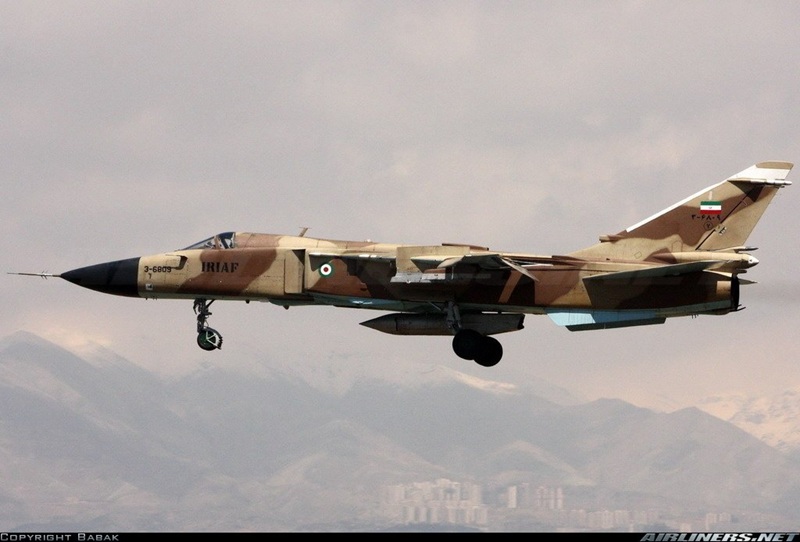
CENTCOM acknowledged that Iranian fighter aircraft were active in the battlespace during the engagement. However, it maintained that the three F-15E Strike Eagles were lost due to accidental engagement by allied air defense systems.
In modern combat operations, such an explanation raises technical questions.
Why?
Modern Identification Friend or Foe (IFF) systems — including encrypted Mode 4 and Mode 5 transponders — are specifically designed to reduce fratricide risks, even in contested electromagnetic environments.
Ground-based air defense systems such as Patriot PAC-2 batteries typically:
- Cross-check IFF responses
- Confirm flight plans
- Validate radar tracks
- Coordinate with airborne controllers
The simultaneous loss of three fourth-generation multirole fighters to friendly surface-to-air missiles would be an exceptionally rare event in modern NATO-standard operations.
This has led some defense analysts to consider an alternative scenario: that hostile engagement — potentially by Iranian aircraft or advanced surface-to-air systems — may have played a role.
Another F-15 of the US air force was shot down, in what they claimed as a friendly-fire incident.
This is the second F-15 shot down today.
The claims of friendly-fire is not really convincing, since the only aircraft in the air are US and Israeli, why would they shoot down… pic.twitter.com/Ebh1Its0pZ
— Zhao DaShuai 东北进修🇨🇳 (@zhao_dashuai) March 2, 2026
Combat Environment and Plausible Enemy Action
When multiple aircraft are lost in active combat, history shows that official narratives are often viewed cautiously until further details emerge.
The presence of Iranian fighters in the area complicates the friendly-fire explanation. If enemy aircraft were actively contesting airspace, the probability of air-to-air or coordinated surface engagement increases.
If Iranian systems successfully penetrated coalition air defenses, even partially, the strategic implications would be significant.
Iran Claims Additional Drone Shootdown
Irves Watch analysis
Due to restrictions of communication in Iran, the Israeli Air force is using Hermes 900 drone to provide comms link to smaller drones to make strikes in Iran.
The shot down Hermes drone had a serial number 997. Same drone was seen here at channel 24 program. pic.twitter.com/ZUyyunRbdI— Irves (@Irves_Watch) June 18, 2025
Iran released video footage showing the alleged destruction of an Israeli Hermes 900 drone conducting reconnaissance over Iranian territory.
The Hermes 900 is a high-endurance surveillance UAV widely used for intelligence and targeting missions. Its loss would suggest:
- Increased Iranian air defense effectiveness
- Improved electronic warfare or radar tracking capability
- Growing difficulty for coalition ISR (intelligence, surveillance, reconnaissance) operations
Repeated drone losses can degrade real-time targeting capacity, forcing aircraft to operate at greater stand-off distances.
Coalition Operations Appear to Shift
Observers have noted a visible decline in publicly available footage of US-Israeli strikes following the reported F-15 losses.
Potential explanations include:
- Operational pause for reassessment
- Tactical repositioning
- Increased air defense caution
- Greater reliance on stand-off weapons
Meanwhile, Iranian missile launches reportedly continued, including daylight strikes on Israeli targets and additional attacks on US regional bases. Reports also indicated damage to luxury hotels in Bahrain and the UAE.
Strategic Implications
If the F-15 losses were indeed caused by friendly fire, it would expose coordination challenges in a congested, high-intensity air defense environment.
However, if hostile action was responsible, it would signal:
- Iranian capability to contest coalition air superiority
- Potential vulnerabilities in advanced Western aircraft operations
- A shift toward a more balanced air defense environment
Either scenario suggests the air domain is becoming more contested and unpredictable.
Information Gaps Remain
At present:
- No independent forensic details have been released
- Radar data remains classified
- Engagement timelines are unclear
- Full battle damage assessments are unavailable
Until further evidence emerges, both friendly-fire and hostile-engagement explanations remain part of the discussion.
What is certain is that the loss of three F-15Es — followed by another drone shootdown — marks a serious development in the air campaign and may influence operational tempo in the coming days.