For more than a century, great powers have believed that air campaigns could reshape politics from the sky. From the firebombing of cities in World War II to precision drone strikes in the 21st century, the promise has been the same: destroy enough military and political infrastructure, and the regime will fall.
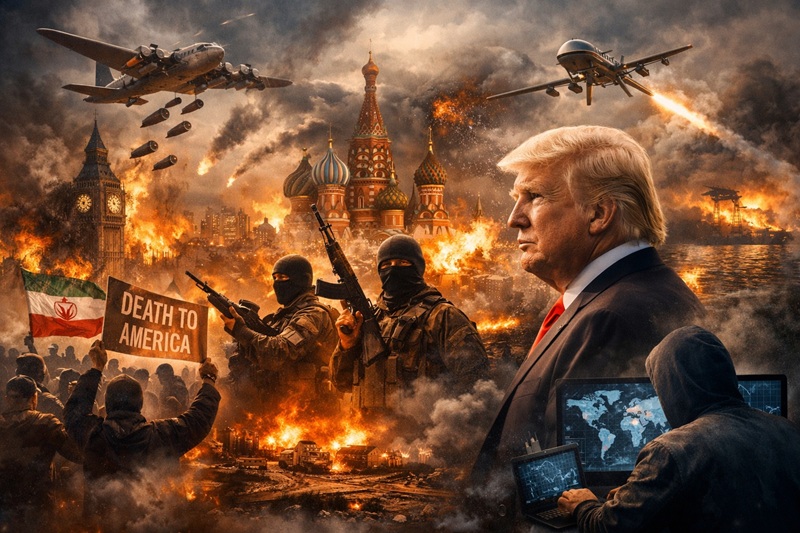
Now, as former U.S. President Donald Trump faces mounting pressure over Iran policy, history offers a sobering warning. Air campaigns may devastate targets — but they rarely produce friendly regime change. More often, they harden resistance, fuse national identity with ruling elites, and trigger delayed retaliation.
Below are three historical lessons that policymakers ignore at their peril.
Lesson 1: Air Power Rarely Produces Friendly Regime Change
Since World War I, dozens of bombing campaigns have sought to coerce or collapse governments from the air. Strategic bombing theorists once believed civilians would turn against their leaders under aerial assault. Reality proved far more complicated.
- During the Blitz, Nazi Germany bombed London relentlessly. Britain did not surrender; resistance intensified.
- In 1999, NATO bombed Serbia under the leadership of Slobodan Milošević. While Belgrade ultimately made concessions over Kosovo, the campaign did not produce a pro-NATO leadership installed by air power alone.
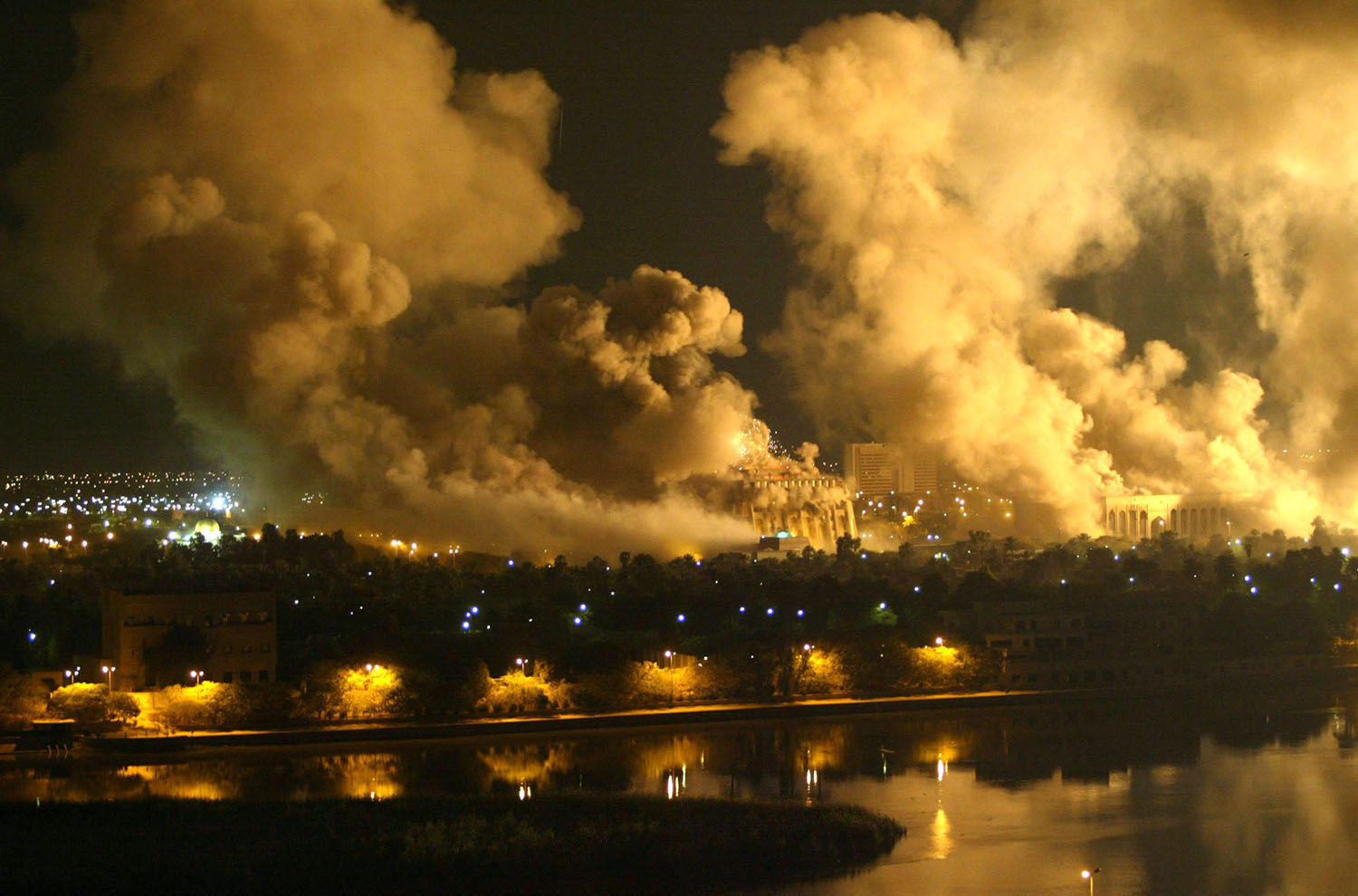
- The 2003 U.S. “Shock and Awe” campaign toppled Saddam Hussein’s regime — but regime change required a full-scale ground invasion. Air strikes alone were insufficient.
- Since 2022, Vladimir Putin has repeatedly struck Kyiv and other Ukrainian cities. Rather than collapsing, Ukrainian national cohesion strengthened under Volodymyr Zelenskyy.
The pattern is consistent: air power can destroy infrastructure and degrade military capability. It does not reliably reshape political loyalty or produce a cooperative government aligned with the attacker.
Lesson 2: External Attack Fuses Regime and Nation

Bombing transforms domestic politics. External attack often creates a “rally-around-the-flag” effect — even among citizens who oppose their leaders.
When a country faces foreign assault:
- Political opposition tends to close ranks.
- Public criticism shifts toward the external enemy.
- National identity fuses with regime survival.
Consider the hypothetical: if Iran assassinated Donald Trump, would American Democrats praise Tehran? Or would domestic divisions narrow in the face of foreign aggression?
Similarly, despite internal dissent in Iran, foreign military strikes would likely strengthen nationalist sentiment rather than empower pro-Western factions. History shows that populations rarely align with external bombers to remove their own governments.
In Ukraine, Russian strikes did not fracture society — they reinforced resistance. In Serbia during NATO’s 1999 campaign, domestic support for the regime initially increased despite widespread dissatisfaction beforehand.
External attack often legitimizes the regime it seeks to weaken.
Lesson 3: Retaliation Is Often Delayed and Asymmetric

The absence of immediate retaliation does not mean success.
States — especially those with regional networks or asymmetric capabilities — often respond on their own timeline. Retaliation may come:
- Months or years later
- Through proxy groups
- Via cyber operations
- Through attacks on economic infrastructure
- By escalating conflicts in neighboring regions
After U.S. operations in the Middle East, responses frequently emerged through non-state actors rather than direct state confrontation. Modern warfare increasingly blurs the lines between state and proxy, overt and covert, kinetic and cyber.
In the case of Iran, retaliation would likely be multidimensional — from regional proxy escalation to cyber campaigns targeting financial or energy systems. The immediate battlefield calm can mask long-term instability.
Strategic patience, not immediate counterstrike, often defines asymmetric retaliation.
Why This Matters Now
If the United States were to pursue regime change in Iran primarily through air power, historical precedent suggests three risks:
- Political failure — Destruction without political transformation.
- National consolidation — Strengthening the regime internally.
- Long-term blowback — Delayed retaliation beyond conventional battlefields.
Air campaigns may satisfy short-term political demands for action. But history — from World War II to Ukraine — demonstrates that bombing alone rarely engineers durable political outcomes.
As Trump confronts escalating tensions with Tehran, the weight of history suggests that regime change from the sky remains one of the most persistent — and least reliable — illusions of modern warfare.