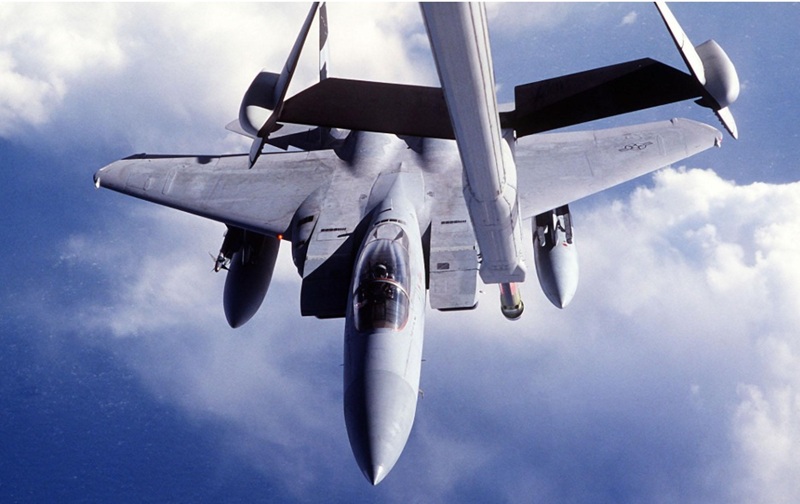
A United States McDonnell Douglas F-15 Eagle crashed in Kuwait during heightened military tensions across the Middle East following the February 28 escalation involving the United States, Israel, and Iran.
The aircraft went down during morning hours. The pilot successfully ejected moments before impact and survived the crash.
While U.S. officials have not yet released a formal statement on the cause, video footage circulating online has prompted speculation about what may have brought the fighter jet down.
What the Footage Shows
Another video shows the crash of the U.S. F-15 jet in Kuwait. pic.twitter.com/JpRsECmwJa
— Clash Report (@clashreport) March 2, 2026
Videos show the aircraft:
- Losing stability mid-air
- Sustaining visible damage near the tail section
- Spinning multiple times before impact
- Bursting into flames upon ground contact
Witnesses reported hearing a loud explosion, followed by heavy black smoke rising from the crash site.
The pilot deployed the ejection seat seconds before the aircraft struck the ground and was later seen conscious on the ground before being transported away by local civilians.
Focus on the Tail Section Damage
The most notable detail from the footage is apparent impact damage near the aircraft’s rear fuselage.
Damage to the tail section of an F-15 is critical because it houses:
- Vertical stabilizers
- Flight control surfaces
- Hydraulic systems
- Engine exhaust components
A missile strike in this area could immediately destabilize the aircraft, causing loss of control and uncontrolled spin — consistent with the footage observed.
Possible Cause: Defensive Missile Misfire?
One theory circulating online suggests a potential friendly-fire incident.
According to unverified reports:
- An Iranian missile may have targeted the U.S. embassy in Kuwait.
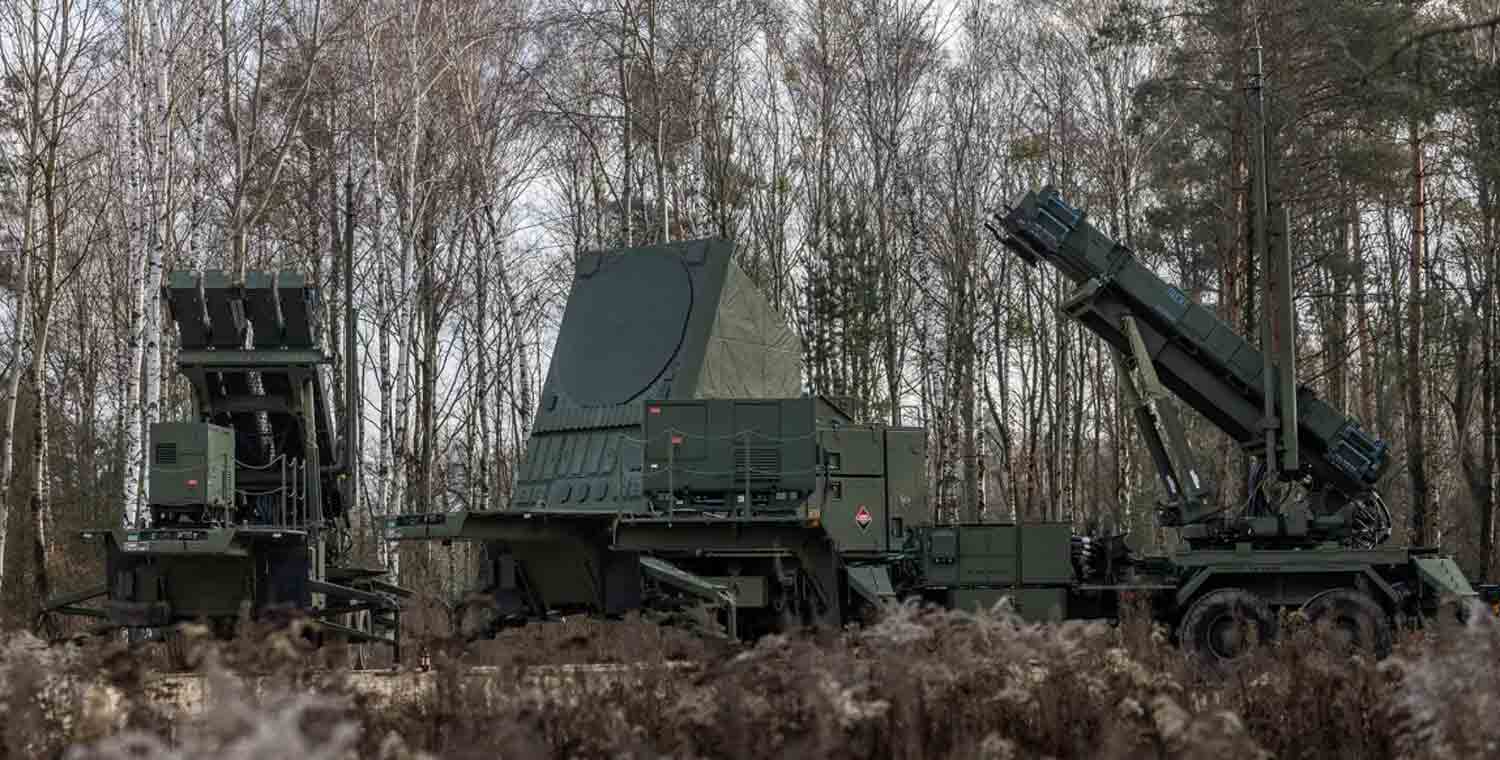
- Air defense systems were activated to intercept the incoming threat.
- A defensive interceptor missile may have unintentionally struck the nearby F-15.
- The Iranian missile reportedly continued toward its intended target.
It is important to emphasize that this scenario remains speculative. No official confirmation has been issued by U.S. or Kuwaiti authorities.
However, friendly-fire incidents during high-intensity air defense engagements are historically documented risks, particularly in complex, fast-moving airspace environments.
The Air Defense Challenge
Modern air defense systems are designed to:
- Detect and intercept incoming ballistic or cruise missiles
- Engage threats at high speed
- Operate under compressed decision timelines
In tense conflict conditions, especially when multiple aerial objects are present, distinguishing between hostile missiles and friendly aircraft can become extremely challenging.
Kuwait hosts critical U.S. military infrastructure and serves as a key logistics hub for regional operations. Any missile attack in its airspace would trigger immediate defensive responses.
Alternative Possibilities
While the missile-strike theory is receiving attention, other possibilities remain:
- Mechanical failure under combat conditions
- Structural damage unrelated to air defense systems
- Direct strike by hostile missile or drone
- Engine failure caused by debris or shockwave
A formal investigation will likely examine flight data recorders, radar logs, and missile tracking information before conclusions are reached.
Strategic Context
The crash occurred amid escalating hostilities following joint U.S.-Israeli operations against Iranian targets.
With air defense systems on high alert across Gulf states, airspace congestion and rapid missile interceptions increase the probability of accidental engagements.
If confirmed as friendly fire, the incident would highlight:
- The complexity of integrated air defense coordination
- The risks of high-tempo missile exchanges
- The strain placed on regional airspace management
What Happens Next?
Key questions remain:
- Was the F-15 struck by an interceptor missile?
- Was it targeted directly by hostile fire?
- Did a mechanical malfunction contribute?
- What do radar and defense logs show?
Until official findings are released, the exact cause of the crash remains unconfirmed.
What is clear is that the aircraft suffered sudden loss of control after apparent damage to its tail section — a critical area for flight stability.
As investigations proceed, the incident underscores how rapidly escalating missile exchanges can create unpredictable and dangerous consequences in contested airspace.