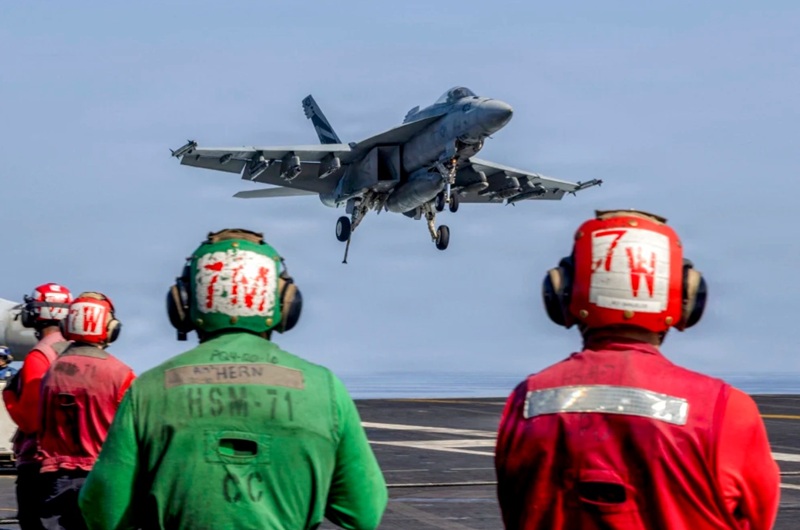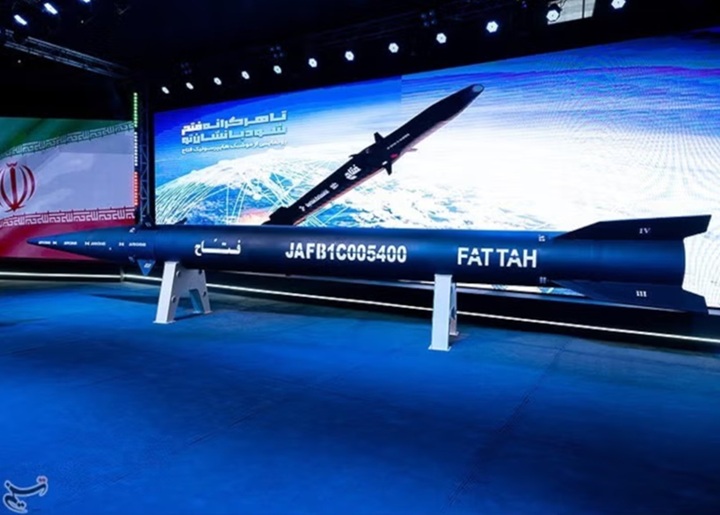
As the conflict involving Iran continues, some analysts argue that sustained airstrikes could eventually eliminate Iran’s ability to launch long-range missiles.
However, military experts say suppressing Iran’s launch capability may be far more difficult than many expect.
Iran has spent decades developing a missile infrastructure designed specifically to survive air campaigns and continue operating under attack.
Several structural and strategic factors make neutralizing Iran’s launch systems particularly challenging.
Local Production Means Launchers Can Be Replaced

One key advantage for Iran is domestic production capability.
Many missile launch vehicles and support equipment are manufactured locally, allowing damaged systems to be repaired or rebuilt relatively quickly.
Military analysts often compare this to early predictions during the Russia-Ukraine war, when observers initially believed Russian armored forces had lost most of their tanks.
Yet the vehicles continued to reappear on the battlefield as damaged equipment was repaired or pulled from reserves.
Similarly, Iran’s missile launch infrastructure is not dependent on foreign supply chains, making complete elimination extremely difficult.
Iran Is Not Iraq in the Gulf War
The concept of destroying mobile missile launchers through airstrikes—often called “Scud hunting”—comes from earlier conflicts such as the 1991 Gulf War.
During that war, coalition forces targeted Iraq’s Scud missile launchers.
However, Iran’s situation differs significantly from Saddam Hussein’s Iraq.
Key differences include:
- Iran’s much larger territory
- complex geography including mountains and rugged terrain
- far greater ability to conceal mobile launchers
Iraq’s launchers operated mostly in flat desert environments, where detection from the air was easier.
Iran’s landscape provides far more opportunities for concealment.
Underground Missile Infrastructure

Another major challenge for adversaries is Iran’s extensive underground missile infrastructure.
Iran has invested decades in building hardened facilities that include:
- mountain tunnel complexes
- underground launch silos
- concealed storage bunkers
- protected transport networks
Many of these installations are designed to withstand heavy aerial bombardment.
Even if entrances are damaged, tunnel systems can sometimes be reopened using engineering equipment stored inside the facility.
Additionally, the exact locations of many missile silos remain unknown to foreign intelligence agencies.
Simple Launch Systems Are Hard to Track
Iran and its regional allies have also developed very simple launcher designs that can be produced quickly.
Some launch platforms consist of:
- basic truck frames
- welded metal launch rails
- portable power and ignition systems
These improvised launch systems can sometimes be assembled with minimal industrial infrastructure, making them difficult to eliminate through conventional air campaigns.
Because such launchers can be manufactured in decentralized locations, destroying production capacity becomes far more complicated.
Drones Add Another Layer of Threat

Iran’s long-range strike capability is no longer limited to ballistic missiles.
The country also deploys one-way attack drones, which have proven highly effective in recent conflicts.
These drones offer several advantages:
- very low production cost
- ability to travel thousands of kilometers
- minimal launch infrastructure
- capacity to overwhelm air defenses through large numbers
Some drone launch systems are extremely simple, consisting of basic metal launch rails welded together.
Because of this simplicity, they can be deployed quickly and relocated easily.
Precision Changes the Equation
Another difference from earlier missile wars is the improvement in missile accuracy.
Older Scud missiles used by Iraq were highly inaccurate, meaning each launcher had to fire many missiles to achieve meaningful battlefield effects.
Modern Iranian missiles are far more precise.
As a result:
- fewer launches may be required
- individual strikes can target high-value infrastructure
This increases the strategic value of each launcher.
A Flexible and Resilient Strike Network
Taken together, Iran’s missile and drone systems form a flexible strike network rather than a small number of fixed launch points.
Key characteristics of this network include:
- mobile launchers
- underground hardened facilities
- decentralized production
- drone strike capability
These features make it difficult for adversaries to fully eliminate Iran’s long-range strike capability through airpower alone.
Why “Launcher Hunting” May Not Be Enough
The idea that missile launchers can be quickly destroyed through aerial search-and-strike operations may be overly optimistic.
While airstrikes can degrade infrastructure and eliminate some launch systems, Iran’s missile architecture appears designed to continue functioning even under sustained attack.
As modern warfare increasingly combines ballistic missiles, drones, and dispersed launch networks, suppressing these systems becomes far more complex than the traditional Scud-hunting campaigns of past wars.