Recent commentary questioning the Pakistan Aeronautical Complex (PAC)’s ability to handle large-scale export orders for the JF-17 Thunder reflects a misunderstanding of both industrial capacity and global fighter production norms.
PAC already possesses the ability to manufacture up to 24 JF-17 aircraft per year without major facility upgrades. The fact that production reportedly hovered around 18–20 aircraft last year does not indicate a bottleneck—it reflects delivery pacing aligned with the Pakistan Air Force’s own induction, training, and squadron conversion timelines.
Why a 4–5 Year Delivery Window Is Normal
Even in a hypothetical scenario where 100 JF-17s are sold immediately, the resulting four-to-five-year production timeline would be entirely consistent with global standards for new-generation fighter aircraft.
Comparable Western and non-Western fighter programmes routinely deliver aircraft over similar or longer timelines due to:
- Pilot and ground crew training requirements
- Infrastructure readiness at customer air bases
- Weapons and avionics integration
- Financing and milestone-based contracts
For a modern 4.5-generation fighter, this timeline is not a weakness—it is industry standard.
PAC Is Already Expanding Production Capacity
Crucially, the discussion does not end with current output levels. PAC Kamra is already in the process of expanding production capacity, which will further ease export fulfilment in the coming years.
PAC is not a single assembly hall but a large, multi-factory aerospace complex with modular growth potential. Expansion therefore does not require starting from scratch; it involves repurposing and upgrading existing industrial assets.
Block III Nears Completion, Freeing Export Bandwidth
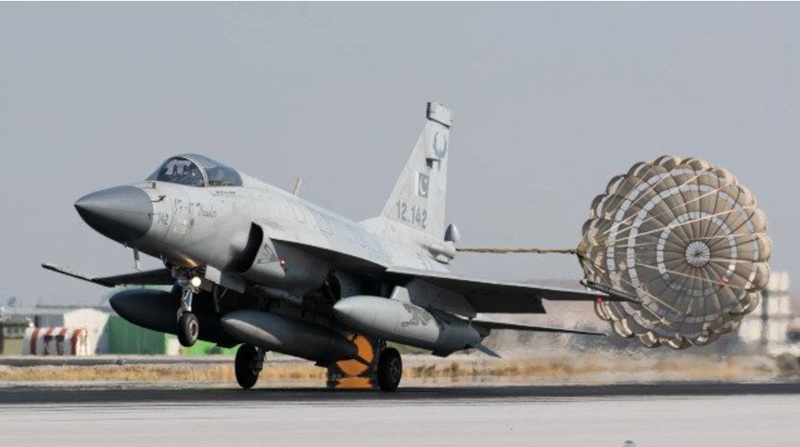
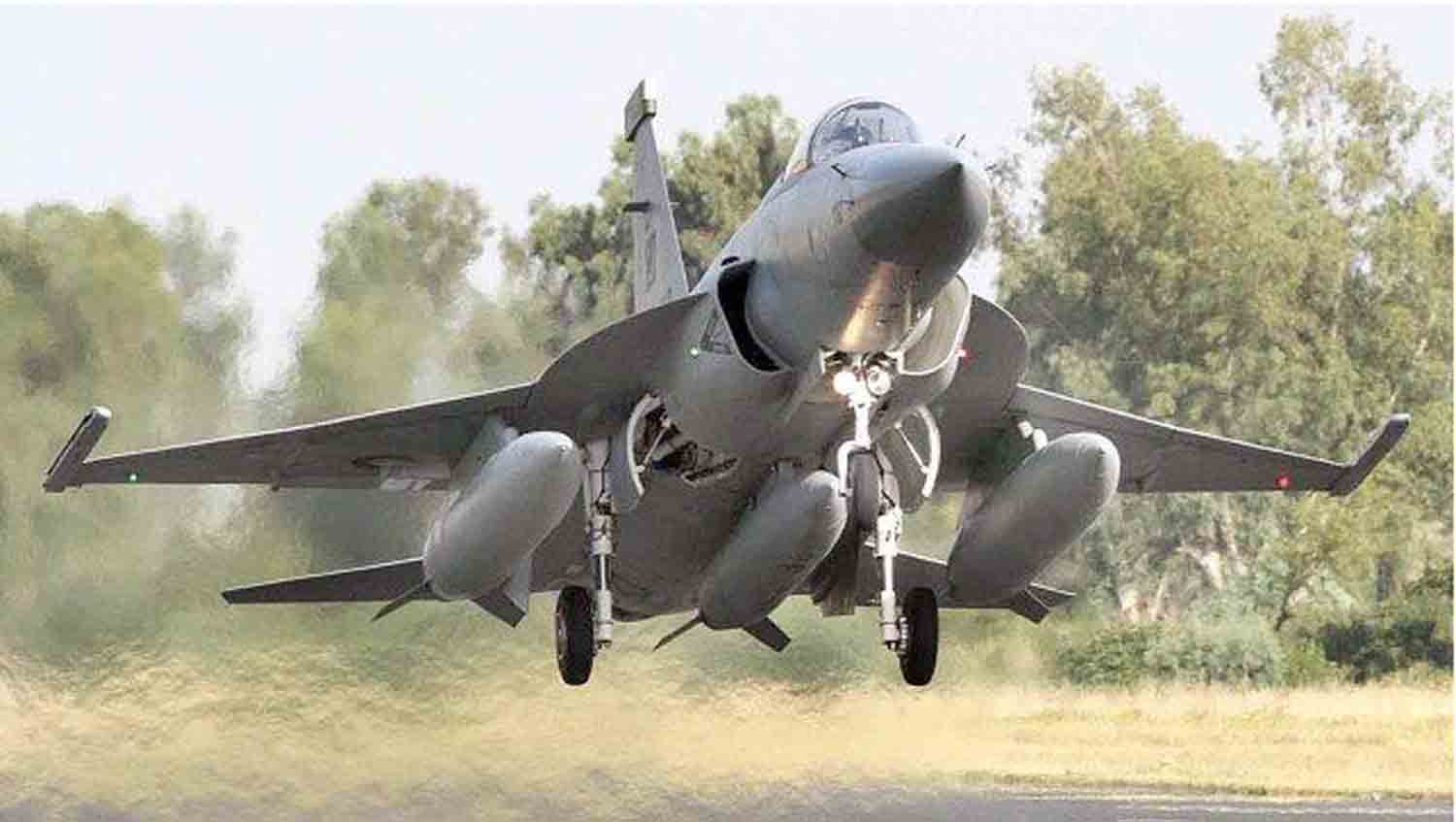
Recent imagery showing JF-17 Block III aircraft with high serial tail numbers, alongside in-primer airframes behind operational jets, strongly suggests that the PAF’s order of 50 Block III aircraft is essentially complete.
This is a critical point often overlooked in export discussions:
- There is no large pending domestic JF-17 order competing with exports in the near term
- Export customers will not be “crowded out” by urgent PAF requirements
- Production lines can increasingly prioritise foreign contracts
In industrial terms, this is an ideal transition phase—from domestic stabilisation to export-driven throughput.
What Comes Next for the PAF: The PFX Programme
Looking ahead, the PAF’s future combat aviation focus is shifting toward the PFX (Pakistan Fighter Experimental) programme. Importantly, this transition aligns neatly with PAC’s industrial planning.
One of PAC’s major sub-facilities, the Mirage Rebuild Factory (MRF), will become surplus within the next five years as the Mirage fleet retires from service. Rather than lying idle, this facility is expected to be repurposed for JF-17 and PFX-related production and assembly, effectively adding new capacity without greenfield construction.
Industrial Planning, Not Improvisation
The idea that PAC might be overwhelmed by export success ignores the reality that:
- PAC has decades of experience in fighter overhaul, rebuild, and assembly
- Production scaling is already planned, not reactive
- Infrastructure reuse (such as MRF) lowers cost and accelerates expansion
- Export timelines can be synchronised with customer readiness
In other words, PAC is not a fly-by-night operation. It is a mature aerospace manufacturing ecosystem with visible, deliberate planning mechanisms already in motion.
Why JF-17 Remains Attractive to Export Customers
Beyond capacity, the JF-17’s appeal lies in its balance of:
- Modern AESA radar and avionics (Block III)
- Competitive acquisition and lifecycle costs
- Absence of heavy political conditionalities
- Flexible weapons integration
For air forces seeking a capable yet affordable multirole fighter, a four-to-five-year delivery window backed by assured industrial expansion is not a deterrent—it is a reassurance.
Conclusion: Export Capacity Is Manageable—and Growing
The narrative that PAC cannot handle strong JF-17 export demand does not withstand scrutiny. With:
- Existing capacity of 24 aircraft per year
- Domestic Block III orders nearing completion
- Ongoing production expansion
- Future facilities being freed for reuse
- A long-term transition toward PFX
Pakistan’s aerospace industry is structurally well-positioned to support sustained JF-17 exports while preparing for the next generation of indigenous fighter development.