Most analysts tracking a potential Israeli strike on Iran are focused on the obvious markers: deadlines, Geneva talks, aircraft carrier movements, and diplomatic statements. But none of those variables explain the real timing constraint shaping events right now.
The most important variable is Narendra Modi.
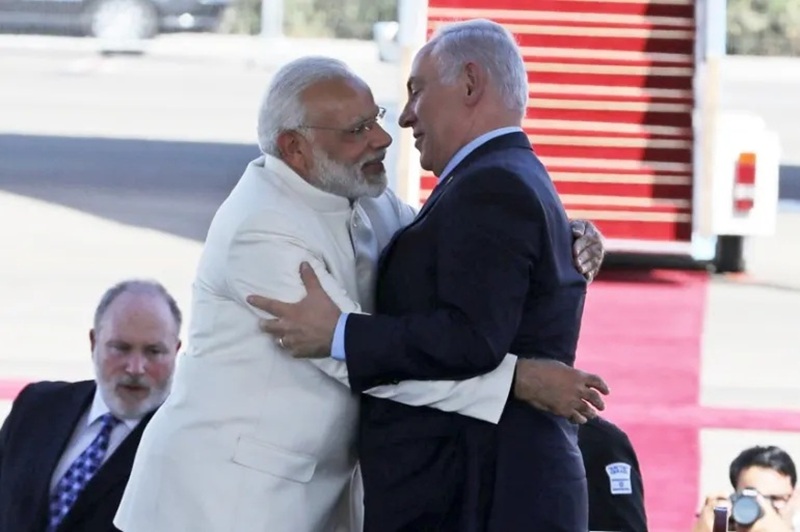
On February 25, India’s prime minister arrives in Israel for a two-day state visit. He is scheduled to meet Benjamin Netanyahu, address the Knesset, and visit Yad Vashem. Modi represents 1.4 billion people and the world’s fifth-largest economy. His physical presence fundamentally alters the strike calculus.
The much-discussed 48-hour deadline regarding Iran’s nuclear posture expires the same day Modi lands. That coincidence is not incidental — it is determinative.
Why No Strike Happens While Modi Is in Israel
No state launches a regional war — one that could trigger Iranian ballistic missile retaliation — while the leader of the world’s largest democracy is standing inside its parliament.
Security protocols alone would prevent it. The diplomatic fallout from endangering a visiting head of government during a military operation initiated by the host country would be catastrophic. It would fracture the very alliance architecture Israel is trying to construct.
Netanyahu himself framed Modi’s visit as part of a broader “hexagon of alliances” designed to counter radical regional actors — explicitly including Iran. You do not dismantle that hexagon while assembling it.
As long as Modi is on Israeli soil, a strike is effectively off the table.
The Real Strike Window Opens After Departure
This shifts the earliest realistic strike window to the evening of February 26 — after Modi departs Israeli airspace.
That date matters for another reason: it coincides with the resumption of nuclear discussions in Geneva.
The sequencing is deliberate.
- February 25: The deadline expires — nothing happens.
- February 26: Modi departs; Geneva talks resume.
- If Iran arrives without meaningful concessions — particularly on zero enrichment — the failure is documented in real time.
- The diplomatic off-ramp has been publicly offered and publicly rejected.
At that point, the legal and political predicate for military action is established in front of the global press corps.
Why March 2 Matters: Purim and Strategic Signaling
The timeline then converges on March 2 — Purim.
Purim commemorates deliverance from a Persian plot to destroy the Jewish people. Several analysts have flagged the date as a possible strike window, not because of mysticism, but because symbolism matters in strategic messaging.
A strike on or around Purim would be unmistakable, intentional, and deeply legible — to allies, adversaries, and domestic audiences alike.
That creates a coherent seven-day sequence:
- Tuesday: Deadline expires.
- Wednesday: Modi provides diplomatic cover.
- Wednesday evening: Geneva documents diplomatic failure.
- Thursday–Sunday: Final authorization and force preparation.
- Monday: Purim.
India’s Iran Evacuation Advisory Changes the Picture
India’s sudden advisory instructing its citizens to leave Iran immediately adds another critical layer.
This was not a routine warning to “exercise caution.” It was a directive to leave.
India knows precisely when its prime minister exits Israeli airspace. And India understands what the strategic window after that departure looks like.
This suggests New Delhi is not a passive observer — it is an informed stakeholder preparing for escalation.
Modi’s Visit Is Not Incidental — It Is Instrumental
Modi is not visiting Israel despite the crisis. He is visiting because of it.
Netanyahu is consolidating alliance legitimacy before executing a decision of historic consequence. When strikes come, Israel will be able to point to the fact that, forty-eight hours earlier, the leader of the world’s largest democracy was standing inside the Knesset endorsing security partnerships.
That is not symbolic diplomacy. It is pre-strike legitimacy construction.
What Markets and Analysts Are Missing
Markets are watching deadlines. Analysts are parsing statements. Commentators are counting ships.
They should be watching departures.
The clock does not start when deadlines expire.
The clock starts when Modi’s plane leaves Israeli airspace.
And India has already told its citizens to get out of Iran before it does.