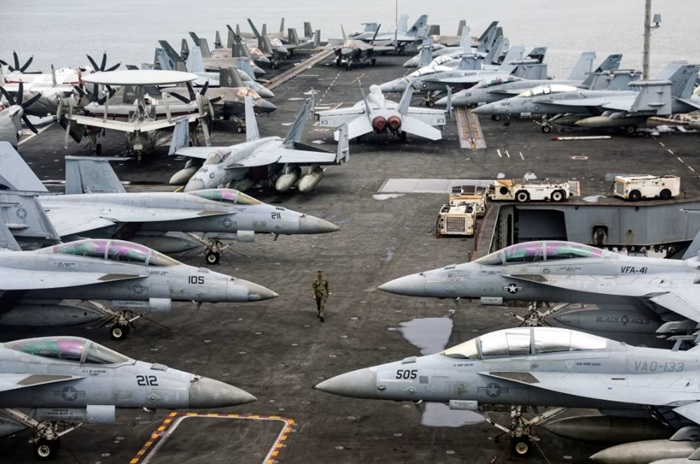
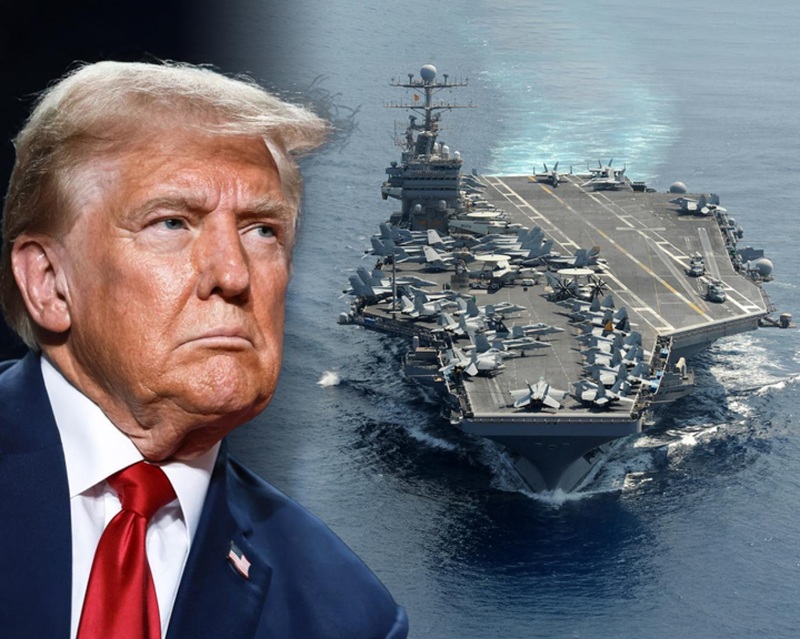
As the USS Abraham Lincoln aircraft carrier and its accompanying strike group arrived in the Middle East amid rising tensions with Iran, US President Donald Trump on Tuesday announced that “another beautiful armada” was on its way toward Tehran, a term that has drawn attention both for its military implications and symbolic power.
Traditionally, military movements are described using terms such as “fleet,” “task force,” or “carrier strike group.” However, Trump’s repeated use of the word “armada” suggests a deliberate choice aimed at conveying strength, historical resonance, and psychological impact.
Historical and Strategic Connotations of “Armada”
The word armada originates from the Spanish term for an “armed fleet,” historically associated with the powerful Spanish Armada of the 16th century — a large naval force deployed against England in 1588. Over time, the term entered global military and cultural vocabulary not only as a descriptor of naval power but as a symbol of overwhelming force and strategic purpose.
By choosing armada instead of more clinical terms like fleet or naval group, analysts say Trump may be signaling more than just the deployment of vessels. The term evokes historical might and serves as a rhetorical tool to reinforce perceptions of American military dominance as the carrier strike group positions itself near Iran’s maritime approaches.
Political and Psychological Messaging
Experts note that in international political discourse, language plays a key role in shaping audience perception. Trump’s use of armada appears designed to achieve several effects:
- Demonstrating Force Beyond Hardware: The word evokes not just ships but a concentrated projection of power that includes aircraft, destroyers, and support assets.
- Signaling Long-Term Strategy: Unlike terms tied to specific operations, armada suggests a sustained posture rather than a one-off mission.
- Projecting Psychological Impact: By invoking a term with deep historical and symbolic weight, the intention may be to exert psychological pressure on Iran’s leadership and domestic audiences abroad.
Context of Current Deployment
The USS Abraham Lincoln and its strike group were reported to have reached the region as part of a broader US military buildup. This deployment follows recent US statements warning Tehran to negotiate a nuclear agreement and halt actions that Washington views as destabilizing.
White House officials have emphasized that while the presence of a powerful naval force is meant to deter conflict, diplomacy remains on the table if Iran engages in meaningful talks. Environmental and strategic analysts warn that the symbolic choice of words, such as armada, may carry implications for escalation risks and regional responses.
International and Regional Reactions
Iran has publicly rejected external pressure, and allied nations in the Middle East have called for de-escalation and a return to negotiation. Diplomatic efforts continue amid concerns that rhetoric emphasizing military power could overshadow diplomatic channels and heighten tensions across the region.