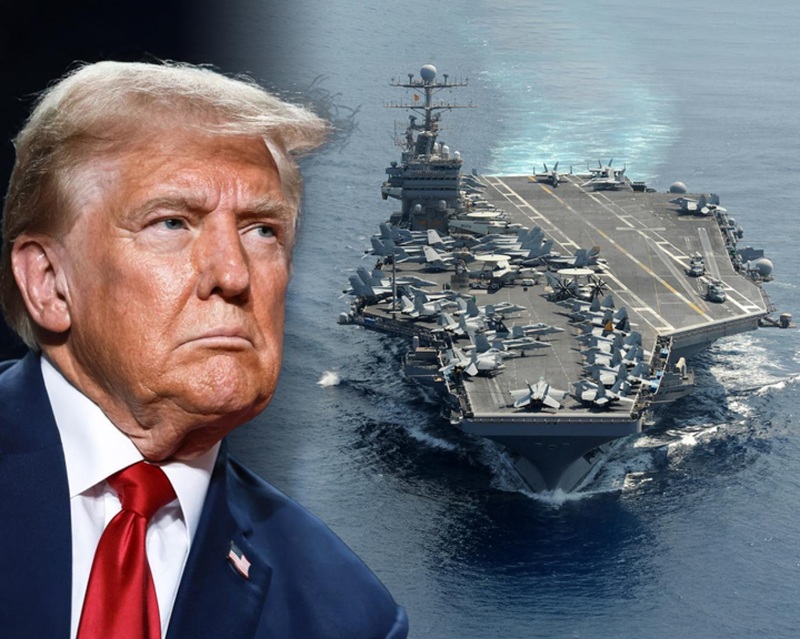
U.S. President Donald Trump has announced a temporary suspension of planned military strikes on Iran’s power plants, citing progress in negotiations aimed at reopening the Strait of Hormuz.
The decision marks a significant pause in what had been shaping into a major escalation targeting Iran’s energy infrastructure.
According to Trump, the United States will delay strikes for five days, pending the outcome of ongoing diplomatic discussions.
The Strait of Hormuz Crisis at the Center of the Conflict
The Strait of Hormuz has emerged as the central flashpoint in the ongoing war.
- Roughly 20% of global oil supply passes through the strait
- Any disruption directly impacts global energy markets
- Control of the chokepoint is now a key strategic objective
Trump had issued a 48-hour ultimatum, warning Iran to reopen the waterway or face military action targeting its energy infrastructure.
Escalation Risks: Energy Infrastructure as a Battlefield
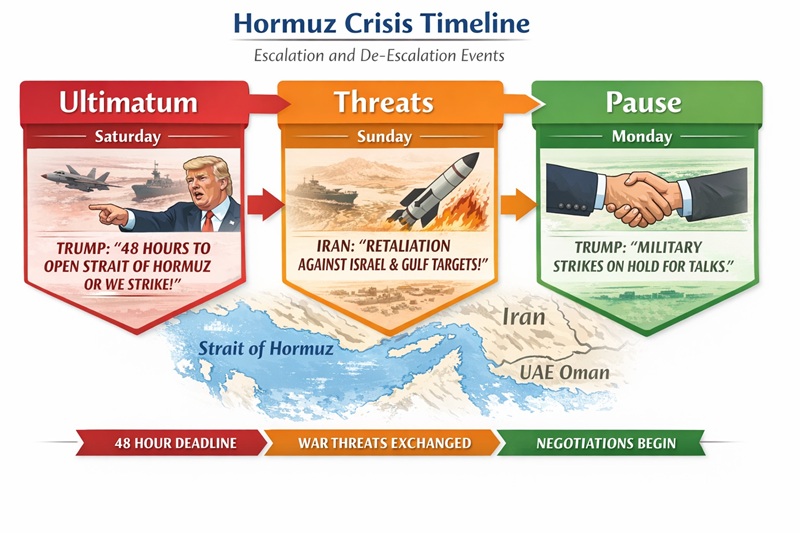
The crisis intensified after both sides signaled willingness to target critical infrastructure:
U.S. Threat:
- Strikes on Iranian power plants
- Targeting energy production facilities
Iranian Response:
- Threats to attack electricity infrastructure in:
- Israel
- Gulf countries
- Potential expansion into regional energy warfare
This exchange raised fears of a full-scale energy conflict, with global consequences.
Trump Cites “Productive Conversations”
In a statement posted on Truth Social, Trump said recent discussions with Iran had been:
- “Very good and productive”
- “In-depth and constructive”
He emphasized that the pause in military action is:
- Temporary (five days)
- Conditional on continued diplomatic progress
The move suggests Washington is testing a diplomatic off-ramp while maintaining military pressure.
Iran Denies Direct Talks
Iran’s foreign ministry has rejected claims of direct negotiations with the United States.
Officials stated:
- No formal talks are taking place
- Regional intermediaries may be attempting de-escalation
Tehran also claimed the U.S. decision reflects:
- Concern over rising energy prices
- A need to buy time for military planning
Market Reaction: Oil Falls, Stocks Rise
The announcement had an immediate impact on global markets:
- Oil prices dropped amid reduced escalation fears
- U.S. stock futures surged, reversing earlier losses
This highlights how sensitive global markets are to developments in the Hormuz crisis.

A Fragile Pause in a High-Risk Conflict
Despite the temporary de-escalation, the situation remains volatile.
Key Risks Ahead:
- Breakdown of talks within the five-day window
- Renewed threats against energy infrastructure
- Rapid return to military escalation
The Strait of Hormuz remains a pressure point where diplomacy and conflict are tightly intertwined.
Strategic Outlook: Pause or Turning Point?
The suspension of strikes raises a critical question:
Is this the beginning of de-escalation—or just a brief pause before further conflict?
The answer will depend on:
- Progress in diplomatic efforts
- Iran’s response to pressure
- U.S. willingness to delay military action
Conclusion
Trump’s decision to pause strikes on Iran’s power plants offers a temporary easing of tensions in a conflict that has increasingly centered on energy security.
However, with the Strait of Hormuz still contested and both sides maintaining strong positions, the situation remains highly unstable.
The next few days could determine whether the crisis moves toward negotiation—or renewed escalation.