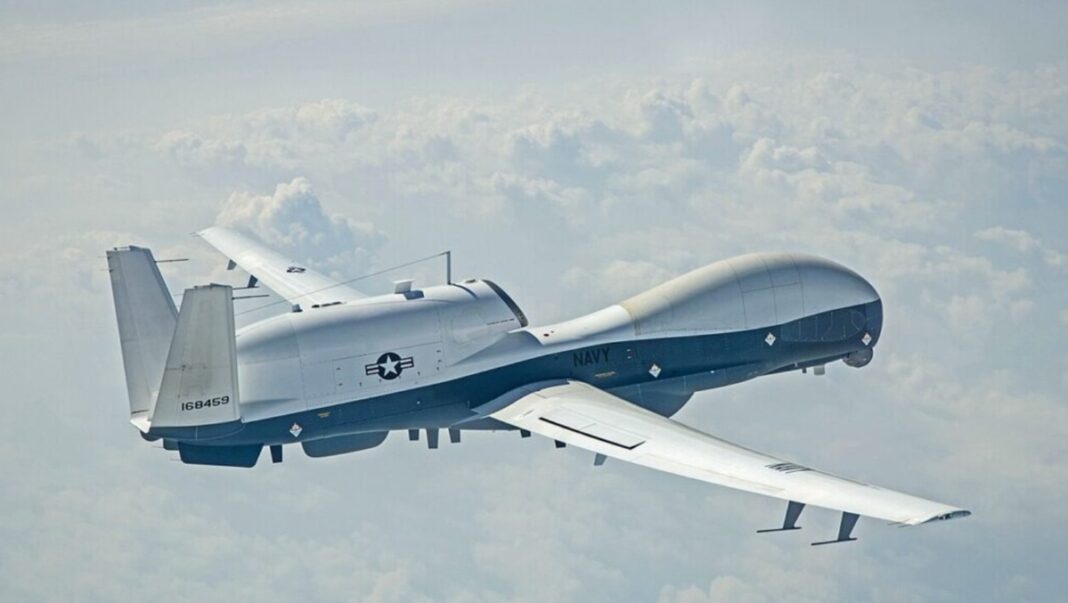
A U.S. Navy Northrop Grumman MQ-4C Triton unmanned aircraft appears to have declared an in-flight emergency over the Persian Gulf after rapidly losing altitude during a surveillance mission north of Bahrain.
According to open-source flight tracking data, the aircraft — serial 169804 — transmitted a 7700 squawk code, the internationally recognized signal for a general emergency. The drone was tracked descending from approximately 52,000 feet to around 12,750 feet within minutes, raising immediate questions about a possible technical malfunction or operational incident.
Its flight track later disappeared over the Gulf, although it remains unclear whether this indicates a loss of the aircraft itself or merely a break in publicly available tracking data.
Emergency Signal Raises Questions Over Drone Status
Flight tracking platforms showed the Triton flying a typical high-altitude intelligence, surveillance and reconnaissance (ISR) profile before the abrupt descent.
The 7700 emergency squawk is commonly used for onboard system failures, navigation issues, or other serious flight-related problems.
A rapid loss of nearly 40,000 feet of altitude in a short period is highly unusual for a high-altitude long-endurance platform of this type and suggests either a serious technical issue or an intentional emergency descent procedure.
At the time of the incident, the aircraft was operating north of Bahrain, within one of the most strategically sensitive maritime zones in the world.
What Is the MQ-4C Triton?
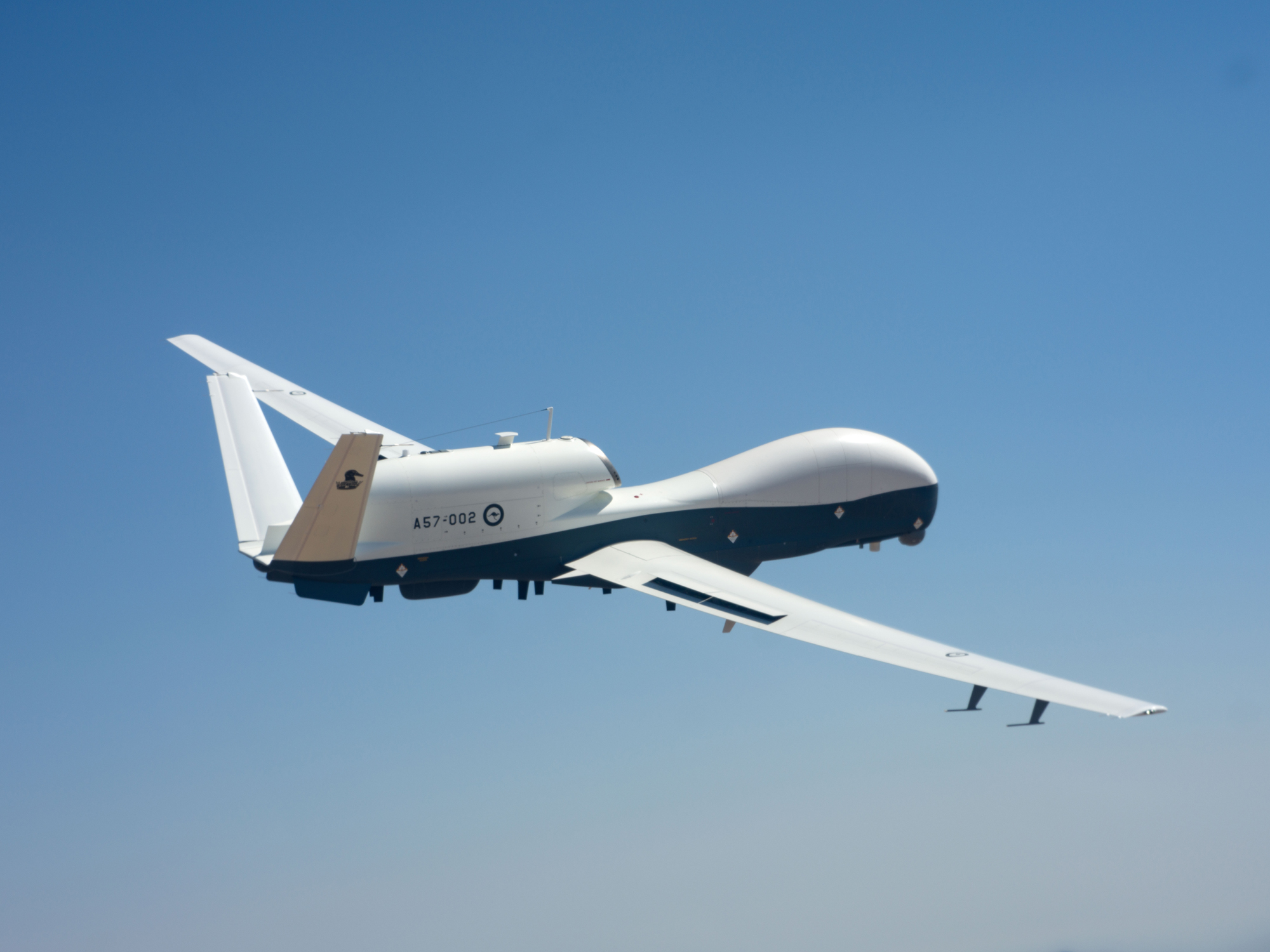
The MQ-4C Triton is one of the U.S. Navy’s most advanced unmanned surveillance aircraft.
Developed by Northrop Grumman, the drone is derived from the RQ-4 Global Hawk family and is specifically optimized for persistent maritime surveillance.
It is designed to operate at altitudes above 50,000 feet for more than 24 hours, providing real-time ISR coverage across vast oceanic areas.
The aircraft routinely works alongside the Boeing P-8A Poseidon to monitor shipping routes, naval movements, and regional military activity.
Its advanced sensor suite includes:
- 360-degree maritime radar
- electro-optical and infrared sensors
- ship tracking systems
- long-range communications relay
Persian Gulf Mission Carries Strategic Weight
The incident occurred in the Persian Gulf, an area that remains central to U.S. regional surveillance operations.
The Triton has been extensively deployed across the U.S. Central Command area of responsibility, particularly around the Strait of Hormuz and surrounding waters.
These missions are critical for tracking commercial shipping, naval deployments, and potential regional threats.
Recent open-source reports indicate that several Triton airframes previously based in the UAE had been repositioned to Naval Air Station Sigonella earlier this year, from where they continue conducting long-range ISR missions into the Gulf.
Cause of Emergency Still Unclear
At this stage, there is no official statement from the U.S. Navy regarding the cause of the emergency.
Possible scenarios include:
- onboard systems malfunction
- engine or flight control issue
- communications failure
- emergency descent due to weather or airspace deconfliction
- loss of public ADS-B tracking feed
Because the aircraft’s track ended over the Gulf, questions remain over whether the drone safely recovered, diverted, or suffered a more serious incident.
Until official confirmation emerges, the status of serial 169804 remains uncertain.