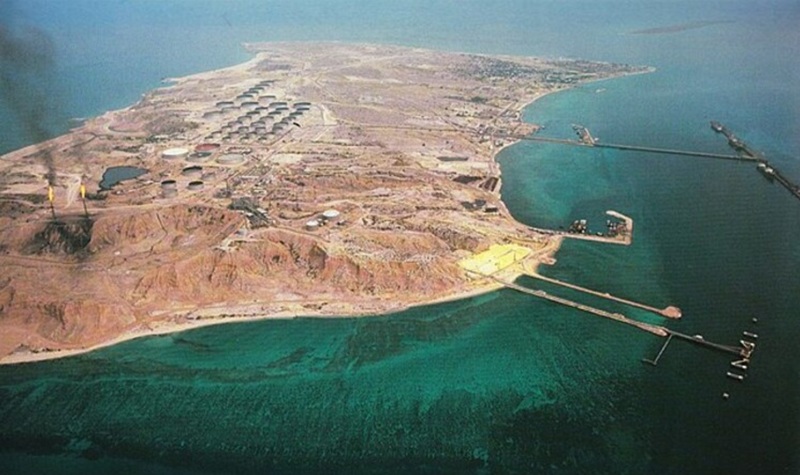
Recent footage released by U.S. President Donald Trump showing B-2 Spirit stealth bombers striking military targets on Iran’s Kharg Island has renewed attention on one of the most strategically important locations in the Persian Gulf.
The video, shared on Truth Social, shows precision strikes hitting military infrastructure on the island, including airbase facilities, missile launch positions, radar systems, and coastal defense installations. The strikes appear to involve 2,000-pound Joint Direct Attack Munitions (JDAMs) dropped by the radar-evading B-2 bomber.
Footage has now been published by President Donald J. Trump showing today’s strikes against Iranian military targets on Kharg Island in the Northern Persian Gulf, which acts as a port hub for the export of up to 90% of oil products leaving Iran. In the footage, strikes can be… pic.twitter.com/WH3iWw74sE
— OSINTdefender (@sentdefender) March 14, 2026
However, the military action also highlights a broader historical context. Kharg Island has been attacked before — most notably during the Iran-Iraq War in the 1980s, when Iraqi forces repeatedly targeted the island’s oil infrastructure.
Despite those attacks, the island continued operating as Iran’s primary oil export hub.
A Strategic Oil Export Hub Since 1960
Kharg Island has played a central role in Iran’s energy sector for decades. The island first began exporting oil in 1960, when Iran expanded its export infrastructure to support growing global demand.
The facility was eventually developed to handle up to seven million barrels of oil exports per day, reflecting Iran’s position as one of the world’s major oil producers during the 1970s.
Today, Kharg Island remains the backbone of Iran’s crude export system.
Recent shipping data indicates that the island accounted for approximately:
- 96% of Iran’s crude oil exports in 2025
- Around 1.538 million barrels per day of the country’s total 1.605 million barrels per day exports
The island also contains 55 crude oil storage tanks capable of holding more than 34 million barrels of oil.
Historical Resilience During the Iran-Iraq War
The strategic importance of Kharg Island made it a primary target during the Iran-Iraq War (1980–1988), particularly during the phase known as the “Tanker War.”
Iraqi aircraft repeatedly attacked the island’s oil terminals and storage facilities in an effort to cripple Iran’s ability to export oil and finance the war.
Even after several storage tanks were destroyed in these raids, the export system proved remarkably resilient.
Even after repeated Iraqi attacks during the Iran–Iraq War in the 1980s that destroyed several storage tanks, Kharg Island was still able to export more than 1.5 million barrels of oil per day.
This experience demonstrated the redundancy and durability built into the island’s export infrastructure.
What the Recent Strikes Targeted
Initial assessments suggest that the recent B-2 strikes were aimed primarily at military installations on the island rather than the oil export facilities themselves.
Reported targets include:
- Iranian Revolutionary Guard Corps missile launch sites
- Coastal defense batteries
- Radar installations monitoring the Persian Gulf
- Military garrison facilities
- Airbase infrastructure
These installations help defend the island and protect the surrounding maritime routes used by oil tankers.
Oil Tanker Operations Continue
Despite the military strikes, tanker operations appear to have continued at the island’s oil terminals.
Shipping tracking data indicates that a Very Large Crude Carrier (VLCC) was recently completing a 48-hour loading operation of approximately two million barrels of crude oil, while several smaller tankers were docked nearby.
Observers say the island has continued loading tankers almost continuously since the current conflict began two weeks ago.
This suggests that the strikes did not significantly disrupt the island’s core export infrastructure.
Precision Bombing and Modern Airpower
The munitions used in the strikes are believed to include GBU-31 and GBU-32 JDAM bombs, which use GPS guidance to strike targets with high accuracy.
JDAM weapons are designed to destroy hardened targets such as:
- Runways and airbases
- Missile launch platforms
- Radar installations
- Command facilities
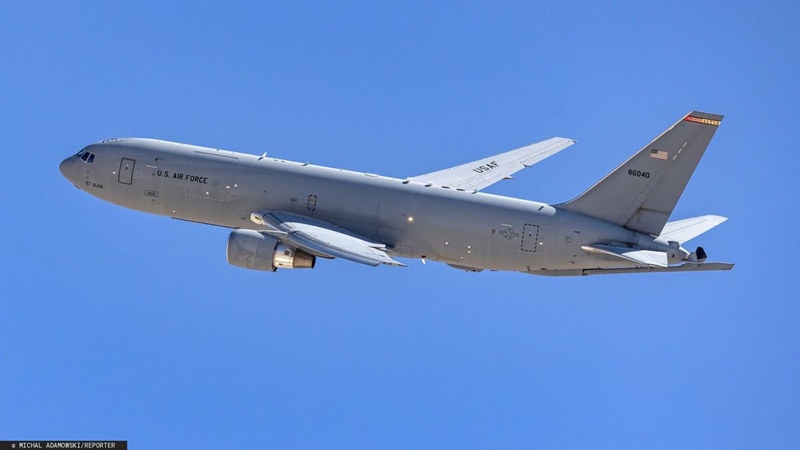
The aircraft delivering these weapons, the B-2 Spirit stealth bomber, is designed to penetrate heavily defended airspace without detection by radar.
Its ability to carry large numbers of precision-guided bombs allows it to strike multiple targets during a single mission.
Strategic Messaging Behind the Strike
The public release of the strike footage carries both operational and political implications.
The B-2 bomber is one of the most advanced aircraft in the U.S. arsenal and is typically used for deep strike missions against high-value targets.
By releasing footage of the operation, the U.S. administration appears to be signaling its ability to strike strategic Iranian military infrastructure even in heavily defended areas.
However, the historical experience of Kharg Island suggests that attacks on the island do not necessarily stop Iran’s oil exports.
A Strategic Island With a Long Wartime History
Kharg Island’s role in regional conflicts illustrates the close link between energy infrastructure and military strategy in the Persian Gulf.
From Iraqi airstrikes during the Iran-Iraq War to modern stealth bomber operations today, the island has repeatedly found itself at the center of geopolitical confrontation.
Yet its export infrastructure has shown a remarkable ability to survive wartime damage and continue supplying global oil markets.
As tensions continue to rise in the region, Kharg Island remains both an economic lifeline for Iran and a strategic target in any conflict affecting the Persian Gulf’s energy corridors.