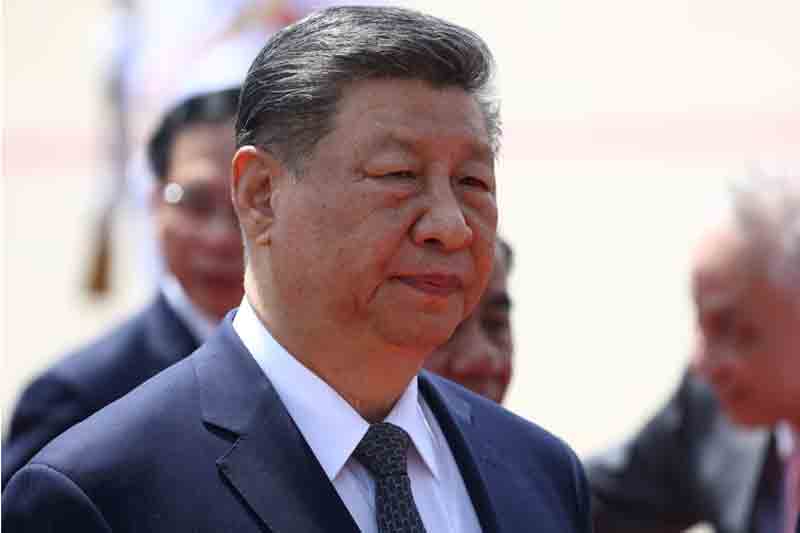

Donald Trump faced a high bar Wednesday night in his national address on Iran, appearing before a country that has not only lost confidence in his presidency, according to the latest polls, but has also soured on his new war and grown deeply worried about its economic consequences.
Millions across the Middle East and around the world are now asking the same questions: when will the war end, how will it end, and what happens next?
At the center of those concerns is the continuing closure of the Strait of Hormuz, a critical global energy chokepoint whose disruption is fueling fears of a worldwide recession.

A More Measured Case for War — But Too Late?
In the 20-minute speech from the Cross Hall of the White House, Trump delivered what was arguably his most coherent and temperate explanation yet for why he launched military action.
He argued that he could not allow what he called the “terrorists” in the Iranian regime to obtain a nuclear weapon after decades of threats against the U nited States.
The president also pointed to the collapse of diplomacy and Tehran’s internal repression, leaning heavily into one of his core political strengths: the projection of force and resolve.
Yet those arguments may have carried more weight a month earlier, when the offensive began.
Weeks of contradictory messaging and shifting war aims may now blunt the impact of a more clearly articulated justification.
No Clear Exit Strategy
The most striking omission from Trump’s address was the absence of a clear endgame.
Many observers had expected the president to use the speech to outline a path toward de-escalation.
Instead, he signaled the possibility of further military escalation.
Trump warned that over the next “two to three weeks” the United States would “bring them back to the stone ages.”
He also threatened strikes on:
- Iranian electrical plants
- oil infrastructure
- additional strategic targets
if Tehran refused a peace deal.
That language is unlikely to reassure Americans already worried about the direction of the conflict or global investors unsettled by the energy crisis.
At no point did the president present a realistic exit strategy, short of complete Iranian capitulation.
Strait of Hormuz Remains the Global Economic Risk
One of the most consequential parts of the speech concerned the Strait of Hormuz.
Trump suggested that the waterway would “open up naturally” because Iran ultimately needs to sell oil.
That assertion may do little to calm markets.
The strait remains under effective Iranian pressure through missiles and drones, and even the United States Navy has yet to fully restore safe commercial passage.

As long as the blockade continues, the world economy remains vulnerable to Tehran’s leverage.
This is especially significant as oil prices continue to rise and American gasoline prices remain above $4 per gallon.
Political Fallout Deepens
The speech also comes at a politically dangerous moment for Trump.
According to the latest CNN/SSRS poll, his approval rating stands at 35%, while only 34% of Americans approve of military action in Iran.
Even more striking, 68% oppose sending ground troops, a possibility the president did not rule out.
The economic damage is also weighing heavily on public opinion.
Trump’s approval on the economy has dropped to 31%, with roughly two-thirds of Americans saying his policies are worsening conditions.
For a second-term president heading toward difficult midterm elections, these numbers are deeply troubling.
More Anxiety Than Reassurance
Trump’s assurances that gasoline prices would soon fall and stock markets would rebound sounded more hopeful than strategic.
Without a clearly defined military or diplomatic path forward, it remains difficult to conclude that the president knows when the war will end — or what the global order will look like once it does.
For now, the speech appears to have done little to ease anxiety over either the conflict itself or the economic shockwaves it continues to generate.