
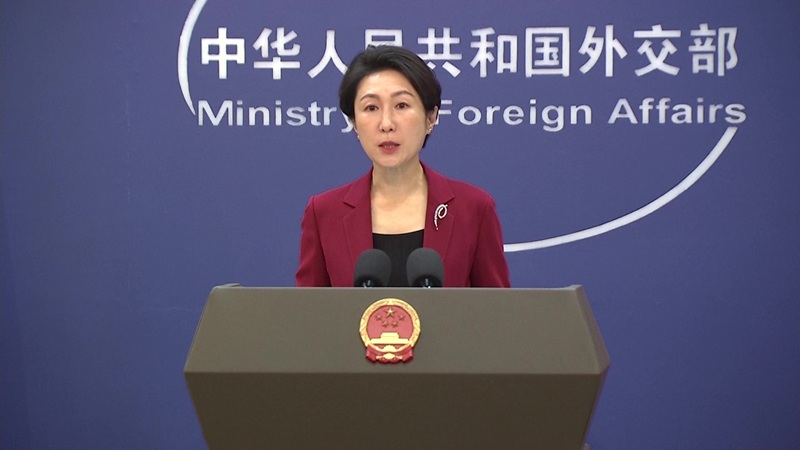
China on Monday firmly rejected Indian media claims questioning border issues and the China-Pakistan Economic Corridor (CPEC), stating that the territory where infrastructure development is taking place “belongs to China” and that Beijing is fully within its rights to carry out construction on its own land.
Responding to questions from Indian outlets, Chinese Foreign Ministry spokesperson Mao Ning said there was “nothing wrong” with China undertaking infrastructure projects in the area, stressing that such activities fall entirely under China’s sovereignty.
Responding to Indian media’s inquiries about border issues and the China‑Pakistan Economic Corridor (CPEC), Chinese Foreign Ministry spokesperson Mao Ning said on Monday that the area in question “belongs to China,” adding that “there is nothing wrong with China carrying out… pic.twitter.com/8M4i4xuFsN
— Global Times (@globaltimesnews) January 12, 2026
1960s China–Pakistan Boundary Agreement Reaffirmed
Mao Ning recalled that China and Pakistan signed a formal boundary agreement in the 1960s, under which the border between the two countries was mutually agreed and demarcated. She described the settlement as a legitimate exercise of sovereign rights by two independent states, emphasizing that it remains legally valid.
Chinese officials have repeatedly stated that the agreement was concluded through negotiations and mutual consent, and that it provides a clear legal framework governing the China-Pakistan border.
CPEC Framed as Economic, Not Political
Addressing criticism of the China-Pakistan Economic Corridor, Mao said the initiative is an economic cooperation project aimed at promoting regional development, improving connectivity, and enhancing the livelihoods of local populations.
She stressed that CPEC focuses on infrastructure, energy, and trade, and should not be politicized. According to Beijing, the corridor is designed to benefit Pakistan’s economy while supporting regional integration under China’s broader connectivity initiatives.
China’s Position on Kashmir Unchanged
Mao also clarified that neither the China-Pakistan boundary agreement nor CPEC affects China’s long-standing position on the Kashmir dispute. She said Beijing’s stance remains consistent and unchanged, underlining that CPEC does not prejudice claims or positions related to Kashmir.
China has traditionally maintained that the Kashmir issue is a historical dispute that should be resolved peacefully through dialogue between the parties concerned, in accordance with relevant United Nations resolutions.
Background: India’s Objections
India has repeatedly objected to CPEC projects, arguing that parts of the corridor pass through territory it claims. India maintains that infrastructure activity in these areas violates its sovereignty, a position China and Pakistan have consistently rejected.
Beijing’s latest comments reflect its continued diplomatic backing for Pakistan and its refusal to accept Indian objections to China-Pakistan bilateral arrangements.
Strategic Significance
Analysts note that China’s firm language signals a desire to insulate CPEC from regional disputes and to prevent external actors from influencing bilateral economic cooperation with Pakistan. The statement also comes amid heightened geopolitical competition in South Asia and growing scrutiny of major infrastructure projects.
For Islamabad, China’s reiteration of support reinforces the political and strategic foundations of CPEC, which remains a flagship component of Pakistan-China relations.