Taliban Interior Minister Sirajuddin Haqqani has travelled to Kandahar to attend the funeral of the mother of Taliban founder Mullah Omar, a visit that analysts say carries political significance amid signs of growing divisions within the Taliban leadership.
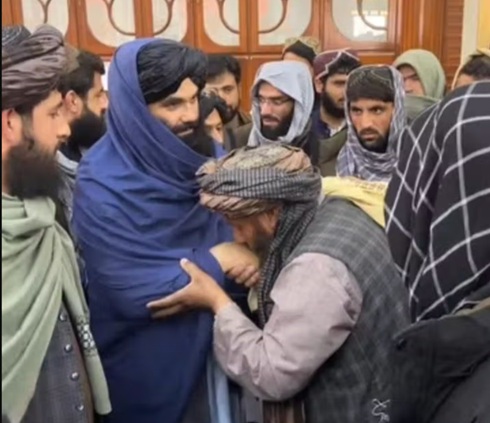
Haqqani attended Friday prayers and met with local residents following the funeral. Images and videos circulating on social media showed large crowds gathering around him during the visit.
Kandahar is widely regarded as the ideological and power centre of the Taliban and is home to the group’s supreme leader, Hibatullah Akhundzada. As a result, Haqqani’s public presence in the city has drawn attention from observers monitoring internal Taliban dynamics.
Visit Comes Amid Reports of Internal Friction
The Kandahar trip follows remarks made by Haqqani last week in Khost province, where he publicly criticised aspects of Taliban governance, stating that a system based on fear and coercion could not endure. The comments were notable given Haqqani’s senior security role and were widely interpreted as reflecting internal disagreements within the movement.
Akhundzada has historically taken a hard line against dissent within Taliban ranks. Several officials who publicly disagreed with his policies have previously been sidelined or removed from their positions.
Among them is former deputy foreign minister Abbas Stanikzai, who left Afghanistan following disputes with the leadership and has not returned. Other officials have also faced disciplinary action after questioning policies, including restrictions on girls’ education.
Limits to Central Control
Analysts note, however, that Haqqani occupies a unique position within the Taliban power structure. Despite reported efforts to curtail his authority, his extensive security network and military influence have made it difficult for the leadership to marginalise him completely.
Following Haqqani’s remarks, senior Taliban figures including Deputy Prime Minister Abdul Ghani Baradar and Education Minister Nida Mohammad Nadim issued statements stressing unity, loyalty to the leadership, and the need to avoid internal discord.
UN Reports Note Leadership Disagreements
United Nations monitoring reports have also pointed to signs of disagreement within the Taliban, including instances where certain leaders reportedly did not fully comply with directives issued by Akhundzada.
At the same time, Taliban officials remain divided in their approach to public visibility. While figures such as Haqqani, Baradar and Defence Minister Mullah Yaqoob continue to release photos and videos of public engagements, other officials have largely refrained from media appearances in line with leadership directives.
Public Appearances Seen as Political Messaging
Observers say Haqqani’s public appearances — first in Khost and now in Kandahar — appear aimed at demonstrating his political and social standing, including in areas traditionally associated with the Taliban’s central leadership.
While the crowds in Kandahar were smaller than those seen during his Khost visit, analysts view the trip as a symbolic move underscoring Haqqani’s continued relevance within the Taliban hierarchy.
The visit comes as questions persist about the Taliban’s internal cohesion, governance model and prospects for international recognition, with unity and loyalty increasingly emphasised in official rhetoric.