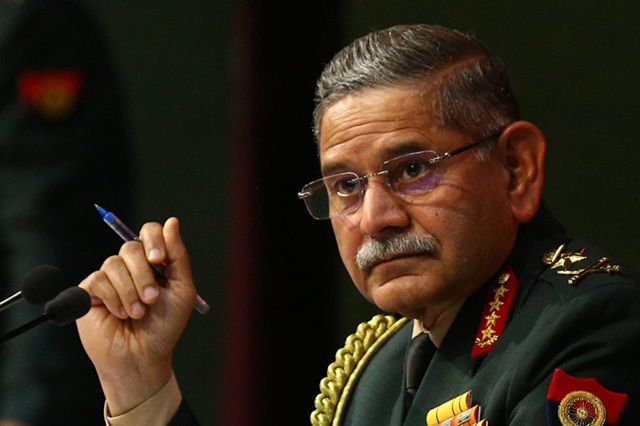
India’s Army Chief Upendra Dwivedi has publicly argued for the establishment of a dedicated rocket–missile force, saying evolving battlefield realities now require closer integration of rockets and missiles to achieve strategic and operational impact.
Speaking about India’s future force structure, General Dwivedi said rockets and missiles have become increasingly intertwined in modern warfare, noting that both systems can deliver decisive effects when employed together. He described the creation of a rocket–missile force as “the need of the hour.”
Regional Drivers: Pakistan and China
The Indian Army chief explicitly linked the proposal to regional developments, pointing out that Pakistan has already established a rocket force and that China has long operated a dedicated missile-centric force structure.
According to defence analysts, these references underline New Delhi’s concern about maintaining credible deterrence and conventional strike options in a region where long-range precision fires are becoming central to military planning.
Expanding Rocket Ranges
General Dwivedi highlighted recent progress in India’s rocket artillery capabilities, stating that the Pinaka system has been tested successfully to a range of 120 kilometres. He added that additional contracts have already been signed to explore extended ranges of up to 150 kilometres.
Looking further ahead, he said India is examining the possibility of increasing rocket ranges to between 300 and 450 kilometres, signalling a major expansion in stand-off strike capability.
Missiles as Part of the Same Strike Ecosystem
In his remarks, the army chief also referenced India’s existing missile programmes, underscoring that rockets and missiles should be viewed as part of a single strike ecosystem rather than separate domains.
Military planners note that such integration would allow the Indian Army to deliver rapid, precise, and scalable firepower across different ranges, bridging the gap between traditional artillery and strategic missile forces.
Shift in Indian Army Doctrine
The statement reflects a broader doctrinal shift within the Indian Army toward long-range precision fires, networked targeting, and deterrence by denial. A dedicated rocket–missile force would centralise command, improve coordination, and potentially mirror structures already adopted by regional rivals.
While no timeline or organisational details were announced, the remarks suggest that discussions on restructuring India’s long-range firepower capabilities are gaining momentum at the highest levels of military leadership.
Regional Implications
Analysts say the proposal could have significant implications for South Asian strategic stability, particularly if India accelerates development of longer-range rocket systems. Any move toward a formal rocket–missile force is likely to be closely watched in Islamabad and Beijing, given the existing security dynamics in the region.