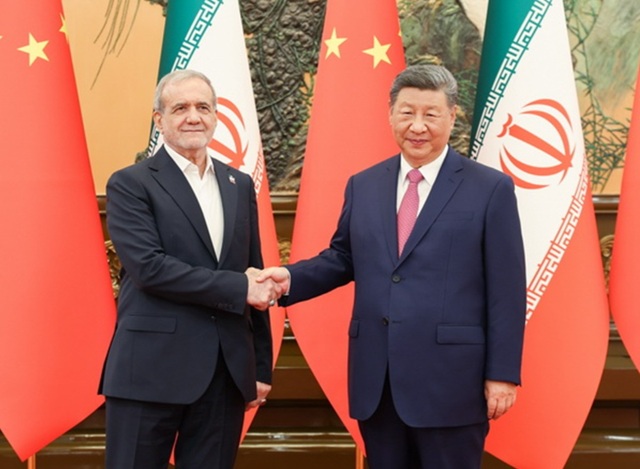
As nationwide protests persist and economic pressures deepen, Iran is discovering that its much-touted strategic partnership with China offers far less support than Tehran once anticipated. A recent Wall Street Journal report highlights how Beijing has largely stayed on the sidelines, even as Iran grapples with inflation, currency depreciation, and rising public discontent.
Iran’s economic crisis has become increasingly visible. The Iranian rial has lost significant value, inflation remains elevated, and purchasing power has eroded across large segments of society. These conditions have fueled recurring street protests, driven primarily by economic hardship, unemployment, and frustration with governance. Despite these pressures, Tehran has received no meaningful economic bailout or political backing from Beijing.
This cautious Chinese approach contrasts sharply with expectations created after Iran and China signed a 25-year comprehensive cooperation agreement in 2021. Iranian officials promoted the deal as a strategic breakthrough that would unlock billions of dollars in Chinese investment across energy, infrastructure, and transportation. Years later, however, most promised projects remain unrealized or limited in scope.
The reasons are largely strategic. China continues to prioritize stable relations with the United States, the European Union, and energy-rich Gulf states. Deeply engaging with Iran—particularly during a period of unrest—would expose Chinese firms and financial institutions to secondary U.S. sanctions. As a result, Beijing has restricted its engagement to low-profile oil imports and selective trade arrangements that minimize political and legal risk.
Crucially, the Iran–China relationship is not a formal alliance. It is transactional and interest-based, rather than ideological. China benefits from discounted Iranian oil and regional leverage, but it has little incentive to underwrite Iran’s economy or intervene diplomatically during moments of internal crisis. When domestic protests rise or fiscal pressures intensify, Beijing’s support remains limited and carefully calibrated.
For Iran, this reality underscores the limits of its “Look East” strategy. Reliance on China as a counterweight to Western sanctions has not translated into economic stabilization or diplomatic protection. With Beijing unwilling to step in decisively, Tehran faces mounting pressure to manage its economic and social challenges largely on its own.
As protests continue and economic indicators remain fragile, the gap between Iran’s expectations of China and the actual scope of Chinese support is becoming increasingly clear—reshaping assumptions in both the Middle East and Western capitals about the true resilience of the Iran–China partnership.