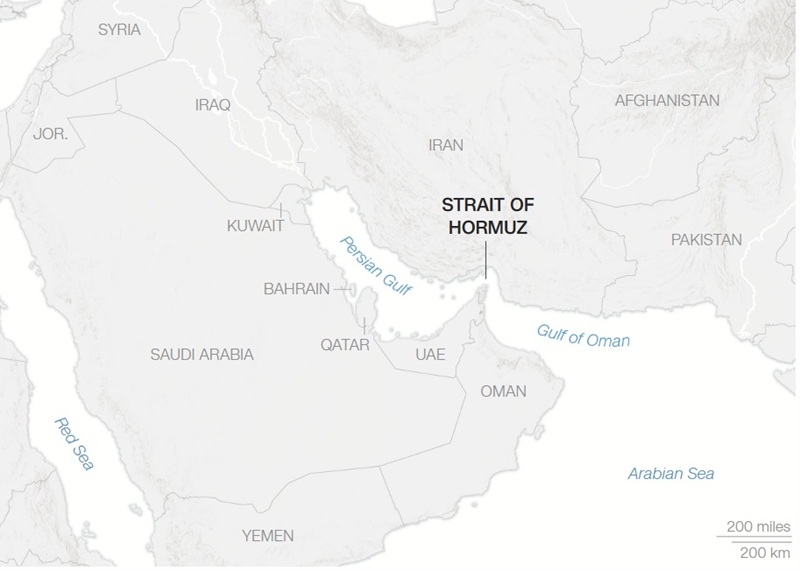
New intelligence reports suggest Iran may have begun deploying naval mines in the Strait of Hormuz, raising concerns about maritime security in one of the world’s most critical energy corridors.
According to CNN reporting on March 10, citing two U.S. intelligence sources, Iranian forces have reportedly used small boats to place naval mines in shipping lanes within the strait.
The report states that several dozen mines may already have been deployed in recent days.
The development comes even as global oil markets briefly declined following headlines suggesting the conflict could be nearing an end.
A Strategic Chokepoint for Global Energy
The Strait of Hormuz is one of the most important maritime chokepoints in the world.
Approximately 20 percent of global oil shipments pass through the narrow waterway connecting the Persian Gulf to international shipping routes.
Any disruption to shipping traffic in the strait can have significant consequences for global energy markets and maritime insurance systems.
Iran’s Naval Mine Capabilities
Intelligence estimates suggest that Iran possesses a large inventory of naval mines.
According to various defense assessments, Iran’s stockpile could include between 2,000 and 6,000 naval mines, originating from domestic production as well as foreign designs.
These mines can be deployed using:
- Small fast boats
- Fishing vessels
- Specialized mine-laying craft
U.S. officials believe that Iran retains a large portion of its small naval craft fleet, despite recent strikes that reportedly destroyed dozens of Iranian naval assets.
US Response and Warnings
U.S. President Donald Trump responded to the reports by warning that deploying naval mines in the Strait of Hormuz could trigger serious consequences.
Trump announced that 10 Iranian vessels believed to be involved in mine-laying operations had been destroyed, although he described them as inactive platforms.
The administration also demanded that any deployed mines be removed immediately.
Washington warned that failure to do so could lead to further military action.
Lessons From the 1980s Tanker War
Naval mines have historically played a major role in conflicts in the Persian Gulf.
During the Iran–Iraq “Tanker War” of the 1980s, Iran deployed approximately 170 naval mines in Gulf waters.
In April 1988, the U.S. Navy frigate USS Samuel B. Roberts struck an Iranian contact mine, suffering severe damage.
The incident highlighted the potential danger mines pose even to heavily defended warships.
Mine Warfare Challenges
Unlike missiles or drones, naval mines are difficult to detect and remove.
Once deployed, mines can remain active underwater for extended periods and may threaten both military and commercial vessels.
Mine-clearing operations often require specialized ships and equipment.
Even with advanced technology, clearing large minefields can take weeks or months, particularly in narrow shipping channels.
Potential Impact on Global Shipping
If confirmed, the deployment of mines in the Strait of Hormuz could significantly increase risks for commercial shipping.
Insurance companies that provide war-risk coverage for tankers already closely monitor security conditions in the region.
Even a limited number of mines could force shipping companies to reconsider transit routes through the strait.
Such developments could potentially disrupt oil shipments and affect global energy markets.
Oil Markets React to Mixed Signals
Despite the intelligence reports, oil markets recently moved lower after political signals suggested the conflict might be de-escalating.
Analysts say markets may be reacting to contradictory signals, balancing diplomatic rhetoric against continuing military developments in the region.
If the security situation around the Strait of Hormuz deteriorates further, energy traders and shipping companies may quickly reassess the risks.
A New Phase of Maritime Risk
Naval mines represent a different type of threat compared with missile or drone attacks.
While missiles create visible and immediate incidents, mines introduce a persistent underwater hazard that can disrupt shipping even without frequent attacks.
As tensions continue, the presence of naval mines could become a key factor shaping the next stage of the maritime security situation in the Persian Gulf.