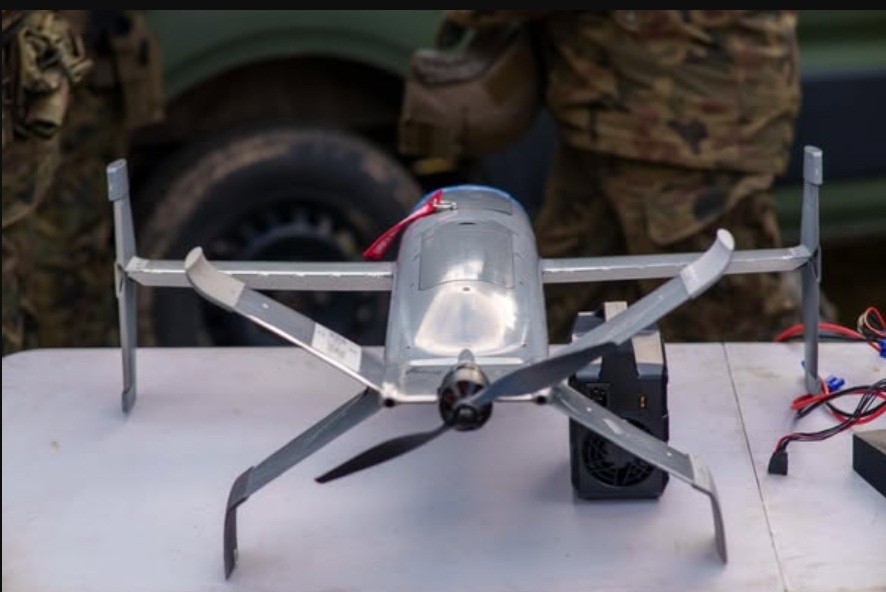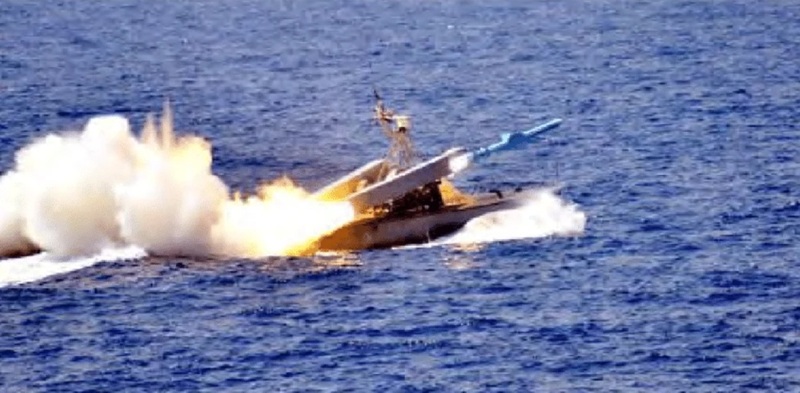
Iran’s ability to disrupt or potentially close the Strait of Hormuz is built around a deliberate anti-access/area-denial (A2/AD) strategy designed to make commercial shipping too dangerous and expensive to continue.
Rather than relying on a single decisive attack, Tehran’s doctrine emphasizes layered maritime denial, combining naval mines, anti-ship missiles, submarines, drones, and fast attack boats to create persistent risk across the entire waterway.
The goal is not necessarily to destroy large numbers of ships but to raise operational and financial risk to levels where insurance markets refuse coverage, forcing tanker traffic to reroute and triggering major disruptions in global energy supply.
Why the Strait of Hormuz Is Vulnerable
The geography of the Strait of Hormuz makes it particularly susceptible to disruption.
At its narrowest point the strait is only about 21 miles wide, meaning that coastal missile batteries, submarines, and fast attack craft positioned along the Iranian coastline can threaten nearly every shipping lane.
Even limited activation of Iranian capabilities could produce a closure lasting weeks or months, because reopening the waterway requires complex mine-countermeasure and anti-submarine operations conducted under constant threat.
Naval Mines: Iran’s Most Efficient Strategic Weapon
Iran reportedly maintains 5,000–6,000 naval mines, one of the largest stockpiles in the world.
These include several types designed to complicate detection and removal:
- Contact mines
- Drifting mines
- Moored hull-impact mines
- Acoustic and magnetic influence mines
- Limpet mines attached directly to ship hulls
Small boats capable of carrying only a few mines at a time can quickly seed large areas of shipping lanes, while midget submarines can covertly deploy explosives directly in high-traffic corridors.
Even a single mine incident can trigger full mine-clearance procedures, slowing maritime traffic and often causing insurers to suspend war-risk coverage.

Anti-Ship Cruise Missiles: The Noor and Qader
Iran’s coastal missile forces form another critical layer of the denial strategy.
Noor Anti-Ship Missile
Derived from the Chinese C-802, the Noor missile has a range of 120–170 km and flies at low altitude over the sea to evade radar detection.
Key features include:
- Active radar homing guidance
- Sea-skimming flight profile
- 165-kg high-explosive warhead
- Launch capability from trucks, ships, and fast boats
Large numbers of these missiles allow Iran to conduct saturation attacks, overwhelming shipboard defenses through sheer volume.
Qader Anti-Ship Missile
The Qader represents a longer-range evolution of the Noor, with reported ranges of 200–300 km.
This extended reach allows Iranian forces to threaten ships approaching the Strait of Hormuz from the Gulf of Oman, expanding the denial zone well beyond the chokepoint itself.
Abu Mahdi Cruise Missile: Extending the Threat to the Indian Ocean
Iran’s Abu Mahdi cruise missile pushes maritime strike capability even further.
With reported ranges exceeding 1,000 km, the missile can potentially target shipping far beyond the Persian Gulf, including the Arabian Sea.
This transforms a localized closure scenario into a regional maritime security crisis, forcing escort fleets to operate across much larger distances.

Khalij Fars: Iran’s Anti-Ship Ballistic Missile
The Khalij Fars missile introduces a different type of threat.
Derived from the Fateh-110 ballistic missile family, it reportedly has a range of around 300 km and descends toward targets at speeds between Mach 3 and Mach 5.
Its steep dive trajectory and manoeuvring capability make interception extremely difficult for naval defense systems.
The missile carries a warhead estimated at 650 kg, capable of inflicting severe damage on both warships and commercial vessels.
Swarm Boats: The Inner Defensive Layer
The Islamic Revolutionary Guard Corps Navy operates hundreds to over one thousand small high-speed boats capable of speeds exceeding 50 knots.
These vessels are designed for swarm tactics, attacking ships from multiple directions simultaneously.
They can be armed with:
- Rockets
- Machine guns
- Short-range anti-ship missiles
- Naval mines
Because these boats are inexpensive and numerous, they allow Iran to sustain harassment attacks for extended periods.
Subsurface Threat: Ghadir-Class Midget Submarines
Iran operates more than 20 Ghadir-class midget submarines, specifically designed for shallow waters like the Persian Gulf.
These compact diesel-electric submarines can:
- Deploy naval mines
- Launch torpedoes
- Conduct covert surveillance
- Insert special operations divers
Their small size and quiet propulsion make them difficult to detect, forcing opposing fleets to dedicate substantial resources to anti-submarine warfare.

Drones and Unmanned Boats: Persistent Surveillance and Attack
Iran’s Shahed-family drones provide reconnaissance and targeting across the strait, allowing real-time coordination of missile strikes and swarm attacks.
In addition, Iran has developed unmanned surface vessels (USVs) capable of conducting explosive attacks against ships.
These drone boats often resemble civilian vessels, making detection difficult until they approach a target.
Because they are cheap and expendable, they can be deployed in large numbers.
The Strategic Impact: Disruption Without Naval Superiority
Iran’s approach to closing the Strait of Hormuz does not depend on overwhelming firepower.
Instead, it relies on the cumulative effect of multiple denial layers operating simultaneously across the surface, subsurface, and air domains.
Military planners note that reopening the waterway would require sustained multinational operations involving:
- Mine-clearance missions
- Anti-submarine patrols
- Air and missile defense
- Escort operations for commercial shipping
Because these tasks are slow and resource-intensive, even limited disruption could keep the world’s most important oil chokepoint closed for weeks or months.
Comparison Chart: Noor vs Qader vs Abu Mahdi Anti-Ship Missiles (Iran)
Below is a clear infographic-style comparison chart you can use in your article or convert directly into a visual graphic.
| Feature | Noor Missile | Qader Missile | Abu Mahdi Missile |
|---|---|---|---|
| Type | Anti-ship cruise missile | Extended-range anti-ship cruise missile | Long-range maritime strike cruise missile |
| Origin | Iranian version of Chinese C-802 | Upgraded version of Noor | New-generation Iranian cruise missile |
| Estimated Range | 120–170 km | 200–300 km | 1,000+ km |
| Speed | ~Mach 0.9 (subsonic) | ~Mach 0.9 (subsonic) | Subsonic turbojet |
| Flight Profile | Sea-skimming | Sea-skimming | Low-altitude sea-skimming |
| Guidance System | Inertial + active radar homing | Improved radar guidance | Advanced navigation with terminal targeting |
| Warhead | ~165 kg high explosive | ~200 kg | Estimated 200+ kg |
| Launch Platforms | Coastal launchers, ships, fast boats | Mobile truck launchers, coastal batteries | Land, sea, and possibly air launch |
| Primary Role | Strike ships inside Strait of Hormuz | Extend missile coverage into Gulf of Oman | Threaten naval forces far beyond the Persian Gulf |
| Strategic Impact | Core missile for coastal defense | Expands anti-ship coverage zone | Creates long-range maritime denial capability |
Key Strategic Differences
Noor Missile
- Backbone of Iran’s coastal anti-ship missile network
- Designed for saturation attacks against ships in the Strait of Hormuz
Qader Missile
- Longer range evolution of Noor
- Expands threat coverage to shipping approaching the strait
Abu Mahdi Missile
- Strategic long-range weapon
- Allows Iran to threaten ships hundreds of miles from the Persian Gulf
Together these missiles form different layers of Iran’s anti-access/area-denial (A2/AD) strategy:
- Abu Mahdi → Outer maritime strike zone
- Qader → Extended coastal missile envelope
- Noor → Core anti-ship missile inside the Strait of Hormuz
This layered missile network is designed to make naval escort operations significantly more difficult in a crisis.