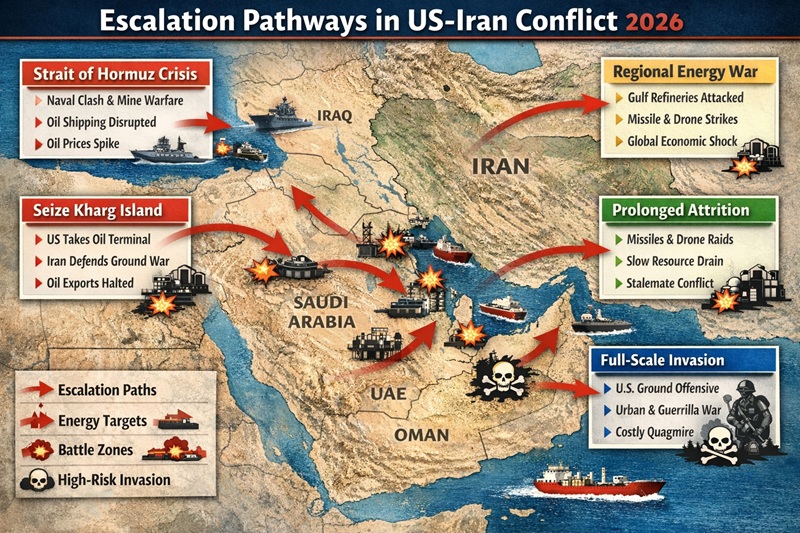
As the Iran conflict approaches the one-month mark, a new report from the Center for Strategic and International Studies reveals a dangerous pattern: deliberate escalation designed to widen and intensify the war.
According to the report , Iran has abandoned its previous strategy of calibrated responses and instead adopted “unrestrained retaliation”—aimed at imposing massive costs on the United States, Israel, and the global economy.
War Map: Expanding Conflict Geography (Horizontal Escalation)
What is Horizontal Escalation?
Horizontal escalation refers to expanding the war across geography—bringing more countries and regions into the conflict.
Key Findings
- Iran targeted 14 countries within the first 6 days
- The United Arab Emirates intercepted 2,100+ drones and missiles
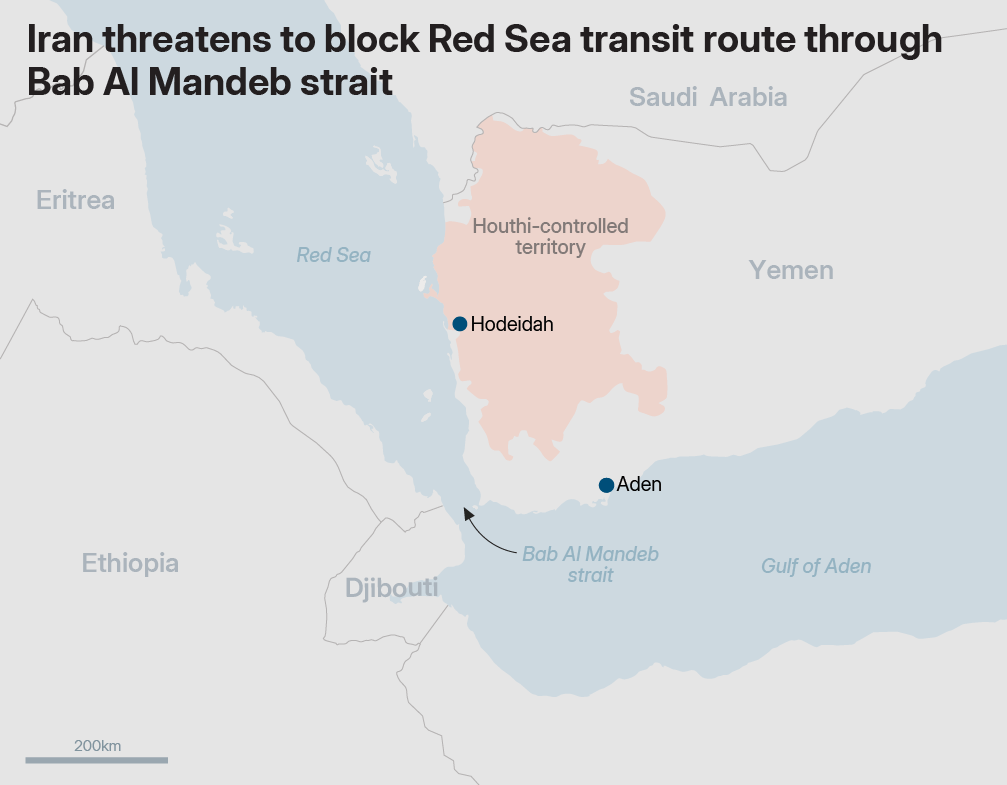
- Threats to expand into:
- Strait of Hormuz
- Bab al-Mandeb
This expansion risks global energy disruption, especially if shipping lanes are blocked.
Vertical Escalation: From Military Targets to Civilian Infrastructure

Definition
Vertical escalation means increasing the intensity and severity of attacks.
Three Levels of Escalation (CSIS Framework)
| Level | Target Type | Example |
|---|---|---|
| Low | Military | U.S. bases, THAAD systems |
| Medium | Civilian | Hotels, apartments |
| High | Critical Infrastructure | Airports, ports, energy |
Timeline of Escalation
Day 1 (Feb 28)
- U.S. military bases → Low escalation
- Hotels & apartments → Civilian targeting
- Airports → Critical infrastructure
Day 2 (March 1)
- Ports & shipping lanes attacked
- Data centers targeted
- Missile defense systems struck
Day 3 (March 2)
- Energy infrastructure hit
- U.S. embassies targeted
- Intelligence facilities attacked
This progression shows a clear escalation ladder, moving from military to economic and civilian disruption
Escalation Ladder
- Early phase: Military targets (controlled escalation)
- Mid phase: Civilian pressure (psychological warfare)
- Late phase: Infrastructure attacks (economic warfare)
Energy Shock: Worse Than Previous Crises
The report highlights a critical warning from Fatih Birol:
Current disruption may exceed the oil shocks of 1973 and 1979.
Why This Matters
- Gulf energy infrastructure is globally interconnected
- Attacks trigger:
- Oil price spikes
- Supply chain disruptions
- Inflation shocks worldwide
Trump’s Ultimatum and Future Escalation
The situation escalated further after Donald Trump issued an ultimatum:
- Open Hormuz or face attacks on power stations
Iran responded with threats to:
- Destroy regional energy infrastructure
- Expand retaliation to Gulf states
This creates a self-reinforcing escalation cycle:
- Attack → retaliation → broader targets → higher stakes
Strategic Objective: Iran’s “Final War Doctrine”
According to CSIS , Iran’s strategy aims to:
- Deter future U.S./Israeli attacks
- Reshape regional power balance
- Conclude long-running shadow conflicts
This marks a shift from:
- Controlled proxy warfare
➡️ To - Direct, large-scale confrontation
Key Takeaways
- Iran is using horizontal escalation to expand war geography
- It is using vertical escalation to increase destruction intensity
- Critical infrastructure is now the primary battlefield
- Global energy markets face historic disruption risks
- The conflict risks spreading to Hormuz and the Red Sea