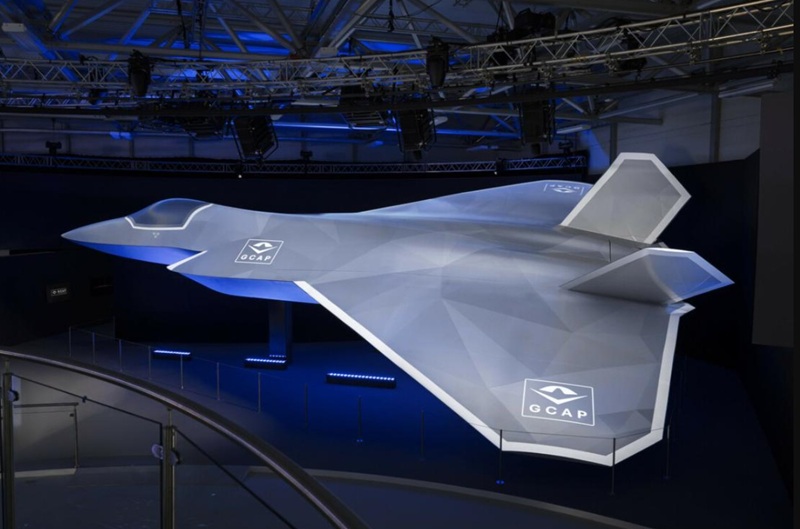
Italy’s parliament has approved €8.77 billion in initial funding for the Global Combat Air Programme (GCAP), marking one of the most consequential defense investment decisions in the country’s modern history. The funding authorization, approved at committee level and extending through annual installments until 2037, signals Rome’s long-term strategic commitment to sixth-generation combat air capabilities, despite sharply rising program costs .
The approved tranche forms part of a broader projected Italian contribution of €18.6 billion, more than three times the cost estimate presented when the program was first introduced to parliament in 2021. Even so, the government has framed GCAP not merely as an aircraft acquisition, but as an investment in technological sovereignty and industrial parity.
What GCAP Represents
Formally launched in December 2022, GCAP merges the sixth-generation fighter ambitions of Italy, United Kingdom, and Japan into a single program targeting an in-service date of 2035. Unlike earlier multinational fighter efforts, GCAP is structured around an explicitly equal partnership, with each nation holding a one-third stake in the industrial venture .
The program’s ambition extends beyond a single manned aircraft. GCAP is conceived as a “system of systems”, integrating a next-generation fighter with uncrewed adjunct aircraft, artificial intelligence-enabled decision support, advanced sensors, and a combat cloud architecture linking air, land, sea, and space domains.
Industrial Architecture and Governance
GCAP’s industrial framework reflects lessons learned from earlier collaborative programs. BAE Systems leads airframe development and overall integration for the United Kingdom, Leonardo heads Italy’s contribution with responsibility for systems and training integration, while Mitsubishi Heavy Industries manages Japan’s airframe production and systems integration.
Crucially, the partnership includes provisions for shared intellectual property and technology transfer, addressing long-standing European concerns about unequal access to critical capabilities in multinational defense projects .
Rising Costs and Political Scrutiny
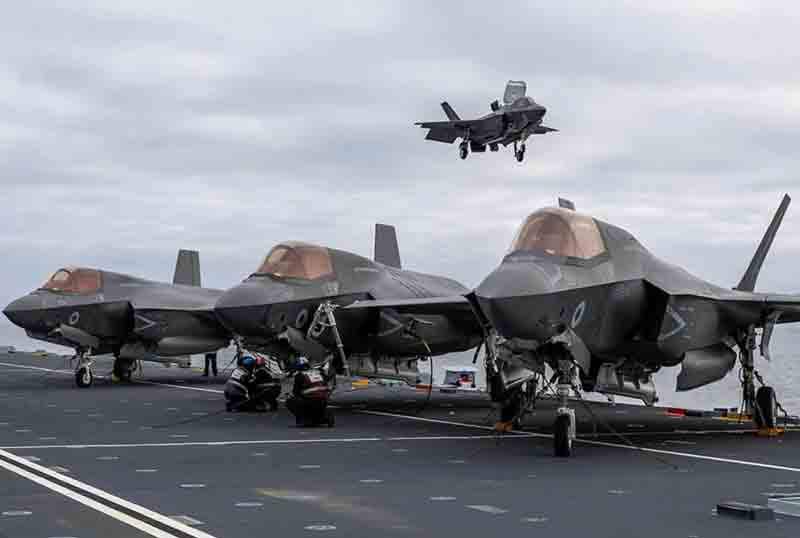
The scale of Italy’s financial commitment has attracted domestic criticism, particularly from opposition parties questioning the transparency of the cost escalation. At €18.6 billion, GCAP now exceeds the total cost of Italy’s F-35 procurement program, making it the most expensive military aviation initiative in Italian history.
Nevertheless, the governing coalition has maintained that sixth-generation capabilities are essential for long-term deterrence and for sustaining Italy’s role as a first-tier aerospace power. Defense Minister Guido Crosetto has emphasized that GCAP differs fundamentally from past programs by positioning Italy as an equal decision-maker rather than a junior partner .
GCAP and the European Context
Italy’s funding approval comes amid mounting difficulties within the rival Future Combat Air System (FCAS) program involving France, Germany, and Spain. Persistent industrial disputes and governance disagreements have delayed FCAS timelines, prompting speculation that Germany may ultimately pivot toward GCAP.
Should Berlin formally join, GCAP would consolidate much of Europe’s combat air development under a single framework, reshaping the continent’s defense-industrial balance and potentially marginalizing parallel efforts .
Strategic Implications Beyond Europe
GCAP’s trilateral structure—linking European powers with Japan—carries broader strategic weight. The program is designed with interoperability in mind, aligning with allied data standards and operating concepts relevant to NATO and Indo-Pacific security environments alike.
Interest from countries such as Australia, Saudi Arabia, and Canada highlights the program’s potential to evolve into a wider multinational framework, though expansion would introduce new governance and technology-sharing challenges. The founding partners have indicated that formal criteria for new entrants are under development .
Conclusion
Italy’s decision to underwrite a major share of GCAP’s early development phases underscores a clear strategic calculation: that future air combat dominance will depend on integrated systems, sovereign industrial capacity, and durable international partnerships. While cost growth and political scrutiny remain unresolved issues, GCAP’s steady progress contrasts sharply with competing initiatives and positions it as a potential anchor for Europe’s sixth-generation airpower ambitions.
As technology demonstrators approach flight testing later this decade and an operational capability is targeted for 2035, GCAP is shaping not only a new aircraft, but a new model for how allied nations cooperate in the most complex tier of military aviation development .