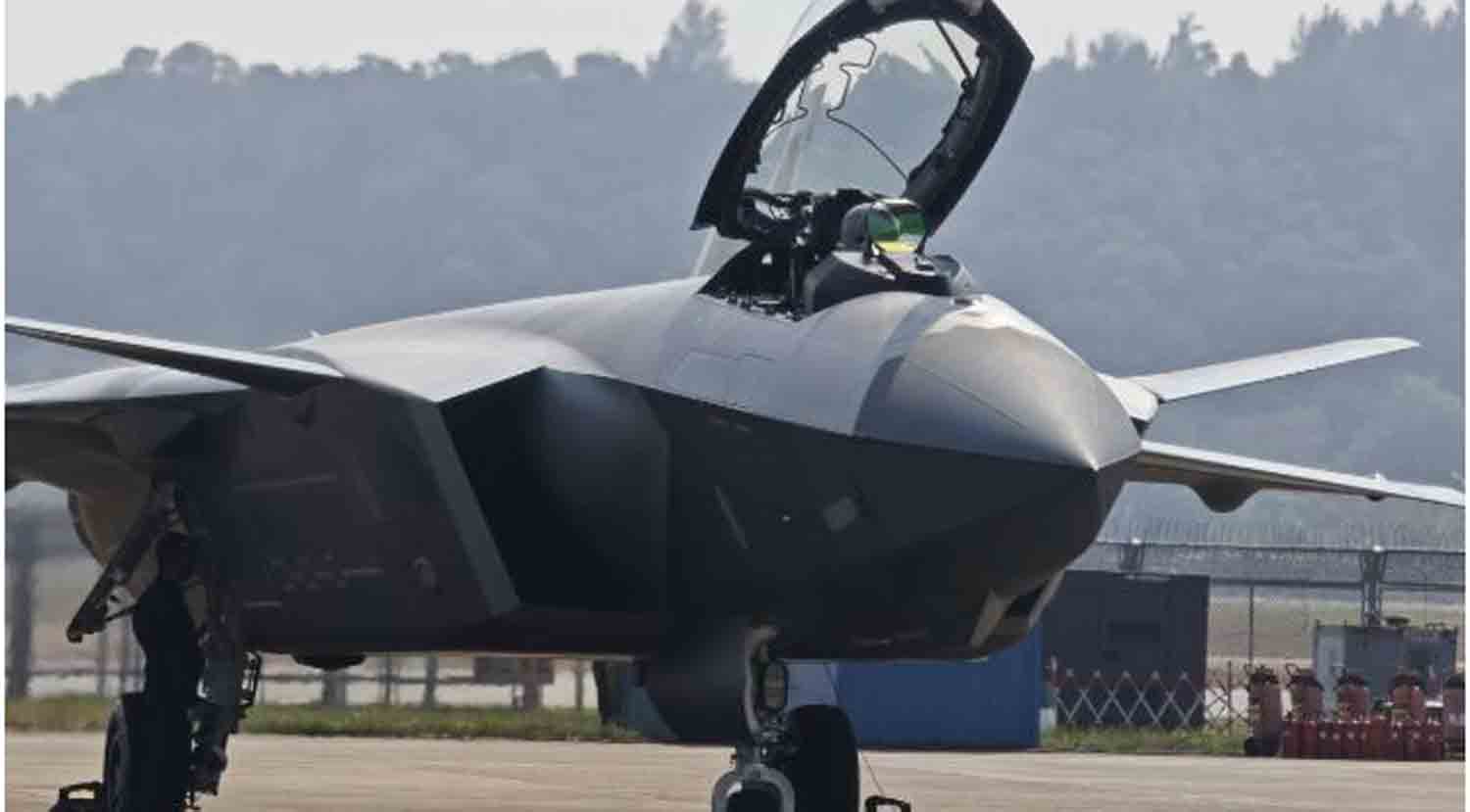
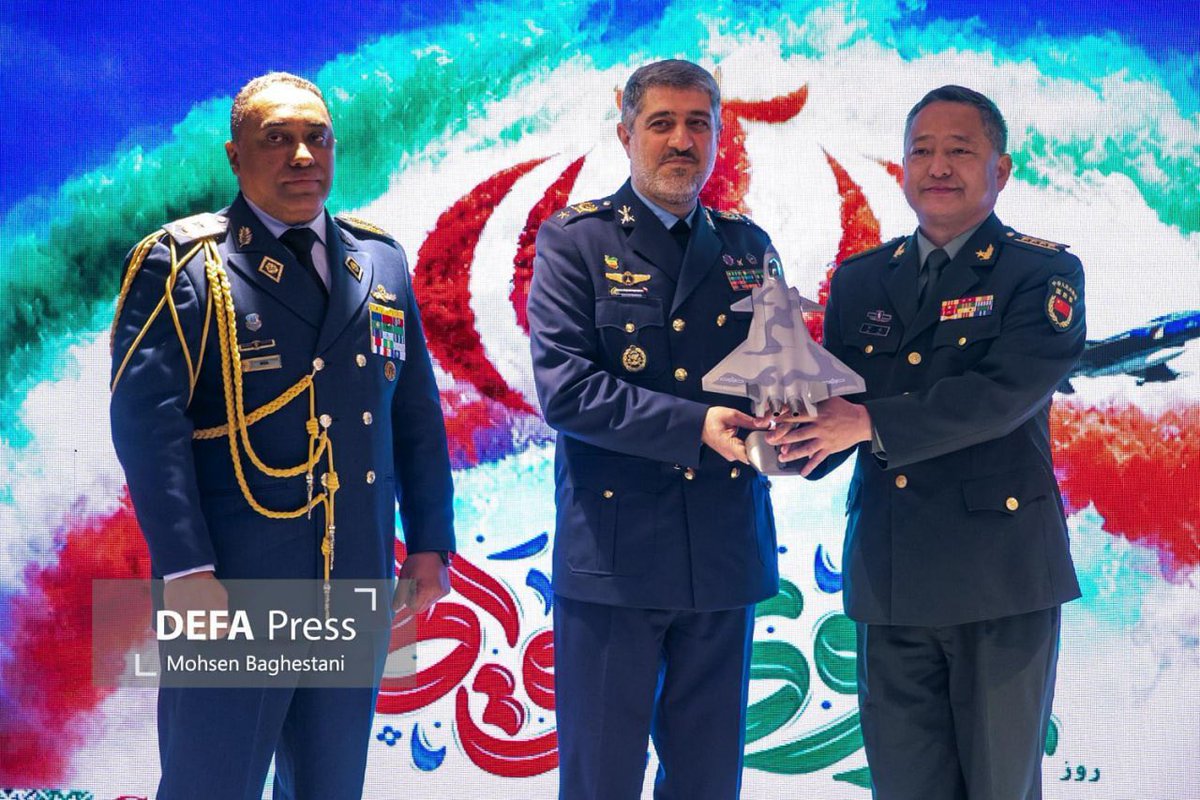
The presentation of a scale model of China’s Chengdu J-20 stealth fighter by Beijing’s military attaché in Tehran to Hamid Vahedi, commander of the Islamic Republic of Iran Air Force (IRIAF), has drawn attention as a symbolic gesture occurring amid heightened regional tensions and evolving great-power competition.
While the exchange was ceremonial in form, its timing and visibility have prompted closer scrutiny. Images and video of the meeting circulated through Iranian state-affiliated media, placing the gesture within a broader context of deepening China–Iran defence engagement under sustained Western sanctions and regional instability.
Symbolism Rather Than Commitment
Chinese officials have not announced any transfer of combat aircraft, and no formal procurement discussions have been confirmed. However, statements by Chinese Defence Ministry representatives that Beijing is open to sharing defence development achievements with “friendly countries” have been interpreted in Iran as deliberate strategic ambiguity rather than routine diplomatic language.
Defence analysts have cautioned against assuming that symbolic gestures translate directly into arms transfers, noting China’s long-standing reluctance to export its most advanced combat aircraft. At the same time, others view the episode as calibrated signalling rather than coincidence, testing reactions while reinforcing perceptions of political alignment.
Iran’s Airpower Constraints
The attention surrounding the J-20 model reflects Iran’s long-standing air force modernisation challenges. The IRIAF continues to rely heavily on legacy platforms, including pre-1979 F-14 Tomcats and ageing MiG-29s, which face increasing survivability limits against modern sensor-fused, stealth-enabled adversaries operating with long-range precision weapons.
Recent regional conflicts and air operations have highlighted these gaps, reinforcing Iranian interest in platforms capable of operating in contested airspace. While fourth-generation aircraft such as the Chinese J-10C have reportedly been discussed in the past, they do not fundamentally alter Iran’s vulnerability to fifth-generation opponents.
The J-20 in Context
Inducted into service with the People’s Liberation Army Air Force in 2017, the J-20 represents China’s first operational fifth-generation stealth fighter. It combines a low-observable airframe with advanced sensor fusion, AESA radar, secure datalinks, and long-range air-to-air missiles such as the PL-15, designed to enable beyond-visual-range engagements under networked conditions.
China has historically maintained that the J-20 is reserved for domestic use, reflecting concerns over technology security, reverse engineering, and operational secrecy. However, expanding production rates and Beijing’s growing use of defence exports as instruments of influence have led some observers to question whether this position could evolve over time.
Strategic Partnership Framework
The episode also sits within the framework of the China–Iran Comprehensive Strategic Partnership signed in 2021, which institutionalised defence cooperation, joint exercises, and technology exchange. Under this arrangement, China has emerged as one of Iran’s most consistent defence partners, supplying systems and technologies that mitigate the effects of sanctions without overtly crossing escalation thresholds.
Speculation surrounding potential barter-based arrangements—such as oil-for-arms mechanisms—reflects existing economic patterns between the two countries, though no such agreement related to combat aircraft has been confirmed.
Signalling Effects
Whether or not the J-20 is ever offered for export, the presentation of its model has already produced tangible signalling effects. For Iran, it reinforces narratives of strategic depth and alternatives beyond Western and Russian suppliers. For external observers, it underscores China’s willingness to employ symbolism as a low-risk means of shaping perceptions and testing geopolitical boundaries.
At this stage, the episode appears less a precursor to imminent aircraft transfers than a reflection of calibrated diplomacy—one that highlights how even symbolic acts can carry strategic weight in an increasingly multipolar security environment.