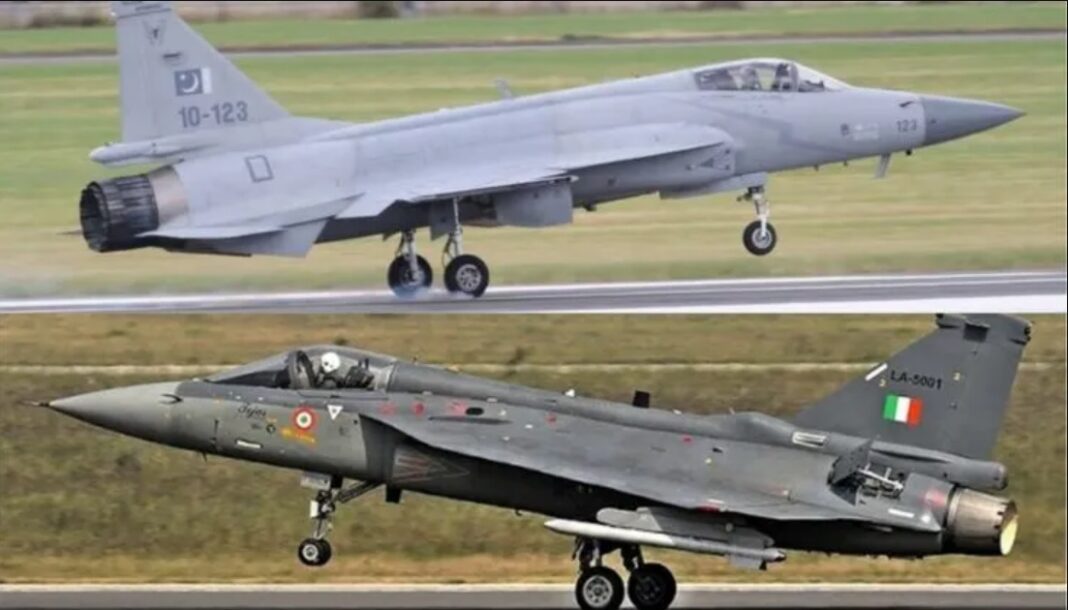
The global market for lightweight multirole fighter jets is undergoing a significant shift, as the JF-17 Thunder rapidly gains export momentum while India’s Tejas program struggles to convert potential into actual deals.
Defense procurement priorities are changing. Today, air forces are no longer chasing theoretical performance—they are prioritizing delivery speed, affordability, and operational readiness.
The Core Shift: “Ready Now” vs “Future Promise”
At the heart of this competition lies a fundamental difference:
- JF-17 Thunder → Immediate deployment, proven capability
- HAL Tejas Mk1A → Advanced design, but delayed delivery
Buyers facing urgent fleet replacement needs are increasingly choosing aircraft that can be delivered now, not years later.
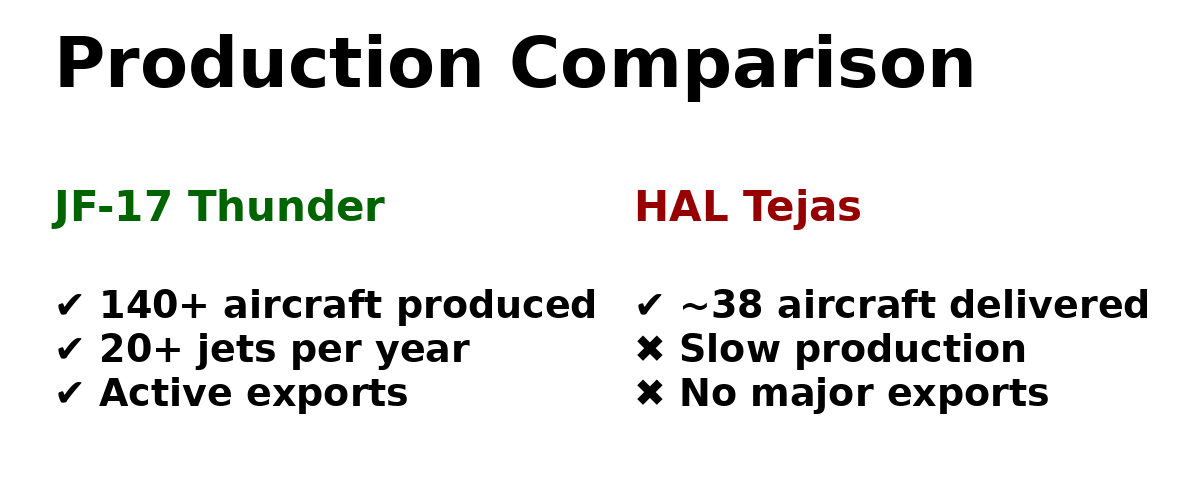
Key Insight: Production consistency = export credibility
Industrial Power: Why Production Wins Wars (and Deals)
The JF-17 benefits from a dual production ecosystem (Pakistan + China), allowing scalable and reliable manufacturing.
In contrast, Tejas production is constrained by:
- Limited industrial throughput
- Dependence on foreign engine supply
- Delays in induction timelines
This creates a perception gap:
JF-17 = Low-risk acquisition
Tejas = Programme uncertainty
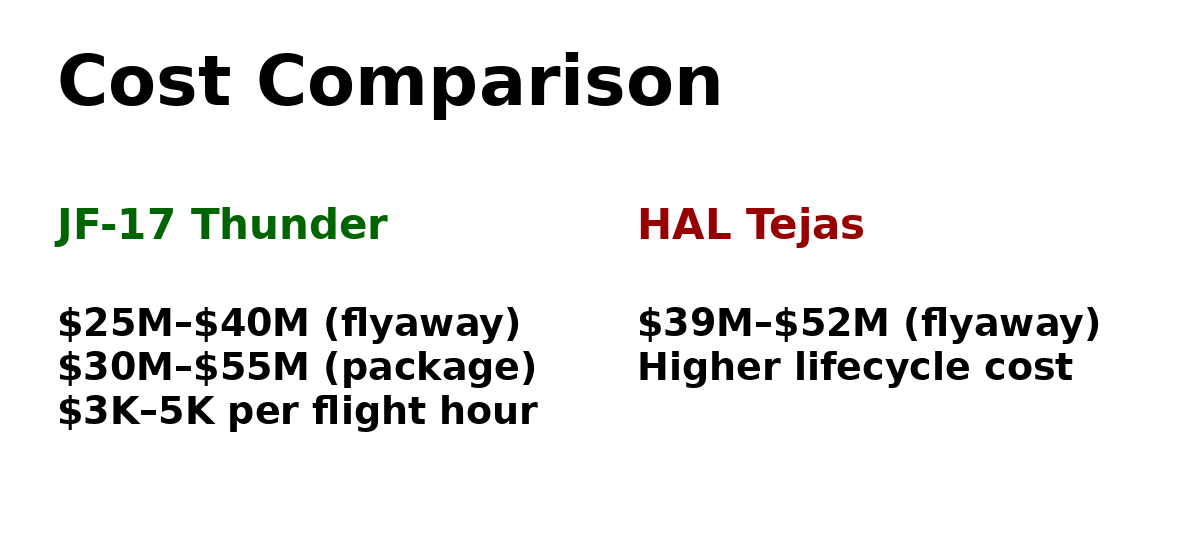
Winner: JF-17 (Cost Efficiency + Affordability)
Operational Capability: Real vs Theoretical
JF-17 Block 3
- AESA radar
- Advanced electronic warfare systems
- Long-range PL-15 missile capability
- Fully operational in Pakistan Air Force
Tejas Mk1A
- Advanced composites
- Modern avionics
- But limited real-world operational data
Buyers prefer combat-proven systems over evolving platforms
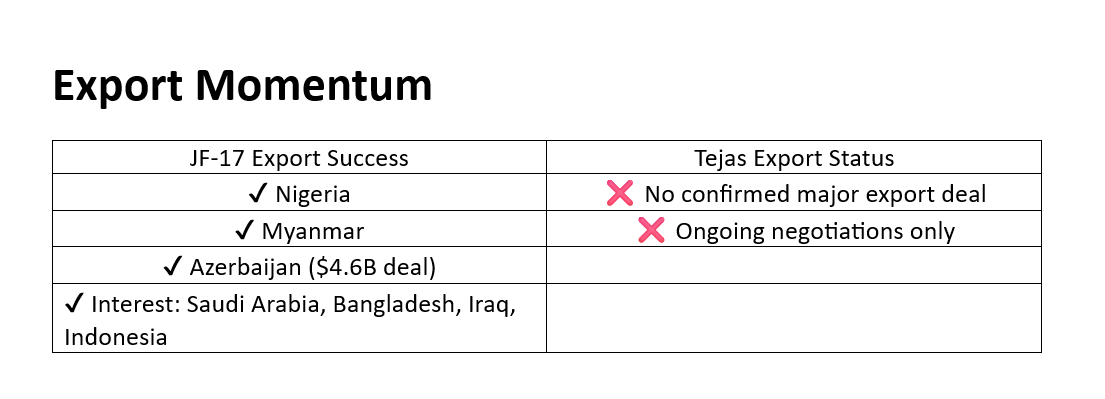
Momentum drives perception—and perception drives sales
Supply Chain Advantage: Sanction-Proof vs Dependency Risk
The JF-17’s supply chain:
- China + Pakistan ecosystem
- Minimal Western restrictions
- No ITAR constraints
Tejas challenges:
- US GE engines dependency
- Israeli subsystem reliance
- Export approvals subject to geopolitics
Result: JF-17 offers strategic autonomy for buyers
Buyer Psychology: The Real Deciding Factor
Modern air forces—especially in Africa, the Middle East, and Southeast Asia—prioritize:
- Immediate deployment
- Budget-friendly solutions
- Minimal political restrictions
This shift has transformed procurement logic:
“Good enough + available now” beats “perfect but delayed”
Strategic Comparison Chart
| Factor | JF-17 Thunder | HAL Tejas |
|---|---|---|
| Production Scale | High | Limited |
| Cost | Low | Moderate–High |
| Export Success | Proven | Unproven |
| Supply Chain | Stable | Dependent |
| Operational Status | Active | Developing |
| Buyer Confidence | High | Moderate |
Why JF-17 Is Winning the Market
The JF-17’s success is not just about performance—it’s about alignment with market needs:
✔ Fast delivery
✔ Lower cost
✔ Reliable supply chain
✔ Combat-ready capability
Meanwhile, Tejas faces:
❌ Production delays
❌ Supply chain risks
❌ Lack of export track record
Final Analysis
The global defense market is sending a clear message:
Execution matters more than potential
The JF-17 has positioned itself as a:
“Ready-now, affordable, export-optimized fighter”
While the Tejas remains:
“Technologically promising but operationally constrained”
Key Takeaway
“In modern defense markets, reliability, affordability, and availability outweigh marginal performance advantages.”