


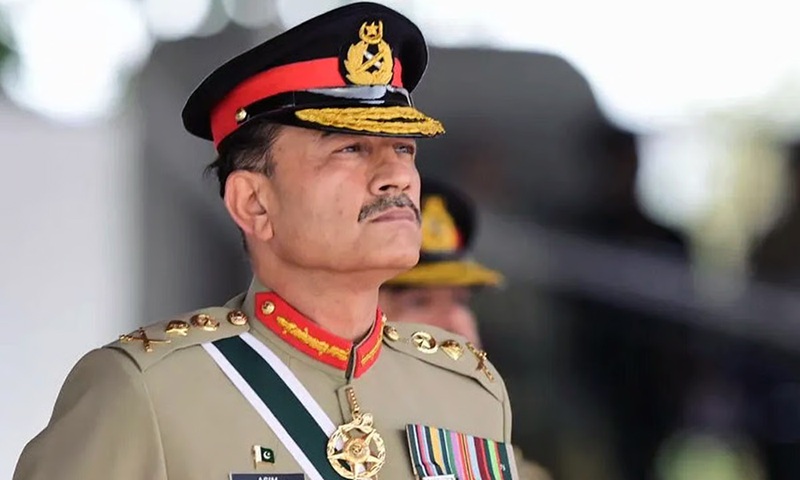
In 2025, Pakistan’s foreign and security policy underwent a clear strategic recalibration, shaped decisively by the leadership of Field Marshal Syed Asim Munir. Against a backdrop of shifting global power alignments, regional conflicts, and economic pressure, Islamabad moved away from reactive diplomacy toward a disciplined, interest-driven posture grounded in deterrence stability and strategic balance.
Rather than ideological rhetoric, Pakistan’s external engagement in 2025 emphasised composure, predictability, and national interest. This shift helped restore diplomatic space, rebuild confidence with key partners, and reposition Pakistan as a credible and responsible regional actor.
Major Powers: Pragmatism Over Polarisation
Relations with China deepened further through defence cooperation and joint technology initiatives, including continued collaboration on platforms such as the JF-17 fighter programme. These ties reinforced Pakistan’s role in sustaining a balance of power in South Asia and beyond.
Engagement with Saudi Arabia evolved from traditional goodwill into a more structured strategic defence partnership, contributing both to Pakistan’s financial stabilisation and its standing in the Muslim world.
Ties with the United States were managed with pragmatism rather than confrontation. Cooperation expanded in counterterrorism, joint military training, and diplomatic coordination, while bilateral trade grew. This steadier relationship enhanced Pakistan’s manoeuvrability in international forums.
Regional Diplomacy: Balance and Confidence-Building
Pakistan adopted a calibrated regional approach. With Iran, Islamabad prioritised border security and confidence-building measures, helping maintain relative calm along the western frontier during periods of regional tension.
Defence-industrial cooperation with Türkiye gained momentum, particularly in drones, naval collaboration, and defence production. A thaw in relations with Bangladesh marked a significant shift after decades of stagnation, supported by military-to-military engagement and renewed political outreach.
Meanwhile, Malaysia and Indonesia emerged as important partners in defence trade and maritime cooperation, expanding Pakistan’s footprint in ASEAN and the Asia-Pacific.
Gulf, Africa and Beyond
Gulf diplomacy remained central. Qatar played a key role as a diplomatic interlocutor in regional crises, while cooperation with the United Arab Emirates focused on defence training, investment, and Pakistani manpower.
Security and political coordination with Jordan and Egypt intensified, particularly within the Organisation of Islamic Cooperation.
Pakistan’s defence exports expanded into Libya and Nigeria, while strategic outreach to Morocco and Azerbaijan widened Islamabad’s influence across North Africa and the Caucasus.
Multipolar Outreach and Multilateral Presence
Engagement with Central Asia through the Shanghai Cooperation Organisation highlighted Pakistan’s role in regional security, connectivity, and trade corridors. Emerging defence ties with Russia further underscored a shift toward a balanced, multipolar foreign policy, reducing reliance on any single bloc.
This bilateral diplomacy was reinforced by active multilateral engagement at the United Nations, OIC, SCO, European Union and ASEAN, signalling a clear departure from perceptions of diplomatic isolation.
Economic Diplomacy and Security Management
Economic diplomacy became a core pillar. Strategic projects such as Reko Diq were framed as long-term recovery drivers, while financial support from China, Saudi Arabia and the UAE provided stabilisation through investments, loans, and rollovers.
Security management tested this posture. Pakistan’s handling of a four-day military confrontation with India was widely viewed as an exercise in restraint backed by credible deterrence. Islamabad reinforced its defensive narrative internationally while maintaining ceasefire stability with the help of external mediation. The nomination of former US President Donald Trump for the Nobel Peace Prize reflected Pakistan’s emphasis on de-escalation through diplomacy.
Long-standing disputes remained firmly on the diplomatic agenda. Jammu and Kashmir was consistently raised at the UN, alongside calls for a plebiscite in line with existing resolutions. Parallel engagement on the Indus Waters Treaty continued at the Permanent Court of Arbitration, the OIC and the UN, with Pakistan projecting confidence in its legal position.
Conclusion
Pakistan’s 2025 foreign policy review presents a coherent narrative of diversified diplomacy, deterrence stability and economic engagement anchored in disciplined military leadership. Field Marshal Asim Munir’s imprint on this trajectory is unmistakable. Under his stewardship, Pakistan has not merely adjusted to global power shifts—it has begun shaping its place within them, positioning itself as a bridge between regions rather than a fault line among them.


