Poland has decided to resume the production of anti-personnel landmines for the first time since the Cold War, with plans to deploy them along its eastern borders and potentially export them to Ukraine, Deputy Defence Minister Pawel Zalewski said.
The move comes as part of a broader regional shift, with nearly all European Union and NATO countries bordering Russia — except Norway — announcing plans to withdraw from the 1997 Ottawa Convention, which bans the use, production and export of anti-personnel mines.
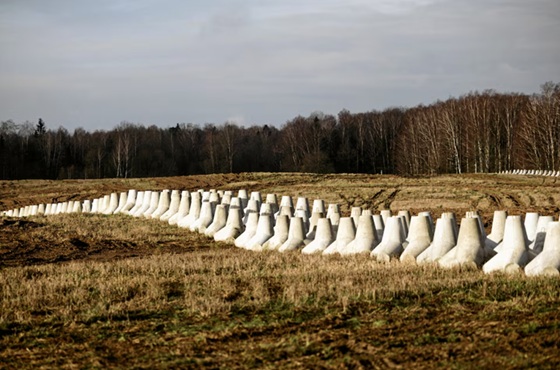
Poland aims to use the weapons to reinforce its borders with Belarus and Russia’s Kaliningrad exclave under a major defensive initiative known as the “East Shield” programme.
“We are interested in large quantities as soon as possible,” Zalewski said.
Formal Decision Confirmed
Asked whether production could begin as early as next year, once Poland completes its withdrawal from the Ottawa Convention, Zalewski said he hoped it would.
“I would very much like that… We have such needs,” he said.
Poland began the formal withdrawal process from the treaty in August, having previously said production could resume if required. Zalewski’s remarks mark the first explicit confirmation from Warsaw that the decision has now been taken.
According to the Landmine and Cluster Munitions Monitor, Poland informed the United Nations in 1995 that it had halted the production of anti-personnel mines in the mid-1980s and had ceased exports.
Millions of Mines Planned
Belma, a state-owned defence manufacturer that already supplies the Polish armed forces with various types of mines, said the East Shield programme could see Poland equipped with millions of landmines to secure its roughly 800-kilometre (500-mile) eastern border.
“We are preparing for Polish demand to amount to 5–6 million mines of all types,” Belma’s chief executive, Jaroslaw Zakrzewski, told Reuters.
While the defence ministry has not yet placed a formal order, Zakrzewski said Belma could scale up production to 1.2 million mines annually starting next year, compared with its current output of around 100,000 mines per year.
Ukraine and Regional Demand
Zalewski said any decision to supply mines to Ukraine would depend on Poland’s production capacity, but stressed Warsaw’s strategic priorities.
“Our starting point is our own needs,” he said. “But for us Ukraine is absolutely a priority, because the European and Polish security line is on the Russia-Ukraine front.”
Belma’s CEO said exports to Ukraine were feasible and added that several NATO countries bordering Russia — including the Baltic states — had already expressed interest in purchasing anti-personnel mines.
Poland’s own defence requirements would take precedence, he said, but surplus production could be supplied to regional allies.
Regional Shift on Landmines
Earlier this year, Lithuania and Finland said they expected to begin producing anti-personnel mines in 2026, citing heightened security concerns following Russia’s full-scale invasion of Ukraine in 2022.
Latvia and Estonia have also announced their withdrawal from the Ottawa Convention, though neither has formally committed to production. Latvian officials say manufacturing could begin quickly if required, while Estonia has described it as a future option.
According to Poland’s foreign ministry, mine production could legally begin once the treaty’s six-month withdrawal period ends on February 20, 2026.
Ukraine has also announced its withdrawal from the Ottawa Convention, arguing that it needs greater freedom to defend itself against Russia, which is not a party to the treaty. Both Kyiv and Moscow have accused each other of using anti-personnel mines during the war.
Other major powers that have never signed the treaty include the United States and China.