Russian officials in 2019 privately signaled to the Trump administration that the Kremlin might back away from supporting Nicolás Maduro in Venezuela if the United States would tacitly allow Russia to operate freely in Ukraine, according to former U.S. national security adviser.
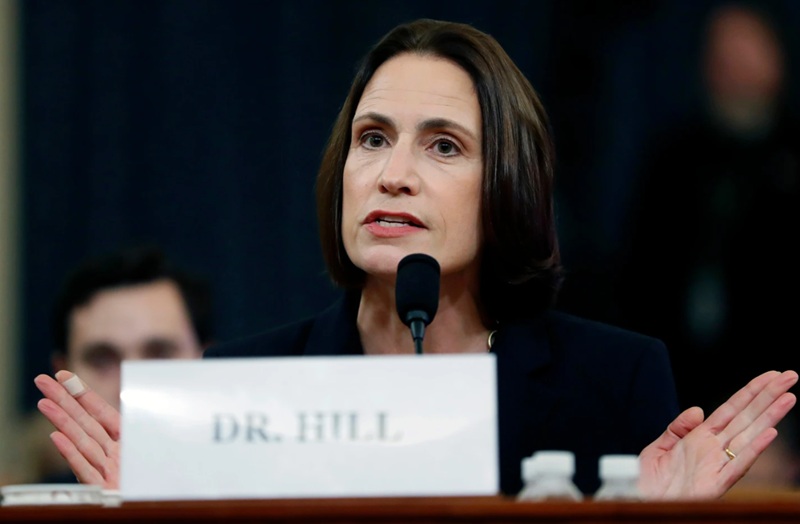
The revelation comes from testimony by Fiona Hill, who served as senior Russia and Europe adviser to President Donald Trump. Hill made the disclosures during a 2019 congressional hearing, and her comments have resurfaced this week following Washington’s stealth operation that ousted Maduro from power in Venezuela.
Venezuela<>Ukraine. Fiona Hill 2019. pic.twitter.com/mVY9uT9ONP
— operator (@alyashok) January 4, 2026
Hill told lawmakers that Russian officials repeatedly hinted at a “very strange swap” arrangement linking Venezuela and Ukraine, suggesting that Moscow would reduce its support for Maduro if the U.S. would similarly refrain from countering Russian influence over Ukraine. Although no formal proposal was ever put on the table, Hill said the idea was conveyed through informal diplomatic signals and sympathetic Russian media commentary referencing policies like the 19th-century Monroe Doctrine.
At the time, Hill was dispatched on behalf of the White House to Moscow to make clear that “Ukraine and Venezuela are not related to each other” in U.S. policy. The U.S. government was then publicly aligned with Western allies in supporting Venezuelan opposition leader Juan Guaidó as interim president.
Context: Why It Matters Now
The resurfacing of Hill’s 2019 testimony comes amid intense global debate over Washington’s recent intervention in Venezuela’s leadership. In 2026, U.S. forces captured Maduro and the Biden administration has framed the action as lawful and justified. Russian officials have condemned the move as “aggression,” though President Vladimir Putin has not publicly commented.
Critics argue that America’s actions in Venezuela complicate the moral high ground Washington has claimed in condemning Russia’s military operations in Ukraine. Hill stressed that if major powers can assert their interests in other nations under broad legal or political pretexts, it weakens the distinction between legitimate diplomacy and power politics.
“The Kremlin will be ‘thrilled’ with the idea that large countries … get spheres of influence because it proves ‘might makes right,’” Hill told The Associated Press.
Historical and Strategic Underpinnings
The Monroe Doctrine — invoked by both U.S. and Russian commentators at the time — was originally a 19th-century U.S. policy opposing European interference in the Western Hemisphere in exchange for a commitment not to meddle in Europe. Russian outreach in 2019 used this framework to argue for a reciprocal understanding: let the U.S. operate in Latin America and Russia in Eastern Europe.
Although the idea never became official policy, Hill’s account highlights the back-channel negotiations and geopolitical maneuvering that often occur behind the scenes in great power politics.