Russia is using the Unmanned Systems Exhibition (UMEX) 2026 in Abu Dhabi as a strategic platform to reassert itself in the fast-growing global unmanned warfare market, unveiling a unified national showcase of its combat-tested drone and loitering munition portfolio.
For the first time, JSC Rosoboronexport—Russia’s state arms export agency and part of the Rostec State Corporation—is organising a consolidated Russian exhibit, signalling Moscow’s intent to aggressively expand exports of unmanned systems refined through sustained battlefield use.
UMEX 2026, running from January 20 to 22 alongside the Simulation and Training Exhibition (SimTEX), is expected to attract senior military delegations and procurement officials from the Middle East, Africa, Asia, and Latin America. These regions have seen surging demand for cost-effective and operationally validated unmanned systems following recent high-intensity conflicts.
🇷🇺 Russia to unveil advanced Supercam drones at UMEX 2026 in Abu Dhabi
Russia’s exhibit to showcase three drones:
🔸Supercam S350: Flagship, proven in civilian & military use
🔸Supercam S180: New, high-speed recon drone
🔸Supercam X4: Dual-use multirotor
Key features: secure… pic.twitter.com/2GRC1M0vWe
— Sputnik (@SputnikInt) January 19, 2026
Pivot Toward Non-Western Markets
Rosoboronexport’s decision to anchor its global unmanned systems marketing campaign in Abu Dhabi rather than traditional European defence shows reflects a deliberate pivot toward non-Western customers. Many of these markets are seeking fewer political restrictions, faster delivery timelines, and greater flexibility in technology access.
At its UMEX stand, Rosoboronexport is highlighting what it describes as battle-proven UAVs and loitering munitions, positioning them as mature systems shaped by real combat feedback rather than controlled trial environments.
Rosoboronexport Director General Alexander Mikheev said unmanned systems represent one of the fastest-growing segments of the global arms market. According to company projections, global demand for UAVs could grow by around 120 percent by 2030, while demand for loitering munitions may surge by as much as 400 percent, driven by their ability to deliver precision effects at a fraction of the cost of traditional guided weapons.
Unmanned Systems as Core Warfighting Assets
The projected growth reflects a broader transformation in modern warfare, where unmanned platforms are no longer auxiliary tools but central elements of reconnaissance-strike complexes, battlefield transparency, and distributed lethality.
Russia’s export strategy increasingly emphasises systems optimised for survivability, rapid production, and favourable cost-exchange ratios. By foregrounding combat validation rather than laboratory metrics, Rosoboronexport is attempting to position battlefield experience as a decisive credibility marker in competition with Western and Israeli unmanned systems.
This approach also aligns with a growing military consensus that attritable, semi-autonomous strike systems offer a more sustainable way to maintain offensive pressure during prolonged, high-intensity conflicts.
Lancet-E and Kub-2-2E Take Centre Stage
At UMEX 2026, Rosoboronexport is placing particular emphasis on the Lancet-E and Kub-2-2E loitering munitions as the core of its export-oriented unmanned strike doctrine.
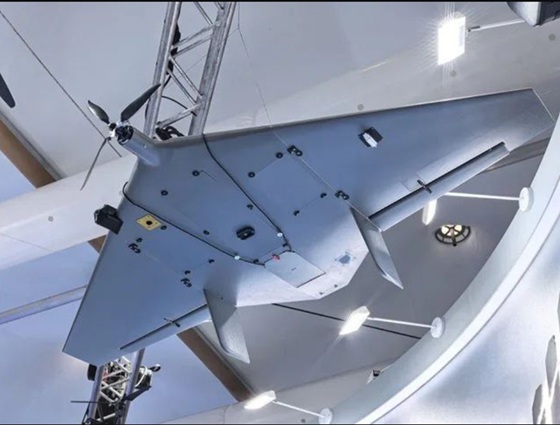
The Lancet-E is presented as an integrated reconnaissance-strike complex combining the Z-16E reconnaissance UAV with Item-51E and Item-52E loitering munitions developed by ZALA Aero. This sensor-to-shooter architecture enables rapid target detection and engagement, compressing the kill chain against time-sensitive targets such as air defence systems, artillery, armoured vehicles, and mobile command posts.
The system’s distinctive double X-shaped tail improves stability and manoeuvrability, while developers have prioritised reduced radar and acoustic signatures and enhanced resistance to electronic warfare. Russian sources claim Lancet variants have disabled or destroyed thousands of enemy vehicles—figures that are difficult to independently verify but central to Moscow’s export narrative.
Complementing the Lancet-E, the Kub-2-2E loitering munition—developed by the Kalashnikov Group—features an upgraded automatic guidance system designed to improve engagement reliability while reducing operator workload. A key feature highlighted at UMEX is its ability to operate in tandem with the Skat-350M reconnaissance UAV, forming a hunter-killer pairing aligned with modern networked warfare concepts.
Expanding the Unmanned Ecosystem
Also on display is the Supercam S350 reconnaissance UAV, positioned as a versatile and cost-effective ISR platform for both conventional and asymmetric operations. At the tactical level, Rosoboronexport is showcasing the Karakurt and Goliath UAVs, designed for squad- and platoon-level use, reflecting the growing importance of organic aerial reconnaissance at the lowest echelons of combat.
Rostec is further presenting a range of modular warheads for loitering munitions and FPV drones, including high-explosive fragmentation, incendiary, HEAT-incendiary, and training variants. This modular approach allows customers to tailor unmanned strike capabilities to specific operational requirements.
Defence Diplomacy and Industrial Partnerships
Beyond hardware, Rosoboronexport is using UMEX 2026 as a venue for defence diplomacy. The company is hosting a public presentation on Russian unmanned systems on January 21 and holding bilateral meetings focused on procurement, joint production, technology transfer, and long-term lifecycle cooperation.
According to Mikheev, this reflects an evolving export model aimed at integrating customer states into broader reconnaissance-strike ecosystems while supporting indigenous defence industrial development.
Rosoboronexport remains Russia’s sole state intermediary for defence exports, accounting for more than 85 percent of the country’s arms exports and working with over 700 defence enterprises. Its parent organisation, Rostec, unites more than 800 research and production entities across 60 Russian regions and reported revenues exceeding RUB 3.6 trillion (around USD 40 billion) in 2024.
As unmanned systems increasingly define the future of warfare, Russia’s high-profile presence at UMEX 2026 underscores its effort to convert battlefield experience into export influence—positioning Moscow as a key contender in the next phase of global UAV competition.