

Satellite internet has rapidly evolved from a commercial convenience into critical strategic infrastructure, a shift that became starkly visible in early 2026 amid crises in Iran and Ukraine. Events in both countries underscored a new reality: space-based connectivity is now firmly embedded in modern conflict and internal security operations.
Iran’s Internet Blackout and the Limits of Satellite Resilience
In January 2026, Iranian authorities imposed a nationwide internet blackout during mass protests, cutting off mobile data, broadband services, and most international connectivity in an effort to suppress dissent and control information flows.
During the initial phase of the shutdown, satellite-based internet—particularly Starlink—emerged as one of the few remaining channels for communication beyond Iran’s state-controlled networks. For activists and civilians, it briefly provided a digital lifeline.
That window quickly narrowed. Iranian authorities reportedly deployed advanced radio-frequency jamming systems to disrupt Starlink signals, causing severe packet loss and unstable connections consistent with military-grade electronic interference rather than routine congestion. In several areas, terminals became unusable altogether.
Security forces also reportedly confiscated satellite terminals during raids, reinforcing Tehran’s determination to eliminate alternative connectivity paths. The episode demonstrated that even resilient low-Earth-orbit (LEO) satellite constellations are vulnerable to sustained, state-level interference—and that satellite internet now sits squarely within the battlespace of internal security operations.
Ukraine: Starlink and the Weaponisation Dilemma
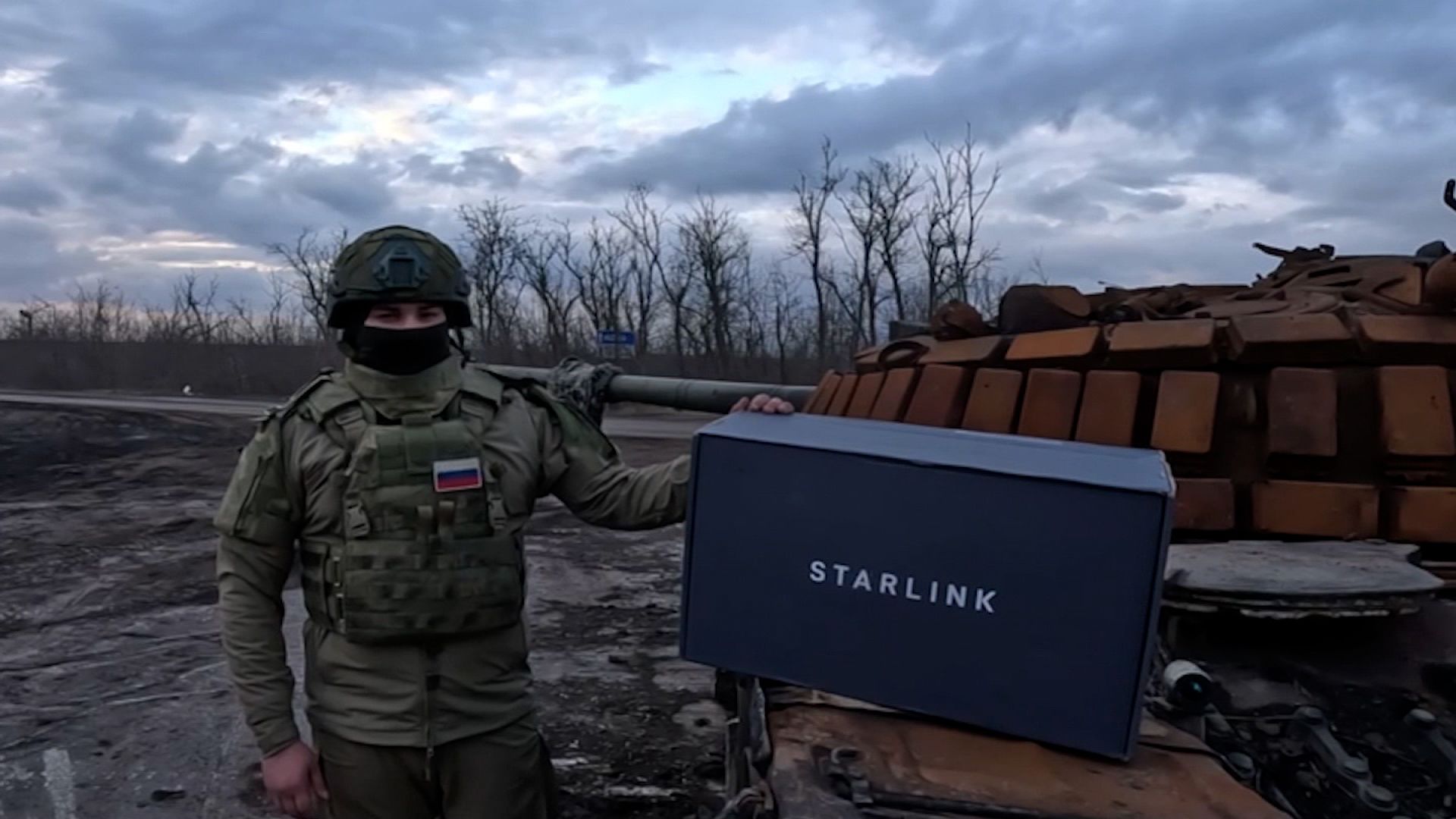
At roughly the same time, Starlink became the center of controversy in Ukraine. Ukrainian officials publicly stated that Russian forces were using Starlink terminals mounted on unmanned aerial vehicles to support long-range drone operations, including strikes on civilian infrastructure.
Ukraine’s defense establishment confirmed coordination with SpaceX to disable Starlink access on Russian drones once such usage was identified. SpaceX reiterated that its terms of service prohibit the use of Starlink on weapons systems and said it would take technical steps to prevent misuse when detected.
Regardless of intent, the outcome was clear: a private U.S. company made operational decisions with immediate battlefield consequences in an active armed conflict.
From Service Provider to Strategic Actor
For military planners, the implications are profound. Commercial satellite providers are no longer passive enablers of connectivity; they are actors whose technical and policy decisions can shape tactical and operational outcomes.
This shift exposes deep weaknesses in existing legal and governance frameworks. The Outer Space Treaty establishes broad principles such as peaceful use and state responsibility for national space activities, but it does not address radio-frequency jamming, cyber interference, or the denial of satellite services during conflict.
International humanitarian law requires distinction between civilian objects and military objectives. Yet commercial satellite systems routinely serve both civilian and military users simultaneously. A Starlink terminal may enable civilians to communicate during a blackout—and minutes later support military command, control, or targeting. Existing law offers no clear threshold for when such systems become lawful military objectives.
The Tallinn Manual reflects this uncertainty, acknowledging that states disagree on when cyber or electronic interference constitutes a prohibited use of force and stressing that the manual itself is non-binding.
A Governance Vacuum in Space
The Iran and Ukraine cases also highlight a deeper governance problem: private companies now control infrastructure essential to both civil society and military operations, yet international law primarily regulates states.
When SpaceX restricts access to prevent hostile use, it exercises power traditionally reserved for governments—but without the transparency, accountability, or legal constraints imposed on state actors. U.S. export control regimes regulate satellite technology transfers, but they were never designed for real-time service denial decisions during active hostilities.
As a result, private operators operate in a legal gray zone, guided largely by corporate policy rather than coherent national or international standards.
What Comes Next
The lesson is not that commercial satellite systems are unreliable. On the contrary, they are now indispensable—and exposed. Future conflicts are increasingly likely to target connectivity rather than territory, with satellite networks as prime objectives.
Without updated legal norms, states will continue to jam, spoof, and interfere with space-based systems while denying that such actions cross established legal thresholds.
For the United States and its allies, this reality demands:
- Formal integration of commercial space providers into military planning
- Clear doctrine for protecting and defending space-based communications
- Sustained diplomatic efforts to establish binding international norms against indiscriminate interference with satellite infrastructure
Space is already contested. The law governing it remains dangerously underdeveloped.