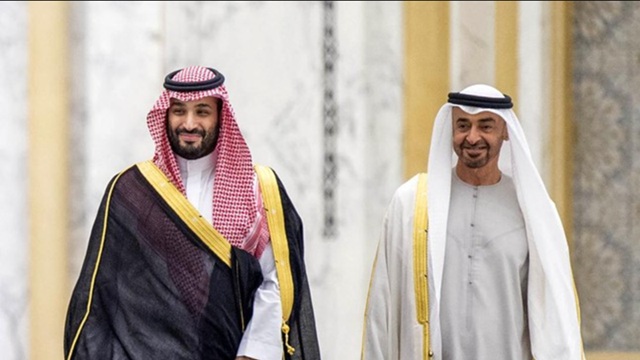
Saudi Arabia and the United Arab Emirates are increasingly moving closer to supporting the United States in its ongoing conflict with Iran, signaling a major shift in Gulf geopolitics as the war enters a critical phase.
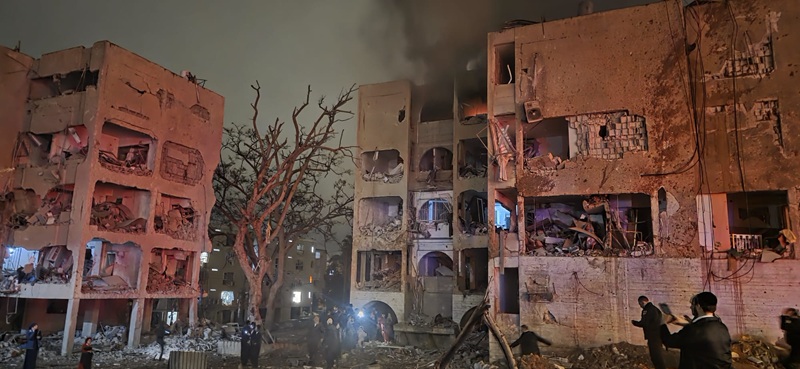
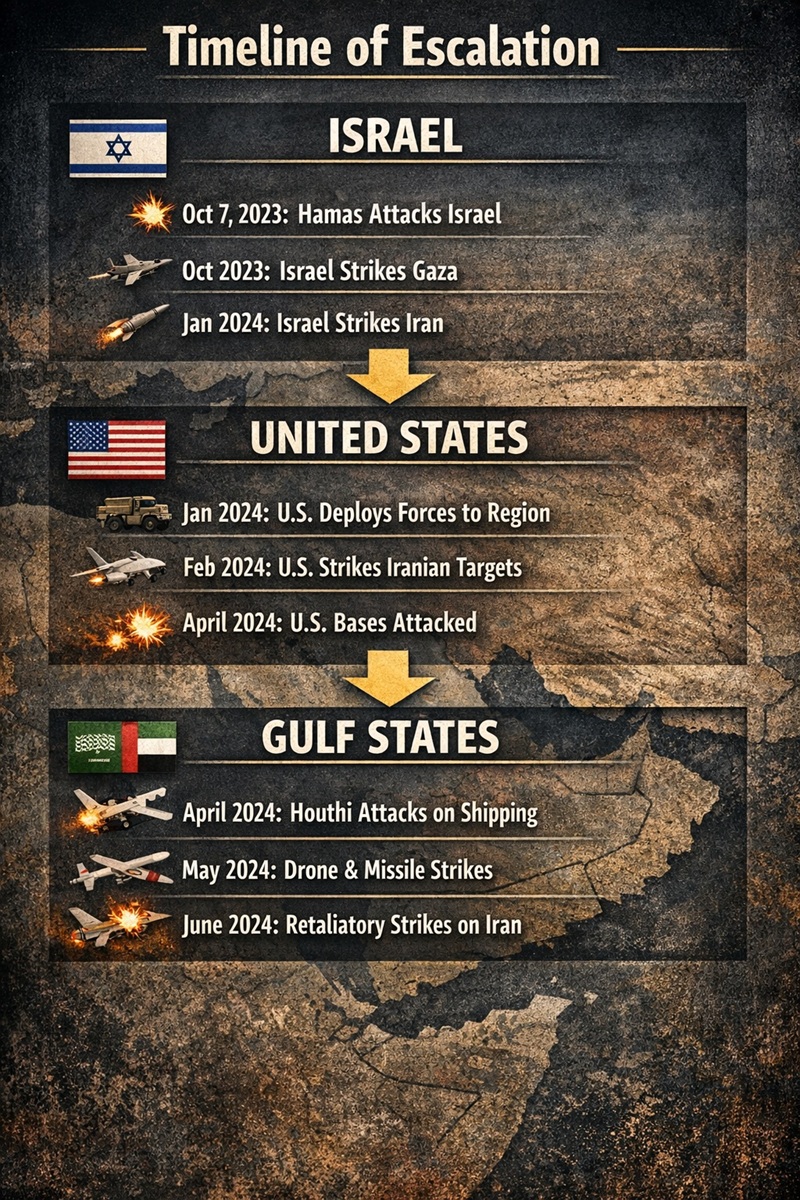
While Gulf states initially resisted direct involvement, recent Iranian attacks on regional infrastructure and U.S. bases have forced a reassessment of their strategic posture.
Saudi Arabia Expands US Military Access
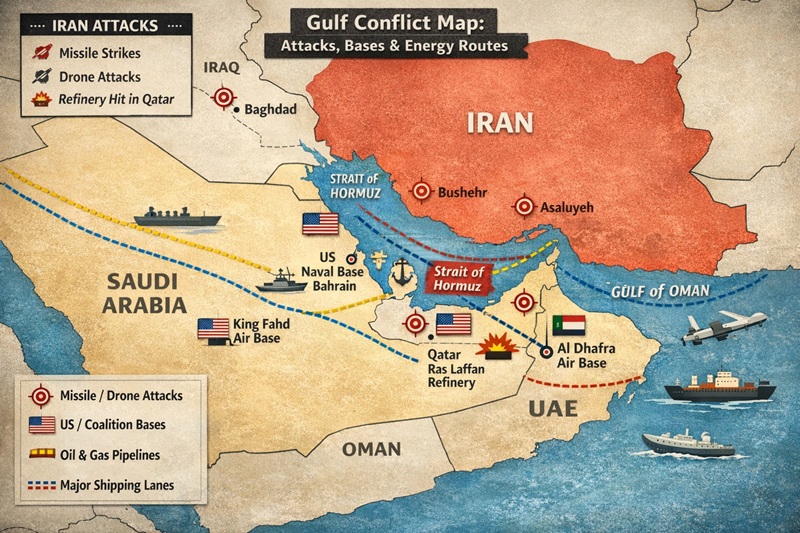
Earlier this month, U.S. officials secured expanded access to Saudi military infrastructure, including King Fahd Air Base in Taif, a key facility located farther from Iranian drone threats.
The base’s strategic importance lies in:
- Reduced vulnerability to Iranian Shahed drone attacks
- Proximity to Jeddah, a critical Red Sea logistics hub
- Potential role in sustaining long-term U.S. military operations
With thousands of U.S. troops reportedly deploying from East Asia, Saudi Arabia is emerging as a crucial operational partner in the region.
UAE Signals Readiness for Prolonged Conflict
The UAE has also indicated that it is preparing for a long-duration war, with officials suggesting the conflict could last up to nine months.
Despite earlier lobbying against military escalation, Abu Dhabi is now:
- Supporting sustained U.S. operations
- Strengthening defensive readiness
- Absorbing heavy missile and drone attacks
Since the conflict began, the UAE has intercepted:
- 338 ballistic missiles
- 1,740 drones
This underscores the intensity of Iranian retaliation across the Gulf.
Gulf States Caught Between War and Diplomacy
Despite growing alignment with Washington, Gulf monarchies remain cautious about full-scale involvement.
Key concerns include:
- Avoiding direct military confrontation with Iran
- Maintaining regional stability
- Preserving diplomatic channels
Countries like Oman continue to advocate de-escalation, warning that the conflict is not in the long-term interest of U.S. allies.
At the same time, Saudi Arabia has issued strong warnings to Tehran, reserving the right to take military action if attacks continue.
Rising Costs: Energy, Security, and Stability
The Gulf region has borne the brunt of the war’s consequences:
- Qatar’s Ras Laffan refinery suffered major damage, impacting 17% of gas production
- Oil and gas exports have been disrupted
- U.S. missile defense systems (Patriot, THAAD) face supply shortages
These developments have raised questions about the reliability of U.S. security guarantees in the region.
A Divided Gulf Strategy Emerges
Analysts say a clear divide is forming among Gulf states:
- Saudi Arabia & UAE: Moving toward deterrence and conditional support for U.S. actions
- Oman & others: Emphasizing diplomacy and neutrality
This divergence reflects differing national interests, threat perceptions, and strategic priorities.
The Strait of Hormuz Factor
Control of the Strait of Hormuz, through which nearly 20% of global energy flows, remains central to the conflict.
Experts suggest Gulf states could:
- Strengthen collective defense mechanisms
- Coordinate naval operations
- Potentially support efforts to reopen the waterway
However, any offensive move risks escalating the conflict further.
Strategic Dilemma: Deterrence vs Escalation
Saudi Arabia and its allies face a difficult balancing act:
- Too passive: Risk emboldening Iran
- Too aggressive: Risk full-scale regional war
As one analyst noted, Gulf states are attempting to “thread the needle” between deterrence and diplomacy.
Conclusion
The evolving position of Saudi Arabia and the UAE highlights a major shift in Middle East geopolitics.
While neither country seeks full-scale war, increasing Iranian attacks and U.S. pressure are pushing them closer to active support roles.
The result is a fragile equilibrium—one where the Gulf is simultaneously a battlefield, a mediator, and a strategic pivot point in a rapidly expanding conflict.