
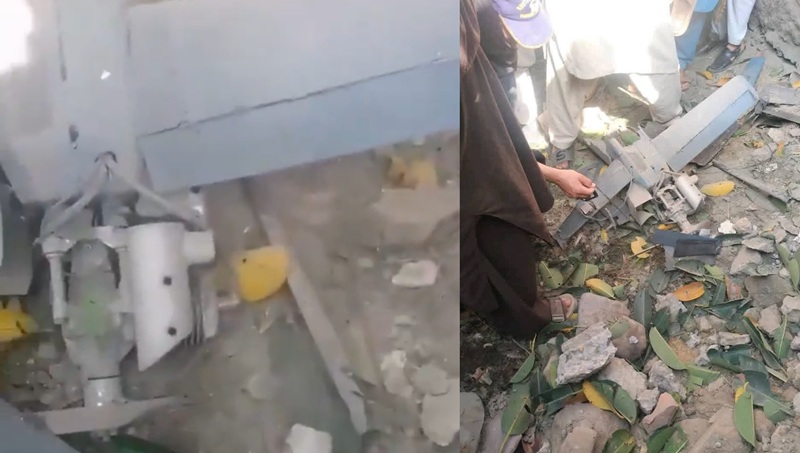
Concerns about the Afghan Taliban’s expanding drone capabilities intensified after the group claimed responsibility for drone attacks targeting Islamabad, Abbottabad, Nowshera, and Swabi. Pakistani security sources say most of the drones were intercepted and shot down by the Pakistan Army’s air defense systems, while one drone crash-landed in Swabi, causing minor property damage but no major casualties.
The incident has renewed attention on earlier reports suggesting the Taliban have been developing a cross-border kamikaze drone program using former Western military bases in Afghanistan.
Latest Developments: Four Cities Targeted
According to security officials:
- The Taliban claimed drone strikes on Islamabad, Abbottabad, Nowshera, and Swabi.
- Pakistan’s air defense systems intercepted and destroyed most incoming drones.
- One drone fell in Swabi, causing limited material damage.
- No significant civilian casualties have been reported.
If verified, the attempted attacks would mark a significant escalation in the use of drone warfare across the Pakistan–Afghanistan frontier.
𝗧𝗮𝗹𝗶𝗯𝗮𝗻 𝗞𝗮𝗺𝗶𝗸𝗮𝘇𝗲 𝗗𝗿𝗼𝗻𝗲𝘀 𝗗𝗲𝘁𝗼𝗻𝗮𝘁𝗲 𝗶𝗻 𝗣𝗮𝗸𝗶𝘀𝘁𝗮𝗻; 𝗔𝗿𝗺𝘆 𝗔𝗶𝗿 𝗗𝗲𝗳𝗲𝗻𝘀𝗲𝘀 𝗤𝘂𝗲𝘀𝘁𝗶𝗼𝗻𝗲𝗱
Videos and photos circulating on social media show Taliban kamikaze drones detonated in multiple Pakistani cities. While Pakistani sources… https://t.co/znkg6jl2sw pic.twitter.com/eDZsXGTmSO— Afghan Analyst (@AfghanAnalyst2) February 27, 2026
Former Western Bases Allegedly Repurposed for Drone Development
Previous media investigations reported that:
- A former British Special Air Service (SAS) base in Logar province is being used as a drone testing site.
- Camp Phoenix, a former major U.S. logistics and training hub near Kabul, is allegedly being repurposed for drone manufacturing.
- After the 2021 Western withdrawal, Taliban engineers reportedly gained access to abandoned military hardware and infrastructure.
These facilities are said to form the backbone of a developing domestic drone program.
Which Drone Systems Are Being Replicated?
Reports indicate Taliban engineers may be attempting to replicate advanced unmanned systems such as:
- MQ-9 Reaper
- Shahed 136
Potential Capabilities:
- Long-range flight capacity
- Explosive payload delivery
- Target surveillance before impact
- Kamikaze-style strike functionality
The Shahed-136, in particular, is a relatively low-cost loitering munition capable of traveling long distances before detonating on impact — a model that has been widely used in modern conflicts.
Foreign Technical Assistance Alleged
Intelligence sources cited in prior reports claim the Taliban may have received technical expertise from:
- Turkey
- China
- Russia
- Belarus
- Bangladesh
Drone components are reportedly sourced from China and Turkey, and a Russian specialist is said to be assisting engineers. Additionally, one engineer allegedly linked to al-Qaeda is believed to be involved in the program, raising further security concerns.
Strategic Implications for Pakistan and the Region
If the Taliban have indeed developed operational cross-border drone capabilities, the implications are significant:
- Increased risk of low-cost urban attacks.
- Greater strain on air defense systems.
- Escalation of cross-border tensions.
- A shift toward asymmetric aerial warfare.
Pakistan’s rapid interception of most drones suggests defensive readiness, but the Swabi incident highlights that the threat may not be fully neutralized.
Conclusion
The Taliban’s claim of drone strikes on Islamabad and other Pakistani cities underscores the evolving nature of regional security threats. While Pakistan successfully intercepted most of the drones, the incident reflects the growing role of unmanned systems in modern conflict.
As drone technology becomes more accessible and adaptable, the strategic landscape across South Asia may face a new phase of security challenges requiring updated defensive doctrines and regional countermeasures.