For the first time since returning to power, the Afghan Taliban are speaking less like rulers and more like a movement trying to convince itself to stay together.
Across Afghanistan, senior Taliban leaders are repeating the same words with unusual urgency: unity, obedience, loyalty to the Amir, survival of the Islamic system. When power feels secure, such language is unnecessary. When it feels threatened, it becomes constant.
This shift tells us something important: the Islamic Emirate is entering its most vulnerable phase.
When Leaders Start Warning Their Own Ranks
In recent weeks, figures ranging from Mullah Abdul Ghani Baradar to Defence Minister Mullah Yaqoob and Higher Education Minister Neda Mohammad Nadeem have delivered near-identical messages. None focused on economic recovery or diplomacy. All focused on discipline.
That uniformity is revealing. It suggests the leadership is less concerned about foreign pressure than about fractures within its own ranks.
The turning point came with unusually blunt remarks by Interior Minister Sirajuddin Haqqani, who openly criticised governance by fear and intimidation, warning that coercion cannot sustain a state. In Taliban political language, this was extraordinary.
The message was clear — and so was the reaction.
Kandahar Pushes Back
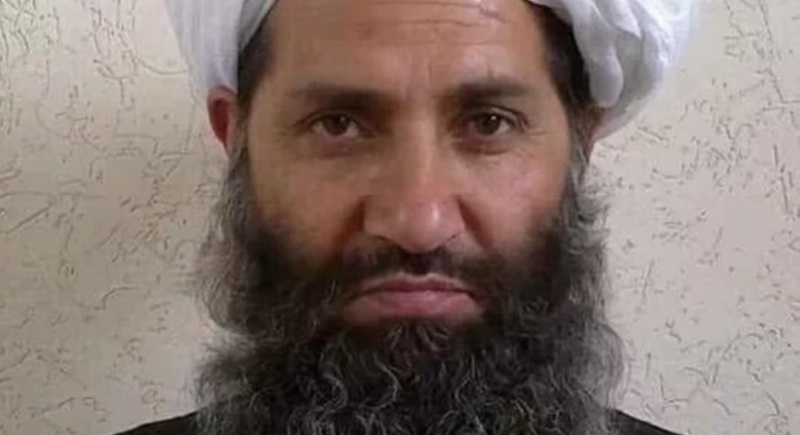
Soon after Haqqani’s remarks, senior figures close to Supreme Leader Haibatullah Akhundzada responded publicly. They warned against “distrust” and “division,” stressing that the Emirate’s survival depends on unity.
Nadeem, one of Akhundzada’s closest allies, repeated this message several times in a single week. That repetition was not accidental. It was defensive.
Former deputy foreign minister Abbas Stanikzai went even further, openly criticising the leadership’s direction. His departure from Afghanistan shortly afterward sent a signal: dissent has limits — and those limits are tightening.
What the Taliban Are Really Arguing About
The Taliban insist ideological unity remains intact. That may be true. But ideology is not the real battleground.
The internal disagreements revolve around three practical questions:
- How rigid should social policies be, especially on women and education?
- Can the Emirate survive permanent international isolation?
- How much power should be concentrated in Kandahar — and in one man?
These are not minor differences. They go to the heart of whether the Taliban want to rule indefinitely or merely dominate temporarily.
Isolation Is Weakening the System
The Taliban may claim sovereignty, but isolation has consequences they cannot ignore.
Afghanistan’s economy is collapsing. Aid is conditional. Recognition remains distant. Sanctions limit basic governance. This does not just hurt ordinary Afghans — it erodes the state’s capacity to function.
Isolation also creates space for external actors to hedge their bets by supporting armed opposition or pressuring the Taliban indirectly.
Unity, in this context, is no longer a virtue. It is a survival strategy.
No Neighbour Is Truly Comfortable
Despite diplomatic engagement, no major regional power genuinely trusts the current Taliban system.
- Pakistan faces escalating militant violence and is openly discussing political change in Kabul.
- Iran has warned against exclusionary rule and quietly backed Taliban opponents.
- Russia and China fear ISIS expansion, militant flows and regional instability.
Even India’s limited engagement is cautious and interest-based, not ideological.
The Taliban are increasingly surrounded by sceptics — not allies.
Why Loyalty Campaigns Signal Weakness
The Taliban’s turn toward clerics, mosques and public calls for renewed allegiance reflects a familiar authoritarian reflex. When institutions are weak, regimes rely on loyalty rituals.
These campaigns are meant to project strength. In reality, they expose anxiety.
Repeated demands for obedience suggest that obedience is no longer guaranteed.
Two Existential Dangers
The Emirate now faces two interconnected risks.
First, the risk of losing effective control as economic failure, regional hostility and internal dissatisfaction converge.
Second, the risk of leadership rupture, as Akhundzada’s rigid authority increasingly appears to some insiders as an obstacle rather than an anchor.
For his supporters, enforcing loyalty is the cheapest way to preserve the system.
For critics, leadership change appears the least costly path to adaptation.
The Moment Before the Shift
The Taliban are not collapsing. Not yet.
But they are no longer confident. Their unity is enforced, not organic. Their authority is asserted, not negotiated. Their legitimacy rests on fear, not consent.
History shows that such systems rarely break suddenly — but when they do, the break is decisive.
Afghanistan is once again approaching a turning point.
The only uncertainty is whether change will come through reform — or rupture.