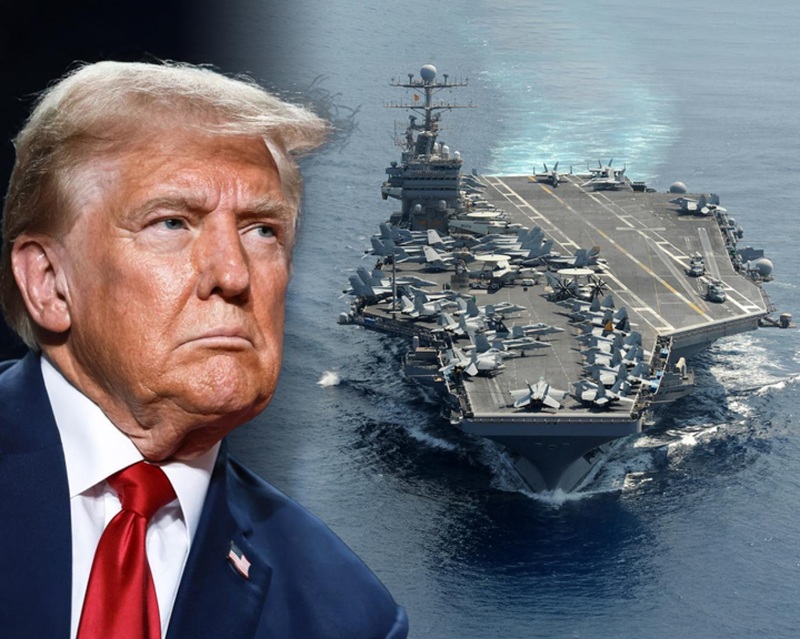
The administration of U.S. President Donald Trump is actively reviewing a broad range of expanded military options against Iran, as unrest inside the country intensifies and concerns grow over Tehran’s nuclear and missile programs, according to reports from major American media outlets.
Senior U.S. officials have briefed President Trump on scenarios ranging from large-scale air and missile strikes to special forces operations aimed at crippling Iran’s strategic capabilities or destabilizing the ruling system. The deliberations come amid widespread protests in Iran, which erupted in late December 2025 and have been met with a violent crackdown by state security forces.
Pentagon Plans: From Limited Strikes to “Decisive” Action
According to reporting by the Wall Street Journal, the Pentagon and the White House have jointly prepared options for what officials describe as “decisive” military action, including a large-scale strike plan targeting Iranian regime assets and facilities linked to the Islamic Revolutionary Guard Corps.
Alongside these expansive scenarios, more limited strikes are also under review, designed to pressure Tehran or degrade specific IRGC infrastructure without triggering a full-scale war.
U.S. defense planners caution, however, that any attempt to target or capture Iran’s Supreme Leader Ali Khamenei would be vastly more complex than past high-profile operations. Analysts note that a so-called “decapitation strategy” would likely require major ground and air deployments to prevent chaos after such an action—resources that are not currently available without a broader invasion.
Special Forces and Nuclear Sites
The New York Times reports that the White House is also considering special operations raids against Iranian nuclear facilities that may remain operational despite earlier strikes. These options go beyond earlier proposals and focus on severely damaging Iran’s ability to pursue nuclear weapons, expand missile production, and support proxy groups across the region.
Some scenarios reportedly envision actions that could weaken the authority of the supreme leader, generate internal instability, or create conditions for long-term regime erosion. While President Trump has not authorized any military action so far, he has repeatedly used the threat of force to push Iran toward negotiations.
Protests, Crackdown, and Rising Regional Volatility
The strategic debate is unfolding as Iran faces one of its most severe internal crises in years. U.S. officials and UN-linked estimates suggest that up to 18,000 people may have been killed during the suppression of protests since December 2025.
These tensions follow earlier U.S. airstrikes on Iranian targets in June 2025 and a brief but intense war involving Israel last year, both of which heightened regional instability. President Trump has warned that further violence against protesters could trigger U.S. military action, though he temporarily eased pressure after reports that some executions in Iran were halted.
Allies Divided, Gulf States Push Back
Israel has reportedly encouraged Washington to consider a joint large-scale operation focused on Iran’s missile infrastructure, reflecting deep concern over Tehran’s growing capabilities.
In contrast, key Gulf allies have imposed firm limits. Saudi Arabia and the United Arab Emirates have refused to allow their airspace or territory to be used for strikes on Iran, citing fears of retaliation similar to the 2019 attacks on Saudi oil facilities and the risk of being drawn into a direct conflict.
This reluctance forces the U.S. to rely more heavily on unilateral assets, including the USS Abraham Lincoln carrier strike group, F-15E aircraft based in Jordan, B-2 stealth bombers, submarines, and long-range strike platforms operating from Diego Garcia.
High Risks, No Final Decision
Military analysts warn that even a successful strike campaign could lead to prolonged instability rather than orderly regime change. Iran’s vast territory, entrenched security apparatus, and willingness to use force against dissent mean that any conflict could stretch on for weeks or months, especially without strong regional support.
As of late January 2026, no final decision has been taken. President Trump continues to call on Iran to negotiate a nuclear deal while emphasizing the strength of U.S. military positioning in and around the region.
Whether these expanded options represent serious preparation for war or leverage for diplomacy remains unclear. What is certain is that the discussions highlight the high stakes and the risk of rapid escalation in an already volatile Middle East.