Turkey and Saudi Arabia are moving closer to a landmark defence-industrial partnership centred on KAAN, Turkey’s fifth-generation fighter aircraft, signalling a deeper strategic convergence that goes far beyond conventional arms procurement.
President Recep Tayyip Erdoğan, speaking to journalists after recent official visits to Egypt and Saudi Arabia, described the emerging Turkish–Saudi defence alignment as both irreversible and strategically urgent. He confirmed that major defence cooperation agreements are being finalised and revealed that joint Saudi investment in the KAAN programme could materialise at any moment .
BREAKING 🚨 — Turkey and Saudi Arabia can jointly invest in Turkish fifth generation fighter jet project KAAN at any moment, Erdogan says pic.twitter.com/IJ3HplohjW
— Ragıp Soylu (@ragipsoylu) February 5, 2026
These remarks were reinforced by senior leadership at Turkish Aerospace Industries (TAI). General Manager Mehmet Demiroğlu stated that negotiations have reached “the final and highest level,” language typically used in defence diplomacy to indicate that political, financial, and technical hurdles have largely been resolved .
KAAN: A Strategic Platform, Not Just a Fighter Jet
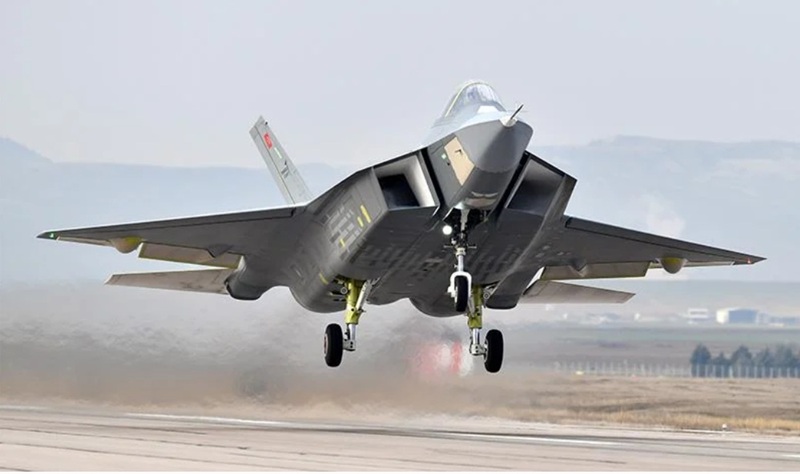
Formerly known as TF-X, KAAN represents Turkey’s most ambitious defence-industrial undertaking. Designed as a twin-engine, all-weather stealth fighter, the aircraft is intended to replace ageing F-16s while also serving as a cornerstone of Turkey’s long-term airpower autonomy and export strategy.
KAAN incorporates low-observable design features, internal weapons bays, advanced sensor fusion, and artificial intelligence-assisted decision support systems. Initially powered by General Electric F110 engines, the programme also prioritises the development of an indigenous engine to reduce long-term dependence on foreign suppliers. Serial production is targeted for 2028, with additional prototypes entering flight testing in the near term .
Why Saudi Arabia Is Interested
For Saudi Arabia, KAAN aligns closely with Vision 2030, which emphasises domestic defence manufacturing, technology transfer, and sustainment autonomy. Riyadh is increasingly seeking alternatives to traditional Western suppliers amid concerns over political conditionality, operational restrictions, and long-term support vulnerabilities.
Saudi participation is reportedly being explored across several models, including direct acquisition, joint investment in KAAN’s development, and the establishment of local assembly or component manufacturing lines inside the Kingdom. Potential order quantities are understood to range from 20 to more than 100 aircraft—volumes that would justify advanced localisation and deeper technology transfer .
Strategic Gains for Ankara
For Ankara, Saudi investment offers critical financial relief for a capital-intensive programme, accelerates development timelines, and enhances KAAN’s credibility in the global arms market. Indonesia’s 2025 agreement to acquire 48 KAAN fighters under a US$10 billion framework has already demonstrated the viability of Turkey’s export-linked investment model, setting a precedent now being closely watched in Riyadh .
TAI’s decision to open a permanent office in Saudi Arabia further underscores Turkey’s intent to embed itself within the Kingdom’s defence-industrial ecosystem and pursue a long-term aerospace partnership rather than a one-off transaction.
Regional and Geopolitical Implications
A Turkish-Saudi KAAN partnership would have far-reaching implications for the Middle East’s airpower balance. For Saudi Arabia, KAAN’s stealth and deep-strike capabilities would complement existing Eurofighter Typhoon and F-15 fleets, strengthening deterrence against Iranian missile forces and proxy threats. For Turkey, it would reinforce its position as a leading non-Western supplier of advanced combat aircraft.
More broadly, such a partnership would signal a shift toward multipolar defence procurement, challenging long-standing supplier monopolies and illustrating how middle powers are increasingly co-producing advanced systems outside traditional alliance frameworks.
While challenges remain—particularly around engine development, technology transfer sensitivities, and exposure to potential sanctions regimes—the strategic logic underpinning the KAAN-Saudi partnership appears increasingly compelling.
As Erdoğan noted, international feedback on KAAN has been “very positive,” reflecting growing confidence that the programme could emerge as a defining symbol of next-generation airpower shaped by middle powers on their own terms .