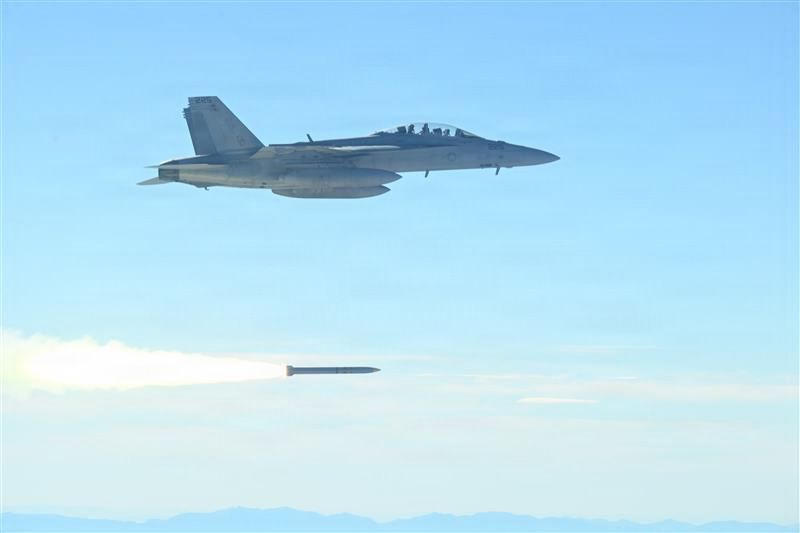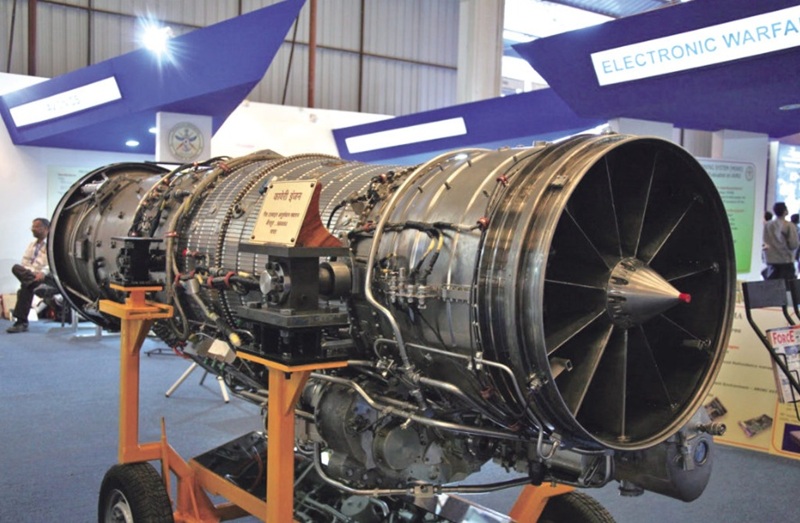
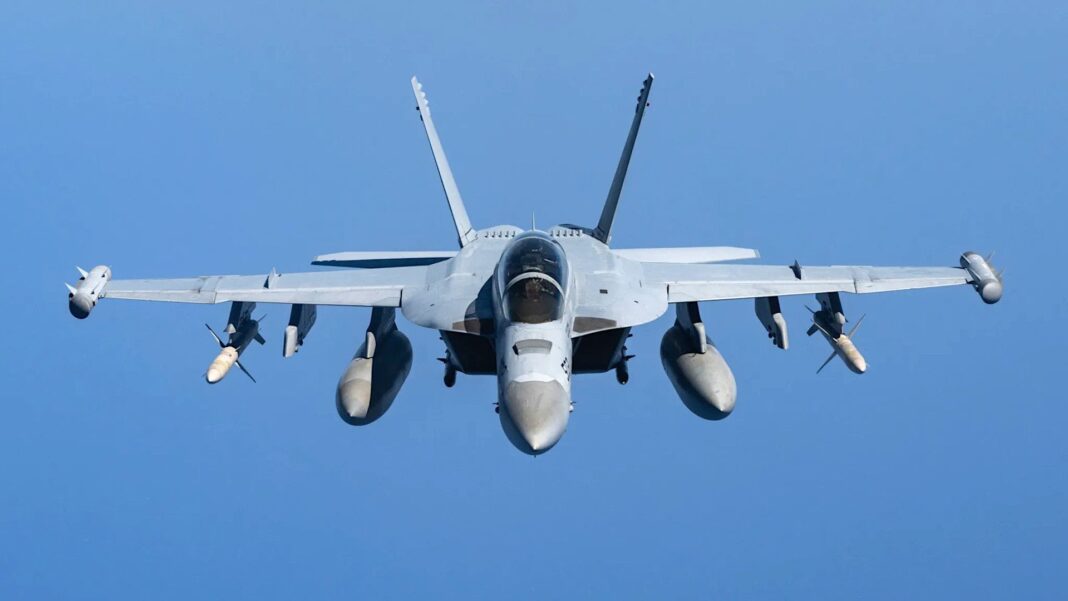
The deployment of two EA-18G Growler electronic attack aircraft to a Jordanian air base is drawing close attention from defense analysts, as it signals a potential shift toward electronic warfare–enabled air operations in the Middle East.
According to available imagery and flight data, one Growler arrived equipped with the legacy ALQ-99 electronic warfare pod, while the second carried the newer ALQ-249 Next Generation Jammer (NGJ)—a combination that provides both proven and next-generation jamming capabilities against modern air-defense systems.
Electronic Warfare at the Center of Operations
The ALQ-99 pod has long been the backbone of U.S. airborne electronic attack, designed to jam enemy radars, disrupt surface-to-air missile (SAM) guidance, and reduce the likelihood of aircraft detection and missile lock-on.
In contrast, the ALQ-249 NGJ represents a major leap forward. The system offers significantly stronger jamming power, faster threat identification, digital beam steering, and improved effectiveness against modern, networked air-defense environments. It is specifically designed to counter advanced radar systems and integrated air-defense networks.
The presence of both pods suggests not a training detachment, but an operationally flexible electronic warfare posture—capable of suppressing both legacy and advanced air-defense threats.
Why Jordan Matters
Jordan occupies a strategically critical position bordering Syria, Iraq, and within operational reach of Iran and its regional proxies. U.S. use of Jordanian bases provides depth, political insulation, and rapid access to multiple theaters without relying solely on Gulf installations.
Defense analysts note that forward-deploying Growlers to Jordan strongly suggests that any future air operations could be launched from this axis, particularly if suppression of enemy air defenses (SEAD) and electronic attack are expected to be decisive.
Likely Strike Architecture
Based on current deployments and regional force posture, any strike package operating from Jordan would likely include:
- F-15E Strike Eagle for heavy precision strike
- F-35 Lightning II for stealth penetration and targeting
- EA-18G Growlers for radar suppression and electronic attack
- Uncrewed aerial systems (UAS) for ISR, decoy, and battle damage assessment
In such an architecture, Growlers would operate ahead of or alongside strike aircraft, degrading radar coverage, disrupting command-and-control links, and opening corridors through defended airspace.
A Broader Regional Signal
The arrival of Growlers equipped with the ALQ-249 NGJ also reflects Washington’s emphasis on maintaining escalation dominance without immediately resorting to large-scale force. Electronic warfare allows the U.S. to neutralize adversary capabilities temporarily, impose uncertainty, and retain flexibility while sending a clear deterrence signal.
The deployment comes amid heightened regional tensions, increased U.S. concern over air-defense proliferation, and growing reliance on layered electronic and cyber effects in modern warfare.
While no official confirmation of imminent strike operations has been issued, the composition and location of these assets indicate that the U.S. is preparing the battlespace—ensuring that if kinetic action is required, enemy sensors and air defenses can be blinded, disrupted, or suppressed from the opening moments.