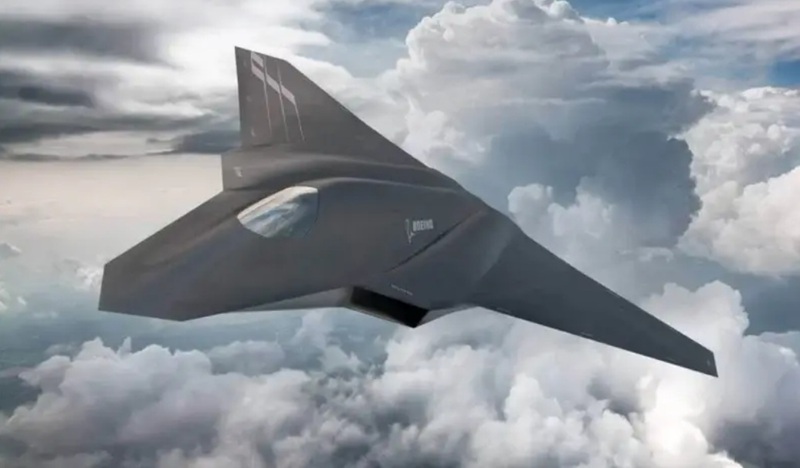
The U.S. Air Force has revealed that the upcoming F-47 sixth-generation fighter will be capable of launching the Stand-In Attack Weapon (SiAW), a missile designed to strike high-value targets inside heavily defended airspace.
The information appeared in a March 4, 2026 notice on SAM.gov, where the Air Force outlined plans to expand industrial capacity for producing the SiAW missile.
The notice identified several potential launch platforms for the weapon, including the F-35, F-16, B-21 Raider bomber, and the future F-47 fighter, marking one of the clearest indications yet of the F-47’s intended operational role.
What the F-47 Fighter Is Designed For
The F-47 is being developed as the centerpiece of the Next Generation Air Dominance (NGAD) program.
When the U.S. Department of the Air Force awarded Boeing the engineering and manufacturing development contract in March 2025, officials described the aircraft as the world’s first sixth-generation fighter.
According to the Air Force, the aircraft is designed to combine:
- Advanced stealth technology
- Sensor fusion
- Long-range strike capability
- Integration with autonomous systems
These features are intended to allow the aircraft to operate inside highly contested environments against advanced adversaries.
More Than an Air-Superiority Fighter
Early discussions of the F-47 often framed the aircraft as the successor to the F-22 Raptor, focusing mainly on air-superiority missions.
However, the association with the SiAW missile suggests a broader operational role.
Rather than functioning purely as a fighter designed to defeat enemy aircraft, the F-47 appears intended to serve as a penetrating strike platform capable of attacking critical enemy systems deep inside defended airspace.
This includes the ability to dismantle key elements of an adversary’s anti-access and area-denial (A2/AD) network.
What the Stand-In Attack Weapon Is
The Stand-In Attack Weapon (SiAW) is being developed specifically for operations against highly defended targets.
According to U.S. Air Force acquisition documents, the missile is designed to allow stealth aircraft to strike targets located within dense air defense environments.
Unlike traditional long-range standoff weapons, SiAW is intended to be used inside contested airspace, enabling rapid engagement of time-sensitive targets.
The missile is expected to be capable of targeting:
- Integrated air defense systems
- Mobile missile launchers
- Anti-satellite systems
- Electronic warfare and GPS jamming systems
- Cruise missile launchers
These targets form the backbone of modern A2/AD networks used by advanced militaries.
Integration With Modern Air Combat Systems
The F-47 is expected to operate as part of a broader NGAD “family of systems.”
This concept includes:
- Collaborative Combat Aircraft (CCA) unmanned drones
- Advanced command-and-control networks
- Long-range sensors and electronic warfare systems
In this architecture, the F-47 would function as a manned command node capable of coordinating both human and autonomous systems during high-intensity operations.
The integration of the SiAW missile strengthens this concept by giving the aircraft the ability to destroy critical enemy systems while operating inside contested environments.
Procurement and Production Plans
The Air Force has already begun allocating funding to build inventory for the SiAW program.
According to the FY2026 Air Force missile procurement budget, the service plans to acquire:
- 99 SiAW missiles in FY2026
- With a budget allocation of approximately $185 million
Earlier procurement quantities in FY2024 and FY2025 suggest the missile program is progressing steadily toward operational deployment.
Industrial and Strategic Implications
The SAM.gov notice also indicates that the Air Force is exploring ways to expand the industrial base for advanced missiles.
By seeking industry proposals for systems comparable to or better than SiAW, the service appears to be planning for long-term scalability and production resilience.
This approach aims to ensure that advanced aircraft like the F-47 are supported by sufficient weapons inventories during prolonged high-intensity conflicts.
What Remains Unknown About the F-47
Despite these developments, many details about the F-47 remain classified.
Key unknown factors include:
- Combat range and endurance
- Engine configuration
- Sensor architecture
- Internal weapons bay capacity
However, the confirmation that the aircraft will carry the Stand-In Attack Weapon provides one of the clearest insights yet into its operational concept.
A Platform for Future High-End Conflict
The integration of SiAW suggests the F-47 will play a major role in future conflicts involving advanced military powers with sophisticated air defenses.
Rather than simply replacing older fighters, the aircraft appears designed to penetrate defended airspace and dismantle the systems that protect enemy forces.
In that sense, the F-47 represents not just a new fighter jet but a central element of the United States’ evolving strategy for air dominance in highly contested battlespaces.