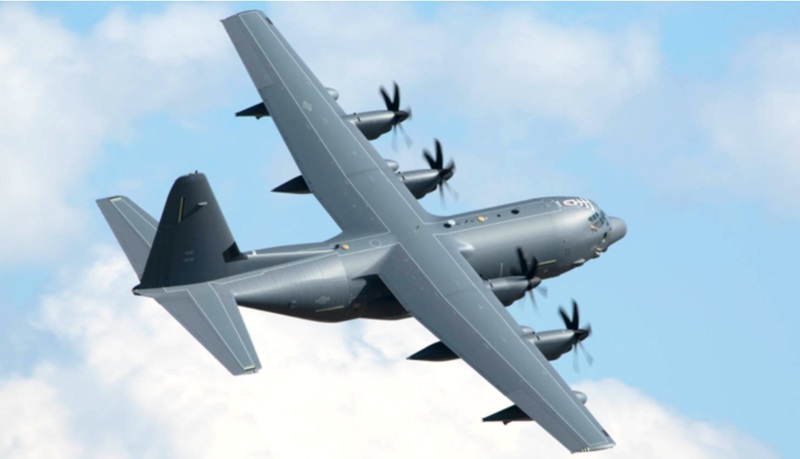
The reported flight of a U.S. Air Force MC-130J Commando II special operations aircraft from the United Kingdom to Azerbaijan has sparked intense strategic speculation, with analysts viewing the move as a calculated signal aimed at Iran rather than a routine military transit.
According to open-source intelligence (OSINT) and flight-tracking data, the aircraft flew on 29 January 2026 from UK-based U.S. facilities — most likely RAF Mildenhall or RAF Fairford — to Baku, utilizing a route designed to avoid politically sensitive airspace while remaining close to NATO-aligned support infrastructure .
Observers noted intermittent transponder deactivation during parts of the flight, a technique commonly associated with sensitive operational tasking rather than routine training or logistics. Such measures are often used during contingency planning, reconnaissance, or preparatory force positioning missions.
Why Azerbaijan Matters
Azerbaijan’s Heydar Aliyev International Airport offers infrastructure capable of discreetly handling large military aircraft under civilian cover, allowing special operations assets to stage without establishing permanent or politically provocative basing arrangements .
Geographically, Azerbaijan sits along Iran’s northern frontier, sharing a border of more than 700 kilometers. This places Baku in a uniquely sensitive position within any U.S. or allied contingency framework, especially amid heightened Iranian concerns over strategic encirclement involving U.S. forces, Israel, and Gulf-based assets .
Special Operations Context
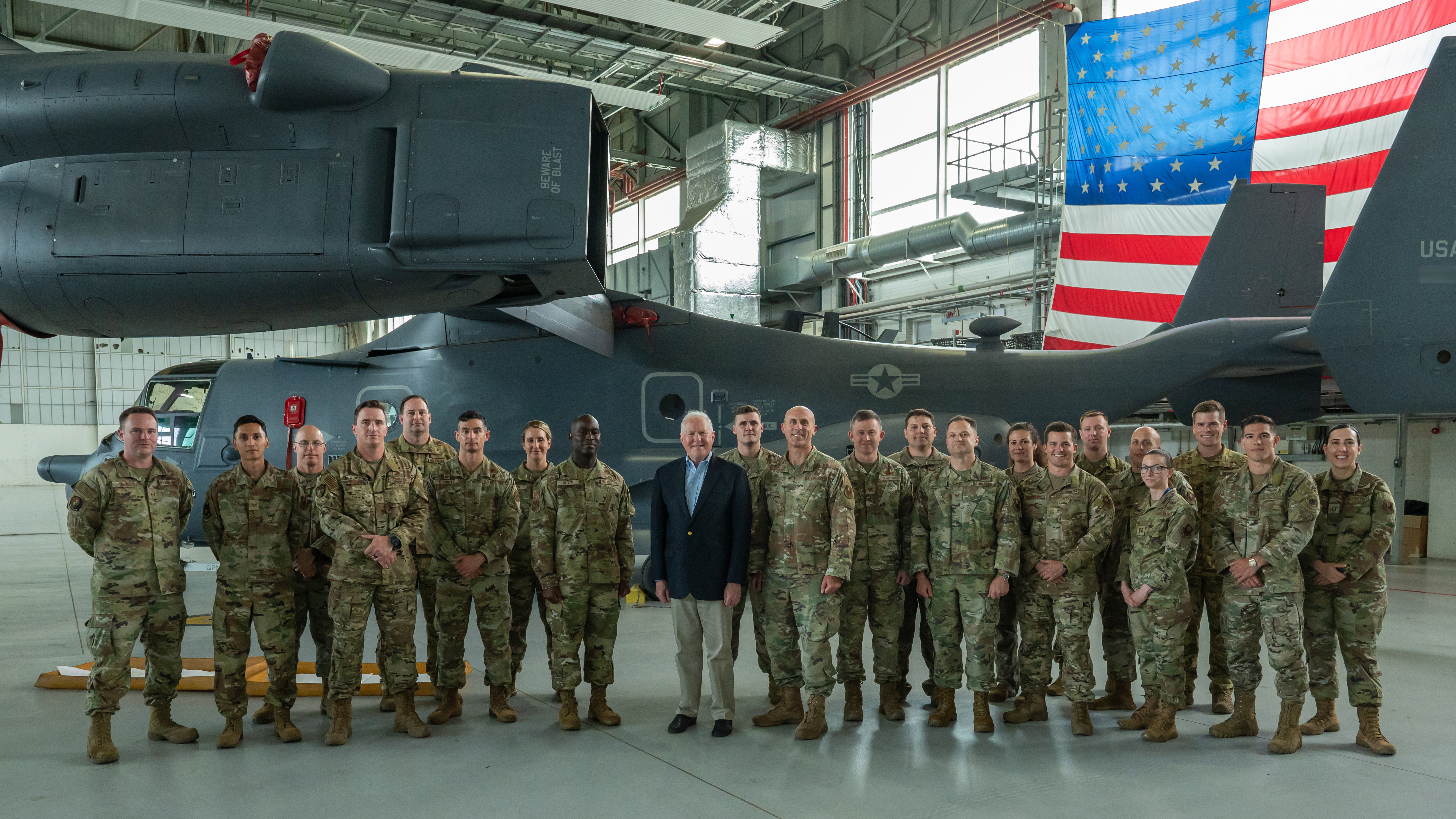
The MC-130J Commando II is operated by Air Force Special Operations Command, and is designed for low-visibility insertion, extraction, resupply, and aerial refuelling of elite U.S. special operations forces in denied or politically sensitive environments.
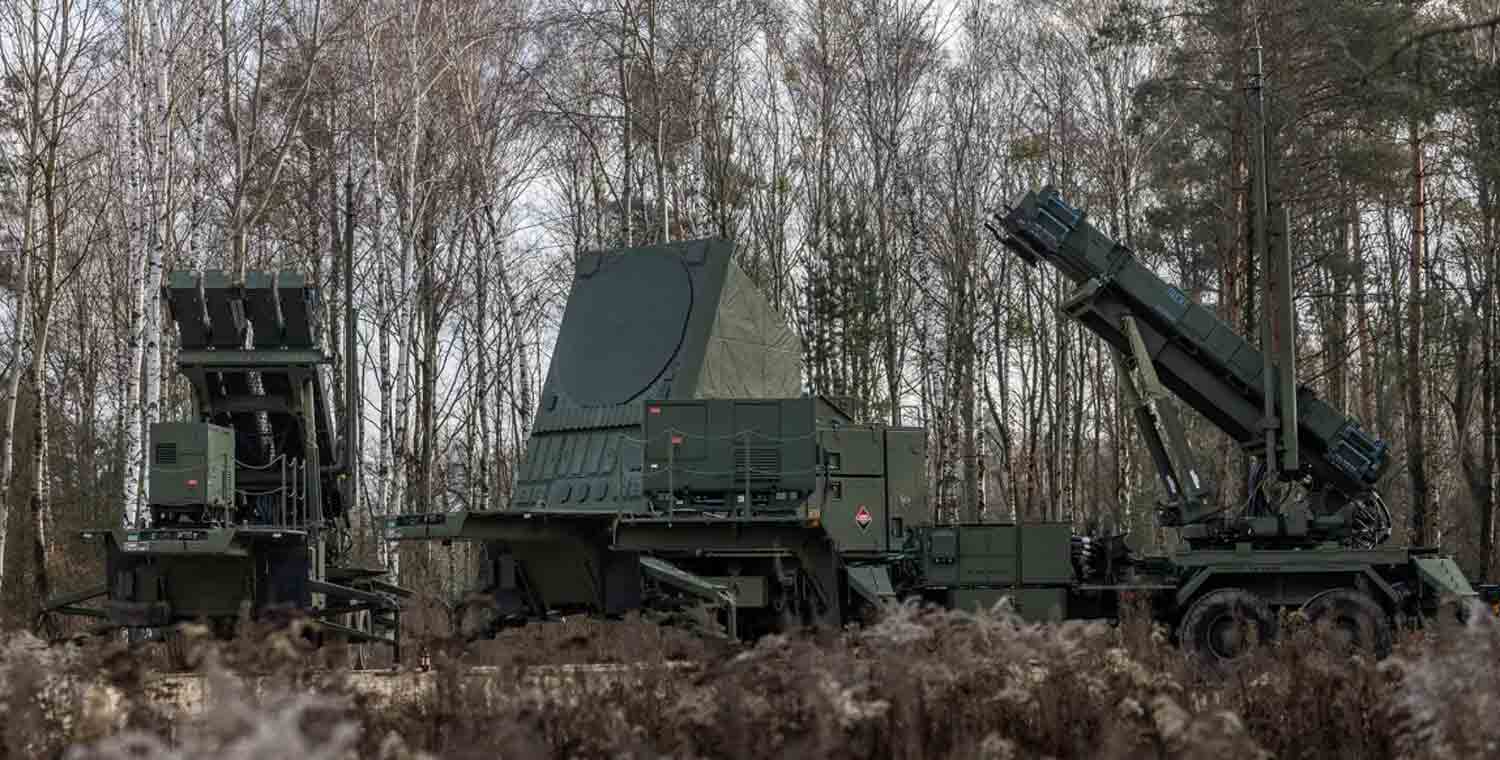
OSINT reporting indicates that the flight aligns with a broader layered force posture, following earlier January arrivals of C-17 Globemaster III transports and AC-130J Ghostrider gunships, as well as rotary-wing platforms linked to the 160th Special Operations Aviation Regiment, including MH-60 Black Hawks and MH-47G Chinooks .
Within this architecture, the MC-130J functions as an enabling node, extending the reach of U.S. special operations through aerial refuelling, sustainment, and covert mobility across long distances.

Strategic Signaling Toward Iran
Analysts stress that the deployment should be viewed through the lens of operational art rather than tactical aviation. The MC-130J’s forward positioning introduces a latent capability to support intelligence insertion, unconventional warfare preparation, or leadership-focused contingency missions — all while preserving diplomatic deniability .
Historical precedent reinforces this interpretation. MC-130 variants have been associated with highly sensitive missions involving the movement or extraction of high-value individuals, making their presence near Iran psychologically significant even in the absence of kinetic action.
From Tehran’s perspective, such deployments compound an already complex threat environment, forcing Iranian security institutions to divert resources toward leadership protection, counter-intelligence, and internal security — imposing strategic costs without a single shot being fired .
Azerbaijan’s Delicate Balancing Act
For Azerbaijan, accommodating discreet U.S. military movements enhances its strategic relevance and deepens Western security ties, while also increasing exposure to Iranian diplomatic, cyber, or proxy pressure. Baku’s long-standing effort to balance relations with Iran, Russia, and Western partners underscores the risks inherent in serving as a quiet operational node in great-power competition .
Bottom Line
The MC-130J Commando II’s transponder-silent arrival in Azerbaijan is less about imminent military action and more about strategic ambiguity. By positioning a platform synonymous with clandestine operations near Iran’s border, Washington expands its menu of options while shaping adversary perceptions, reinforcing uncertainty, and applying psychological pressure — a hallmark of modern conflict conducted below the threshold of open war .