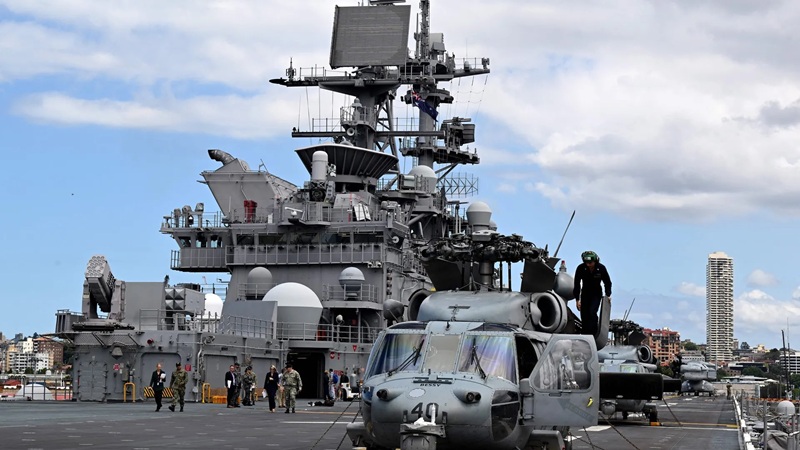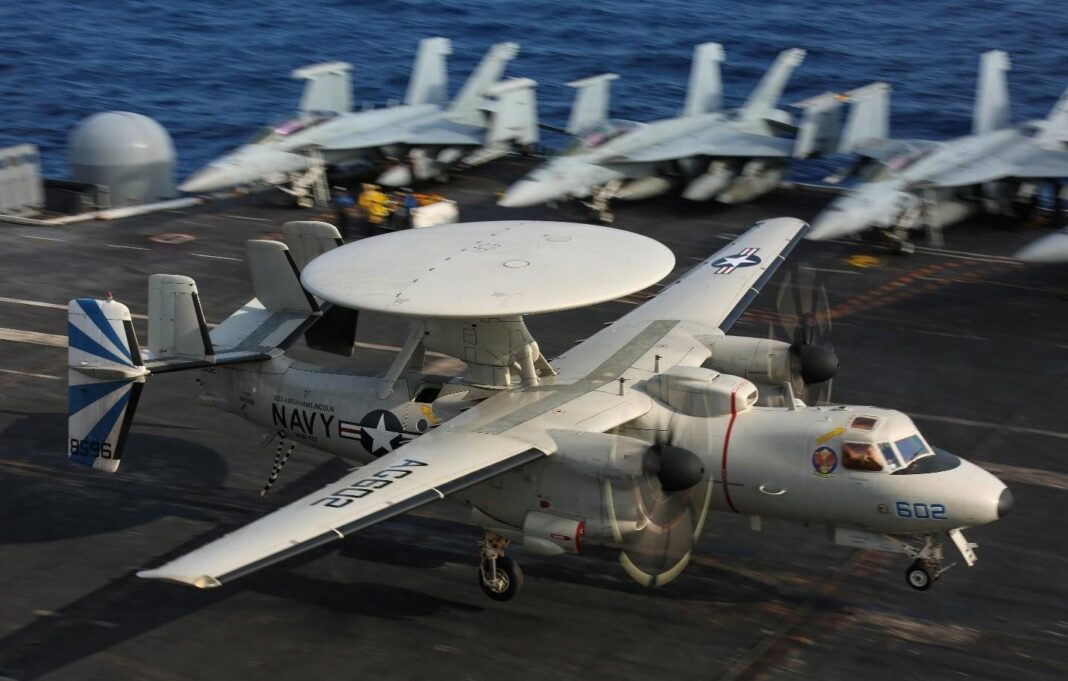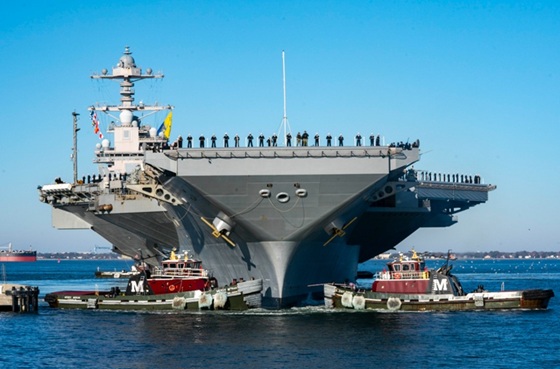
The extension of the USS Gerald R. Ford carrier strike group to an approximately 11-month deployment is not just a military decision—it is a strategic signal.
Carrier deployments are among the most resource-intensive instruments of U.S. power projection. Extending one to nearly a year indicates that Washington is planning for sustained instability, not a short-duration conflict.
This decision reveals more about expectations of the war’s trajectory than any official statement.
JUST IN: The crew of the USS Gerald R. Ford has been told to remain in the Middle East until May, marking one of the longest carrier deployments in years. The extension was confirmed by Vice Chief of Naval Operations Adm. Jim Kilby and reported by The New York Times, USNI News,… pic.twitter.com/mXBBuRYWuL
— Smcapitalclub (@smcapitalclub) March 17, 2026
A Timeline Signal, Not Just a Deployment
The key insight is not the extension itself, but what it implies.
Military planners do not extend high-value naval assets for conflicts expected to resolve within weeks. Instead, such decisions reflect:
- Anticipation of prolonged operational requirements
- Persistent regional instability
- Continued need for deterrence and force presence
The timeline—stretching into late April or May—suggests that U.S. planners expect disruption to continue through the spring.
Market Assumptions vs Military Planning
There is a widening gap between market expectations and military reality.
Many economic models have assumed:
- A 30–45 day disruption window
- Rapid normalization following peak conflict
- Short-lived impact on shipping and energy flows
However, the carrier extension implies planning assumptions closer to:
- 90 days or more of instability
- Continued operational risk in key maritime corridors
- Delayed normalization of shipping and insurance markets
Markets price outcomes. Militaries plan for risks.
Right now, those two timelines are diverging.
The Strait of Hormuz: Persistent Disruption Without Closure
The Strait of Hormuz remains operational—but not open in the conventional sense.
Current conditions reflect a selective access system:
- Approved vessels transit under controlled conditions
- Non-cleared commercial traffic is significantly reduced
- Insurance constraints limit broader shipping participation
This creates a form of functional disruption without total closure, which is sufficient to impact global trade flows.
Insurance, Not Warfare, Drives the Bottleneck
The most critical constraint is no longer purely military—it is financial.
- War-risk insurance premiums have surged
- Coverage availability remains limited
- Reinsurance mechanisms show minimal utilization
Shipping markets do not require active conflict to remain disrupted.
They require uncertainty and unresolved risk.
As long as risk persists, normalization cannot begin.
The Fertilizer Clock: A Critical Overlooked Factor
The timing of the deployment extension intersects with a less visible but highly consequential variable: the global agricultural calendar.
Key timelines include:
- North America planting season (April)
- South Asia crop preparation (May)
- Southern Hemisphere cycles (June)
Fertilizer shipments—particularly urea, ammonia, and sulfur—must move within narrow windows.
Disruption during these periods can lead to:
- Reduced crop yields
- Higher food prices
- Increased global food insecurity
Unlike energy markets, agricultural timelines are biologically fixed and non-negotiable.
The Role of Naval Presence
The USS Gerald R. Ford is not directly responsible for maritime disruption.
However, its extended presence indicates:
- Continued strategic importance of the region
- Anticipation of sustained operational challenges
- Limited expectation of near-term stabilization
In effect, the deployment reflects an acknowledgment that the situation is not yet controllable.
Why the Timeline Matters More Than the Outcome
The extension does not confirm how long the conflict will last.
It confirms something more important:
Planning assumptions are based on continued instability.
For markets and supply chains, this distinction is critical:
- Stability must be sustained before normalization begins
- Insurance markets require extended periods without incident
- Supply chains depend on predictable transit conditions
Even if hostilities decrease, the recovery timeline can lag significantly.
Strategic Implication: A System Under Prolonged Stress
The convergence of factors—military planning, maritime risk, and agricultural timelines—suggests a system under sustained pressure.
- Military operations continue
- Maritime routes remain constrained
- Economic effects are compounding
This creates a feedback loop where:
Risk prolongs disruption, and disruption reinforces risk.
Conclusion
The USS Gerald R. Ford deployment extension is more than a logistical adjustment—it is a strategic indicator of how the United States views the trajectory of the current crisis.
It signals that instability in the Strait of Hormuz may persist through a critical global economic window, with implications extending far beyond the battlefield.
In modern conflicts, timelines matter as much as outcomes.
And right now, the timeline suggests that disruption—not resolution—is the baseline scenario.