India has taken a major step in strengthening its military modernisation drive after the Defence Acquisition Council (DAC) approved defence procurement proposals worth nearly ₹79,000 crore, underscoring New Delhi’s focus on drones, precision strike weapons, and surveillance capabilities across all three services.
The approvals were granted during a meeting of the DAC chaired by Defence Minister Rajnath Singh on December 29, 2025, giving Acceptance of Necessity (AoN) to a wide range of Army, Navy and Air Force acquisitions. AoN is a crucial early step in India’s defence procurement process and signals political clearance for future contracts.
Indian Army: Drones, Rockets and Counter-UAS Systems
For the Indian Army, the DAC approved procurement of loiter munition systems, low-level lightweight radars, long-range guided rocket ammunition for the Pinaka multiple launch rocket system, and the Integrated Drone Detection & Interdiction System (IDDIS) Mk-II.
These acquisitions reflect lessons drawn from recent conflicts, particularly the growing role of drones and precision fires. Loitering munitions will give artillery units the ability to conduct real-time precision strikes against tactical targets, while the lightweight radars are designed to detect small, low-flying unmanned aerial systems.

The long-range guided rockets will significantly extend the reach and accuracy of the Pinaka, enabling engagement of high-value targets deeper inside contested areas. Meanwhile, the upgraded IDDIS Mk-II is aimed at protecting critical military infrastructure and forward formations against hostile drones, a growing concern along both the western and northern borders.
Indian Navy: Maritime Surveillance and Networked Operations
For the Indian Navy, the DAC cleared the procurement of Bollard Pull (BP) tugs, high-frequency software-defined radios, and the leasing of High Altitude Long Endurance (HALE) remotely piloted aircraft systems.
The induction of HALE RPAS is particularly significant, as it will enhance India’s continuous intelligence, surveillance and reconnaissance over the Indian Ocean Region, an area of rising strategic competition. Analysts see this as part of India’s broader effort to monitor expanding Chinese naval activity and safeguard sea lanes.
The radios will strengthen secure long-range communications during boarding and amphibious operations, while BP tugs will improve the Navy’s ability to handle ships and submarines in congested harbours.
Indian Air Force: Missiles, Simulators and Precision Strike
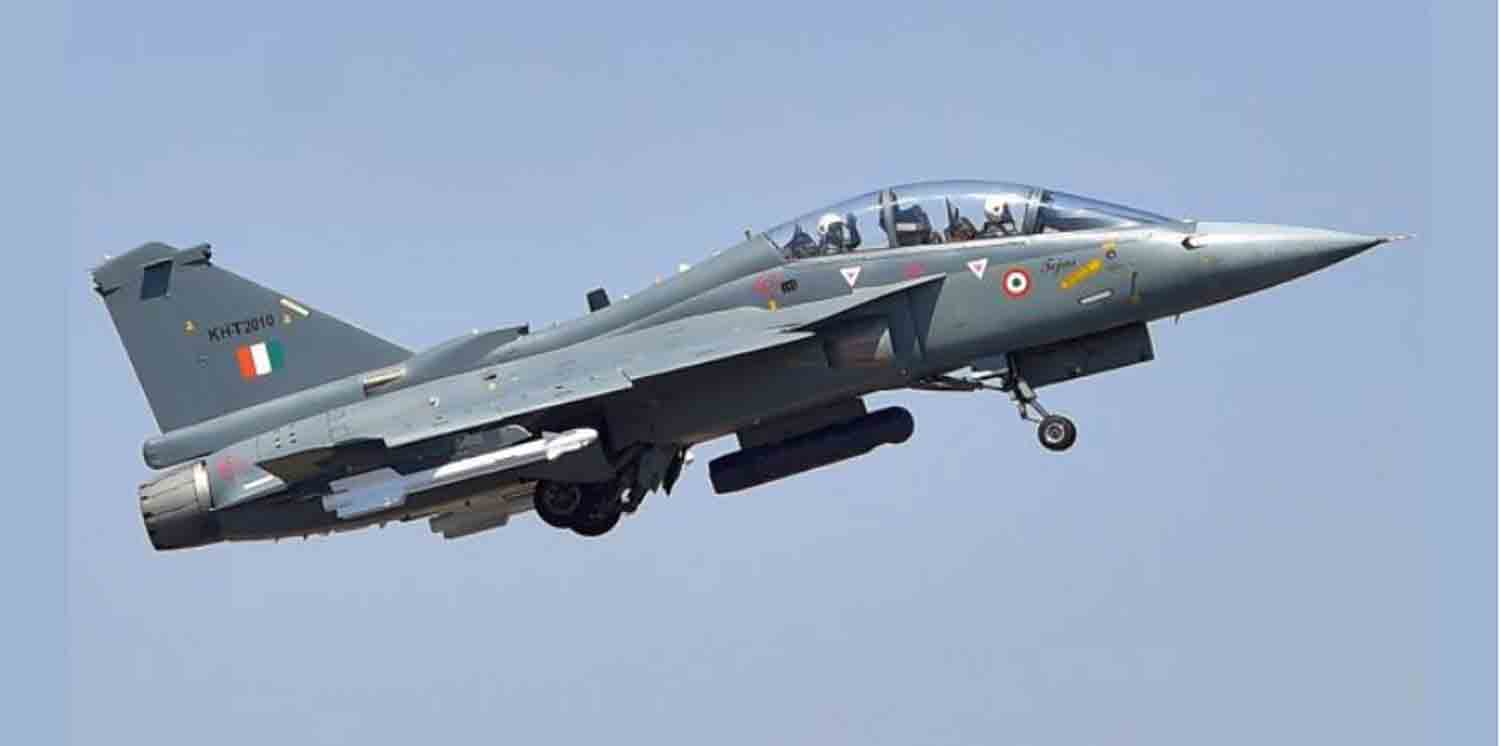
The Indian Air Force received AoN for a mix of combat, training and safety systems, including the Astra Mk-II beyond-visual-range air-to-air missile, SPICE-1000 precision guidance kits, an automatic take-off and landing recording system, and a full mission simulator for the Light Combat Aircraft Tejas.

The Astra Mk-II, with its extended range, will significantly boost the IAF’s ability to engage enemy aircraft from standoff distances, narrowing gaps with regional rivals. The SPICE-1000 kits will enhance long-range precision strike capability, while the Tejas simulator reflects a push toward cost-effective pilot training and higher operational readiness.
Strategic Context
Taken together, the approvals highlight India’s evolving defence priorities: counter-drone warfare, network-centric operations, deep-strike capability and persistent surveillance across land, sea and air. The emphasis on guided rockets, loitering munitions and ISR platforms also aligns with India’s effort to modernise amid lessons from the Ukraine war and rising tensions in the Indo-Pacific.
While AoN does not guarantee immediate contracts, the scale and breadth of the approvals signal sustained political backing for military modernisation and a continued push toward strengthening deterrence through technology-driven capabilities.