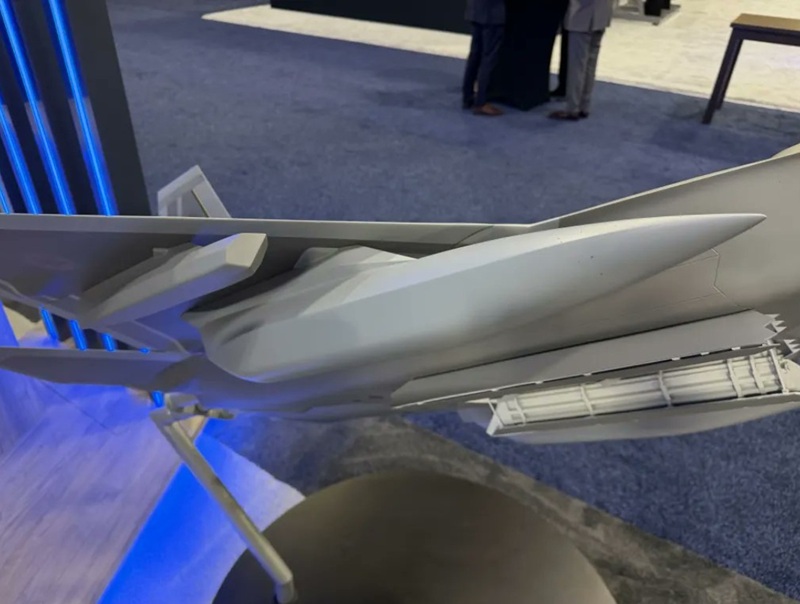
The unveiling of the production-representative “Raptor 2.0” scale model at the Air & Space Forces Association’s Warfare Symposium signals a calculated shift in U.S. airpower strategy as Washington confronts intensifying peer competition in the Indo-Pacific .
Presented by Lockheed Martin, the upgrade reframes the F-22 Raptor not as a sunset platform, but as an extended air dominance node engineered to survive longer, see farther, and operate deeper inside contested battlespace environments .
Why Raptor 2.0 Now?

According to the document, the urgency stems from three converging pressures :
- Expanding Chinese airpower and long-range anti-access/area denial (A2/AD) systems
- Proliferation of integrated air defense networks
- Growing sensor density that compresses survivability margins for legacy stealth aircraft
Flashpoints such as the South China Sea and Taiwan Strait are explicitly highlighted as regions where operational distance and endurance now matter as much as stealth .
The Core Problem: Range and Endurance
Originally fielded in 2005, the F-22 was designed for Cold War-era assumptions about basing and engagement geometry. While its radar cross-section is famously small and its supercruise capability remains formidable, its roughly 530-nautical-mile combat radius increasingly clashes with Indo-Pacific realities .
With only 187 aircraft produced—far below the originally envisioned 750—the fleet faces structural scale limits that modernization must offset qualitatively .
Stealth-Shaped External Fuel Tanks: Extending Reach
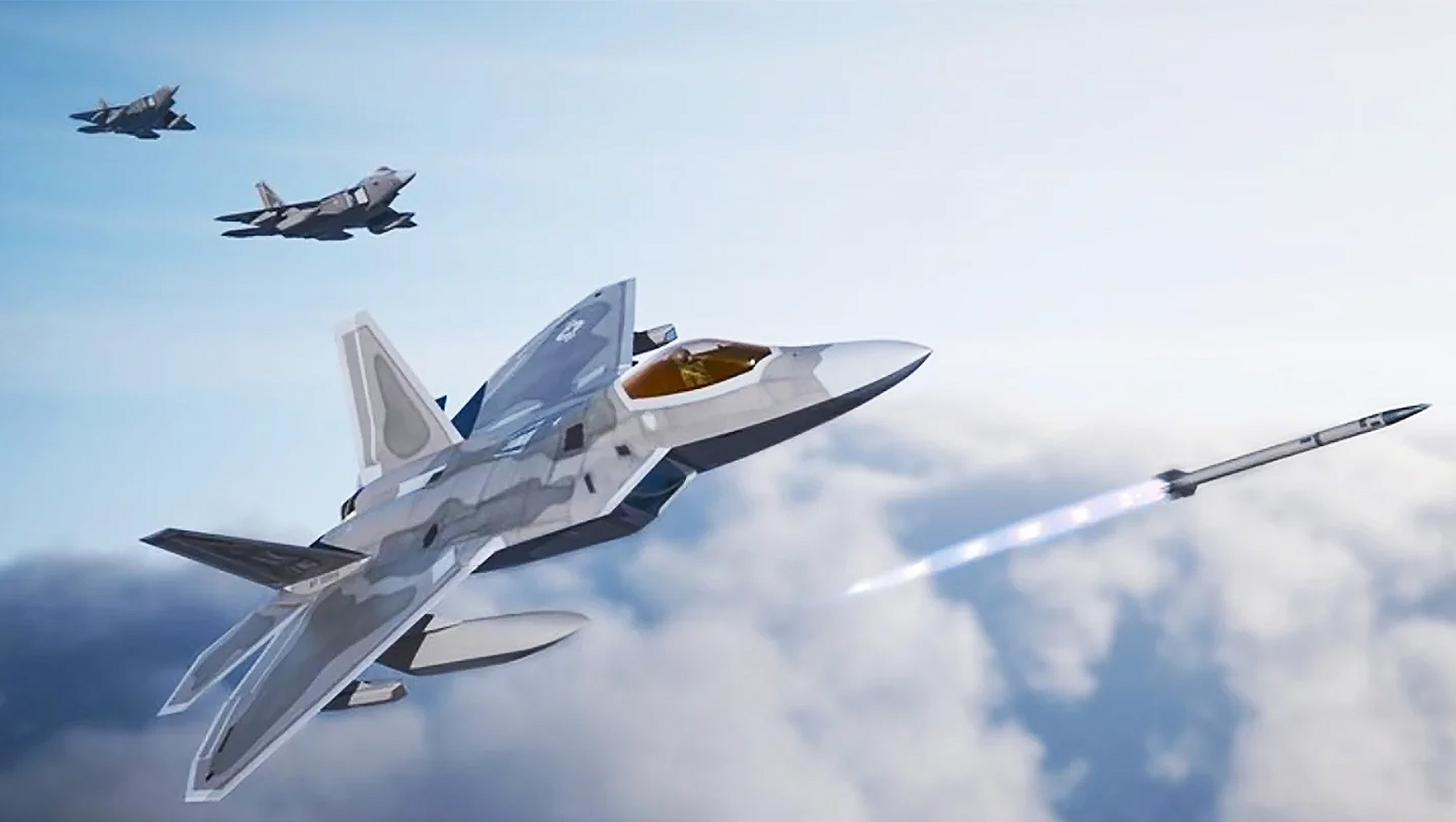
Raptor 2.0 introduces stealth-contoured external fuel tanks designed to increase range without resorting to conventional drop tanks that dramatically increase radar signature .
Key features include:
- Faceted low-observable geometry to minimize radar returns
- Jettison capability before high-intensity combat
- Reduced tanker dependency in dispersed basing scenarios
In a theater defined by maritime expanses and vulnerable tanker assets, even marginal range extensions can reshape sortie generation and survivability calculus .
However, trade-offs exist. Added mass and drag could affect acceleration and sustained supercruise performance under maximum load conditions .
IRST Pods: Restoring Passive Detection
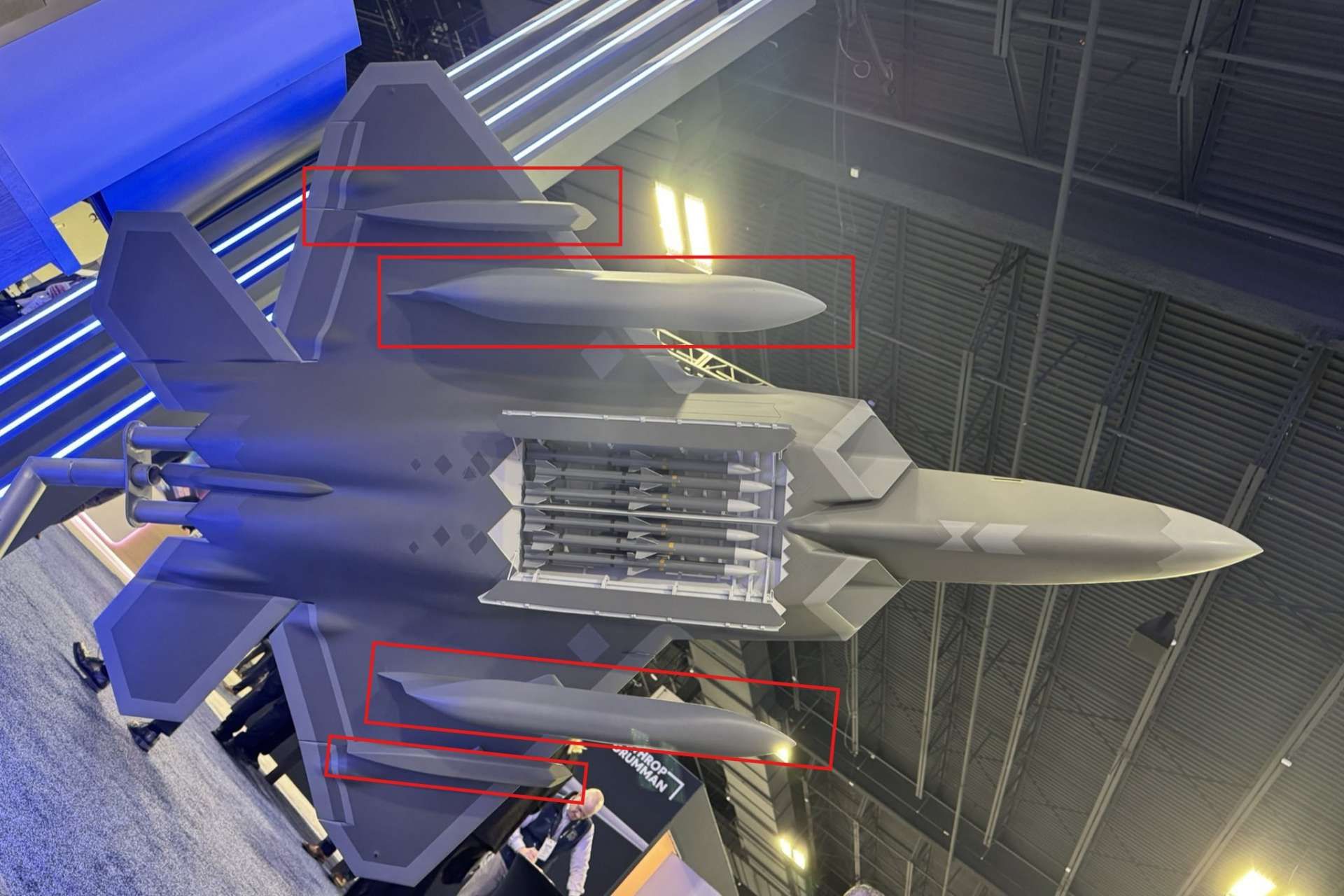
Raptor 2.0 also restores infrared search and track (IRST) capability via underwing Advanced Sensor Pods .
Passive IRST detection allows the aircraft to:
- Identify targets without emitting radar energy
- Preserve electromagnetic silence
- Detect stealth adversaries such as China’s Chengdu J-20 or Russia’s Sukhoi Su-57
The upgrade supports distributed sensor fusion, enabling IRST-equipped aircraft to share targeting data with “clean” F-22s lacking pods .
Still, underwing pods introduce aerodynamic and signature compromises—highlighting the constant balancing act between stealth purity and expanded capability .
Maintenance and Budget Considerations
The document notes that added external components may increase maintenance complexity, especially given the F-22’s historically demanding radar-absorbent material upkeep .
Budget tensions also loom large. Modernization funding competes with next-generation air dominance programs, making Raptor 2.0 a strategic “bridge” rather than a wholesale redesign .
Notably, no propulsion upgrades are included in the disclosed scope—suggesting cost containment and a focus on sensor and endurance improvements over engine replacement .
Strategic Impact: Signaling and Deterrence
Raptor 2.0 does not expand fleet size, but it enhances qualitative edge. The upgrade:
- Extends operational reach into contested zones
- Complicates adversary anti-access strategies
- Reinforces U.S. commitment to fifth-generation air superiority
It also serves alliance reassurance purposes, demonstrating continued U.S. investment in high-end air dominance capabilities amid rising stealth-versus-stealth competition .
Timeline and Operational Outlook
Flight testing milestones in early 2024 indicate the concept has progressed beyond modeling, with integration targeted around 2026 under the FY2025 budget framework .
Operational validation will ultimately determine whether the trade-off between:
- Extended range
- Passive detection
- Performance impact
- Maintenance burden
achieves the intended equilibrium in Indo-Pacific strategic competition .
Conclusion
Raptor 2.0 represents a measured yet consequential recalibration of U.S. air superiority doctrine. Rather than replacing the F-22, the modernization extracts additional utility from a limited fleet, adapting it to longer distances, denser sensors, and stealth-versus-stealth rivalry.
In an era where survivability margins are tightening and engagement envelopes are shrinking, Raptor 2.0 signals that the United States intends to preserve its air dominance edge—even as sixth-generation platforms loom on the horizon .