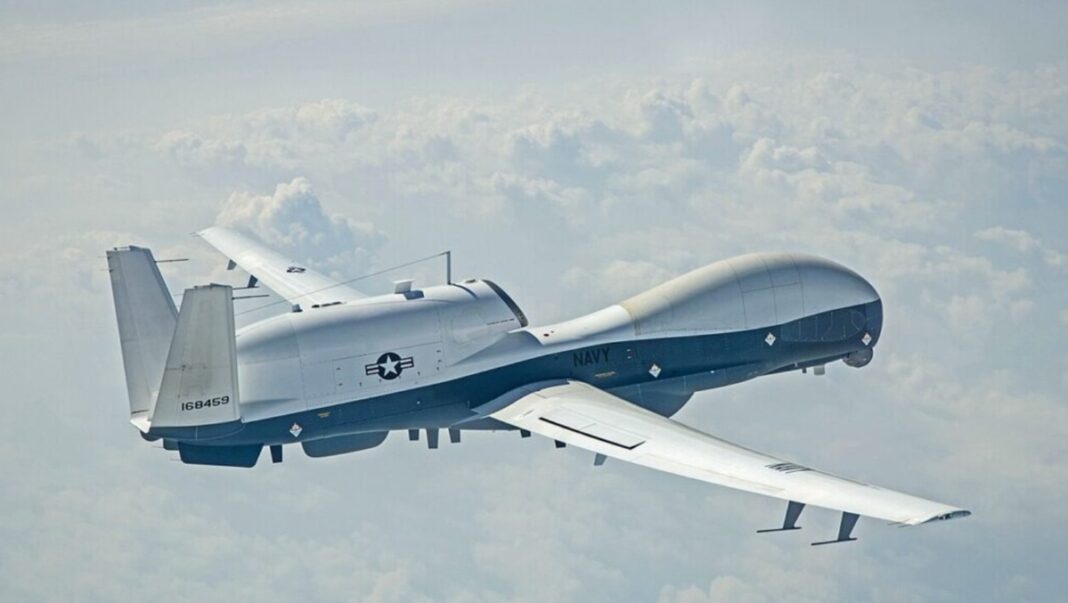
A U.S. Navy MQ-4C Triton high-altitude surveillance drone carried out an extended reconnaissance mission near Cuban territory, underscoring heightened attention on U.S. policy toward the island.
Flight tracking data and open-source reporting show the drone, operating under the callsign BLKCAT6, conducted a more than 12-hour mission over waters near Cuba, including repeated passes close to Havana and the area surrounding Guantanamo Bay.

The aircraft departed from and later returned to Naval Air Station Jacksonville in Florida.
High-Altitude Persistent Surveillance
The MQ-4C Triton, developed by Northrop Grumman, is designed for long-endurance maritime surveillance missions.
During this operation, tracking data indicates the drone maintained:
- an altitude of approximately 49,000 feet
- a ground speed of around 290 knots
- repeated looping flight patterns over key areas
These patterns suggest the mission was not a simple transit flight, but rather sustained monitoring of specific locations.
‼️🇺🇲🇨🇺 BREAKING | Amid the anticipated agreement in the conflict with Iran, Donald Trump is reportedly preparing for actions against Cuba, likely aimed at regime change.
Reports have already emerged that the Pentagon is developing plans for potential operations against Cuba. At… pic.twitter.com/A8OFzoqcg2
— Visioner (@visionergeo) April 17, 2026
Unlike short-duration overflights, the Triton is capable of remaining on station for extended periods, building a continuous picture of activity across wide maritime and coastal regions.
Focus on Havana and Guantanamo Bay
The drone’s route indicates particular focus on:
- waters near Havana
- northern Cuban coastline
- areas around Guantanamo Bay
The repeated back-and-forth tracks suggest an effort to maintain persistent coverage, allowing analysts to monitor movements and detect patterns over time.
This type of surveillance is typically used to support:
- maritime domain awareness
- coastal activity tracking
- intelligence gathering for contingency planning
Context: Increased Attention on US-Cuba Policy
The timing of the mission comes amid renewed attention to U.S. policy toward Cuba.
Reports have indicated that the Pentagon is reviewing a range of contingency plans related to the region. In response to such reporting, U.S. defense officials have reiterated that the Department of Defense routinely prepares for multiple scenarios and stands ready to execute presidential directives if required.

No official confirmation has been provided regarding specific operational plans tied to this particular flight.
Role of Triton in Modern Surveillance Operations
The MQ-4C Triton plays a key role in modern intelligence and surveillance operations due to its ability to:
- remain airborne for extended durations
- monitor large geographic areas
- provide real-time sensor data
- track surface and coastal activity
Its high-altitude operation allows it to cover broad areas while remaining outside immediate risk zones.
This makes it particularly suited for persistent surveillance missions in sensitive or strategically important regions.
What the Flight Suggests
While the U.S. Navy has not issued a public statement about this specific mission, the available data indicates a prolonged and focused reconnaissance operation rather than routine transit activity.
Such missions typically support broader situational awareness, especially during periods of increased geopolitical attention.
At this stage, the flight highlights heightened monitoring of the region, rather than any confirmed shift toward direct military action.