
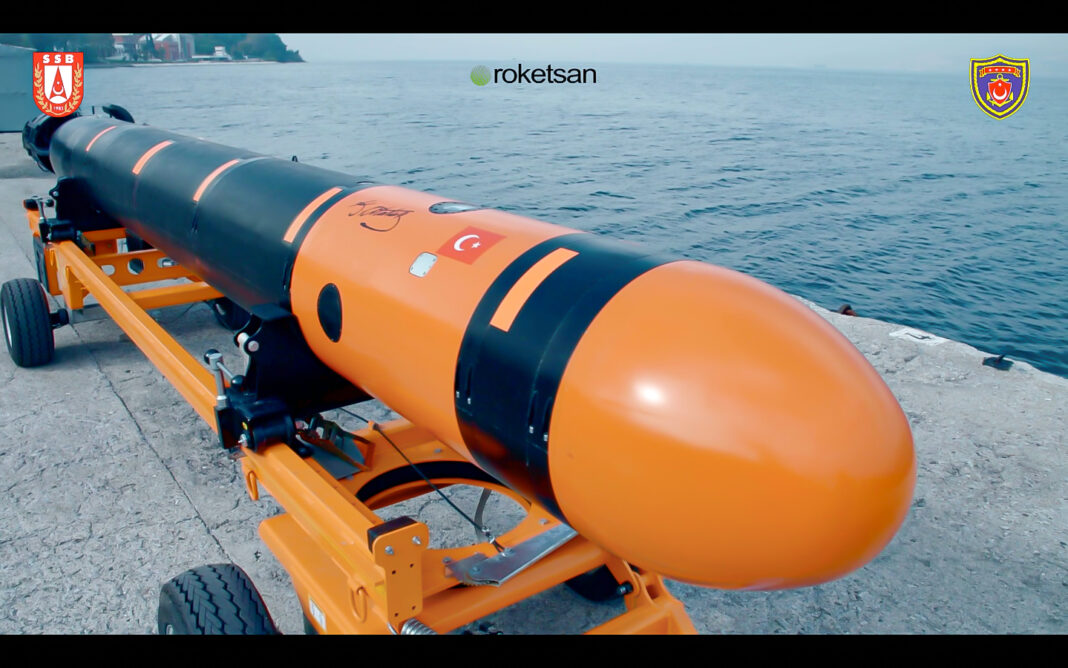
Pakistan may be preparing one of the most significant upgrades to its undersea strike capability in decades after reportedly entering discussions with Turkey for the AKYA heavyweight torpedo, a weapon increasingly regarded as one of the most advanced submarine-launched torpedo systems in NATO-aligned inventories.
If negotiations progress beyond the current technical evaluation stage, Islamabad would gain not only a new weapon but a long-range underwater strike architecture capable of reshaping naval planning across the Arabian Sea and northern Indian Ocean.
The reported talks have drawn strategic attention because the AKYA could eventually arm Pakistan’s incoming Hangor-class submarines, a fleet already expected to significantly strengthen the Pakistan Navy’s anti-access posture.
What Makes the AKYA Torpedo Significant
Developed by Roketsan, the AKYA is a fully indigenous 533mm heavyweight torpedo designed to replace older imported systems used by the Turkish Navy.
Unlike legacy torpedoes that rely mainly on conventional sonar homing, AKYA reportedly combines:
- active sonar
- passive sonar
- fiber-optic wire guidance
- wake-homing
- autonomous engagement modes
This multi-layer guidance architecture allows the torpedo to continue tracking targets even when hostile warships deploy:
- acoustic decoys
- electronic jamming
- evasive maneuvers
- countermeasure bubbles
Defense analysts increasingly view it as one of the most sophisticated torpedo solutions currently available in its class.
Range, Speed and Warhead
According to the report, the torpedo weighs between 1,200kg and 1,700kg, measures roughly seven meters, and carries a 350kg to 380kg warhead.
Its electric propulsion system reportedly uses:
- brushless DC motor
- counter-rotating propellers
- high-energy batteries
This enables speeds above 45 knots and engagement ranges exceeding 50 kilometers.
Such range offers a major tactical advantage, allowing submarines to remain farther away from hostile escorts, maritime patrol aircraft, and anti-submarine helicopters while still engaging distant targets.
Hangor-Class Integration Could Be a Strategic Game Changer
The strategic significance of the talks is closely linked to Pakistan’s Hangor-class submarine program, the largest submarine acquisition project in the country’s history.
The eight-submarine deal, reportedly valued at $4–5 billion, was signed with China in 2015.
The fleet is based on the Type 039A / Yuan-class design and includes air-independent propulsion (AIP), allowing longer submerged endurance than conventional diesel-electric submarines.
Each submarine is expected to carry six standard 533mm torpedo tubes, making AKYA integration technically feasible.
This could significantly improve Pakistan’s anti-access and area-denial capability across the Arabian Sea.
Technology Transfer Could Be the Bigger Story
The most strategically important aspect may not be the purchase itself, but the reported possibility of technology transfer.
According to the report, talks may include:
- local assembly
- maintenance support
- co-production
- software and guidance access
This would align with Pakistan’s broader defense industrial strategy of combining imports with local manufacturing capability.
If realized, it could reduce Pakistan’s dependence on single-source Chinese submarine armament and deepen its naval-industrial ties with Turkey.
Broader Pakistan-Turkey Defense Partnership
The AKYA discussions fit into a wider pattern of growing defense cooperation between Islamabad and Ankara.
Both countries have already collaborated on:
- Babur-class corvettes
- submarine upgrades
- drone technology
- naval electronics
- training exchanges
This suggests the torpedo deal would carry significance beyond underwater warfare.
It would symbolize a deeper bilateral commitment to long-term military self-reliance and defense industrial cooperation.
Strategic Impact in the Arabian Sea
If eventually deployed aboard the Hangor-class, AKYA-equipped submarines could create a more layered underwater threat environment in the northern Arabian Sea.
This would affect planning for:
- destroyers
- frigates
- amphibious vessels
- carrier task groups
- hostile submarines
Combined with possible future Babur-3 submarine-launched cruise missile capability, Pakistan’s submarine fleet could evolve from a coastal defense force into a broader strategic deterrent.